Stay RelentlessGet the latest from Relentless Times and Relentless Fashion.From Relentless AaronBuild Your Digital HomeTurn your idea into a website built to be found, trusted, and remembered.Explore Services
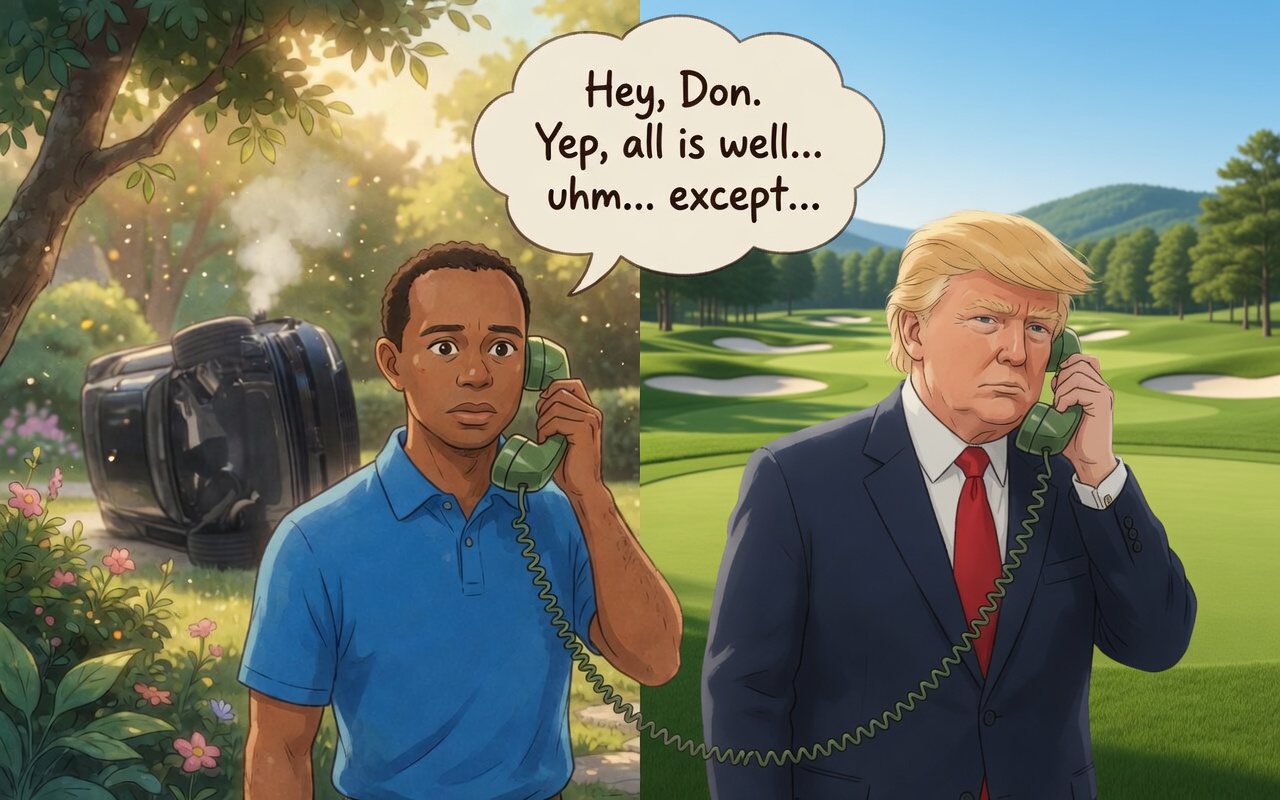
The bodycam catches it clean. Tiger Woods steps out of the flipped SUV on Jupiter Island, Florida, March 27, 2026. Sun low, wreck still smoking behind him. He’s got the phone to his ear, voice low and steady like he’s closing a deal on the back nine. “Thank you so much. All right. You got it. Bye.” Click. He pockets the device, walks back toward the deputy who just waved him over, and drops the line without missing a beat: “Yeah, I was just talking to the president.”
No panic. No shame in the voice. Just the casual flex, delivered like it was the most natural thing in the world.
You watch that clip and something in your gut shifts. Not because the call happened-Trump did send well wishes later, and the two men have history-but because of how Tiger used the moment. Pulled the ace card the second the blue lights hit. Called Daddy in the middle of his own mess, then laid the name down like a shield for the cops. Laughable on the surface. Transparent underneath. The kind of move that tells you exactly where a man’s head sits when the world stops rotating on his axis.
This isn’t about the DUI. That’s the headline everybody’s chasing. Pills in the pocket, vehicle on its side, the whole messy aftermath. We’ve seen Tiger navigate worse and come back swinging. This is about what he reached for when the ground gave way. Not a lawyer. Not a teammate. Not even a quiet second to sit with the weight of it. He reached for the highest contact in the book and made sure the guy in uniform knew it.
I wrote the first piece on mentoring Tiger because I saw the fracture lines years ago-the kid who rose from Navy housing in Cypress, California, to rewrite the game, only to watch the same game start rewriting him. I laid out the blueprint I’d hand him if he ever sat across from me: strip the armor, rebuild the core, face the mirrors that don’t lie. That piece was hope dressed in tough love. This one is the follow-through when the hope meets reality.
Because here’s the part nobody wants to say out loud: the entitlement didn’t arrive with the crash. It was already baked in. You climb that high, surround yourself with presidents and billionaires and ex-first family connections, and the phone stops being a tool. It becomes a weapon. Same way some folks weaponize a car-floor it, feel the rush, consequences be damned. Same way others weaponize their phones-record, post, destroy a life before the facts settle. Tiger weaponized access. One call, one casual drop, and suddenly the deputy isn’t dealing with a regular guy in a wreck. He’s dealing with the guy who talks to the president.
Is it a superiority complex? Maybe. The quiet kind that doesn’t scream; it just assumes the rules bend different when your last name is Woods. You spend decades hearing “yes sir” from every direction, watching crowds part, watching deals close with a nod, and your nervous system rewires. Ordinary accountability starts to feel like an insult. The phone becomes the escape hatch. Call the right number, drop the right name, and the heat dissipates before it ever lands on your skin.
Illuminati desire? That’s the conspiracy lane, and I’m not driving there. But the pattern feels familiar enough: power seeks power, even in the wreckage. When the world tilts, you don’t reach for the people who knew you when. You reach for the ones who remind you who you became. The ones who make the ordinary rules feel negotiable.
Or maybe it’s simpler than all that. Plain stupidity speaking out loud, hastily, the way panic makes a man reach for anything solid. The bodycam doesn’t show panic, though. It shows calm. Measured. Almost rehearsed. The same calm you see on the tee box when the pressure is highest. Only this time the stakes weren’t a major. They were a possible felony.
I’ve sat in rooms with men who built empires and men who lost them. The ones who survive the fall are the ones who refuse the shortcuts when the lights are flashing. They own the mess. They don’t outsource the reckoning to a presidential contact list. Tiger’s move didn’t save him from the cuffs. It just painted the picture clearer: here is a man who still believes the game owes him an extra mulligan.
You feel it in your chest when you watch it-the small fracture in the myth. Tiger wasn’t just a golfer; he was the proof that focus and fire could rewrite bloodlines. Black kid from a military family becomes the face of a country-club sport, changes everything about access and expectation. We needed that story. Still do. But the same fire that forged him also forged the blind spots. The belief that the rules are suggestions when you’re the exception.
That’s the part that hits different for me. I’ve mentored enough brothers who came up the hard way-street corners, second chances, the kind of grind that leaves scars you don’t show in press conferences. None of us had a president on speed dial. When the police lights found us, we sat with the weight. We learned the hard way that influence is earned every single day, not borrowed in a crisis.
So what now? The article isn’t a pile-on. It’s a mirror. Tiger’s got choices in front of him again. Treatment. Reflection. The long road back that doesn’t lean on the Rolodex. The same road I sketched in the first piece. This time the stakes feel heavier because the mask slipped on camera. The world saw the reflex. The question is whether he sees it too.
Entitlement doesn’t announce itself with fanfare. It whispers in the quiet moments when pressure hits and you reach for the easy out instead of the honest one. Tiger reached. We all saw it. The rest of the story-the recovery, the next chapter, the man he decides to become when nobody’s filming-belongs to him.
But the phone call? That moment lives now. A small, telling fracture in the armor. A reminder that even the greatest among us can forget, for one heartbeat, that the ground under our feet is the same ground under everybody else’s. And when you forget that, the fall feels longer than it needs to.
The deputy didn’t flinch. The cuffs still clicked. The system kept turning the way it turns for the rest of us. Maybe that’s the truest part of the whole scene. Power can make the call, but it can’t always change the outcome.
And maybe, just maybe, that’s the lesson worth carrying forward. Not the name-drop. Not the reach. The quiet truth that shows up after the phone goes dark: you still have to sit with what you did. Alone. On the same earth as everybody else. No presidents required.
 You watch that clip and something in your gut shifts. Not because the call happened-Trump did send well wishes later, and the two men have history-but because of how Tiger used the moment. Pulled the ace card the second the blue lights hit. Called Daddy in the middle of his own mess, then laid the name down like a shield for the cops. Laughable on the surface. Transparent underneath. The kind of move that tells you exactly where a man’s head sits when the world stops rotating on his axis.
This isn’t about the DUI. That’s the headline everybody’s chasing. Pills in the pocket, vehicle on its side, the whole messy aftermath. We’ve seen Tiger navigate worse and come back swinging. This is about what he reached for when the ground gave way. Not a lawyer. Not a teammate. Not even a quiet second to sit with the weight of it. He reached for the highest contact in the book and made sure the guy in uniform knew it.
You watch that clip and something in your gut shifts. Not because the call happened-Trump did send well wishes later, and the two men have history-but because of how Tiger used the moment. Pulled the ace card the second the blue lights hit. Called Daddy in the middle of his own mess, then laid the name down like a shield for the cops. Laughable on the surface. Transparent underneath. The kind of move that tells you exactly where a man’s head sits when the world stops rotating on his axis.
This isn’t about the DUI. That’s the headline everybody’s chasing. Pills in the pocket, vehicle on its side, the whole messy aftermath. We’ve seen Tiger navigate worse and come back swinging. This is about what he reached for when the ground gave way. Not a lawyer. Not a teammate. Not even a quiet second to sit with the weight of it. He reached for the highest contact in the book and made sure the guy in uniform knew it.
 I wrote the first piece on mentoring Tiger because I saw the fracture lines years ago-the kid who rose from Navy housing in Cypress, California, to rewrite the game, only to watch the same game start rewriting him. I laid out the blueprint I’d hand him if he ever sat across from me: strip the armor, rebuild the core, face the mirrors that don’t lie. That piece was hope dressed in tough love. This one is the follow-through when the hope meets reality.
Because here’s the part nobody wants to say out loud: the entitlement didn’t arrive with the crash. It was already baked in. You climb that high, surround yourself with presidents and billionaires and ex-first family connections, and the phone stops being a tool. It becomes a weapon. Same way some folks weaponize a car-floor it, feel the rush, consequences be damned. Same way others weaponize their phones-record, post, destroy a life before the facts settle. Tiger weaponized access. One call, one casual drop, and suddenly the deputy isn’t dealing with a regular guy in a wreck. He’s dealing with the guy who talks to the president.
I wrote the first piece on mentoring Tiger because I saw the fracture lines years ago-the kid who rose from Navy housing in Cypress, California, to rewrite the game, only to watch the same game start rewriting him. I laid out the blueprint I’d hand him if he ever sat across from me: strip the armor, rebuild the core, face the mirrors that don’t lie. That piece was hope dressed in tough love. This one is the follow-through when the hope meets reality.
Because here’s the part nobody wants to say out loud: the entitlement didn’t arrive with the crash. It was already baked in. You climb that high, surround yourself with presidents and billionaires and ex-first family connections, and the phone stops being a tool. It becomes a weapon. Same way some folks weaponize a car-floor it, feel the rush, consequences be damned. Same way others weaponize their phones-record, post, destroy a life before the facts settle. Tiger weaponized access. One call, one casual drop, and suddenly the deputy isn’t dealing with a regular guy in a wreck. He’s dealing with the guy who talks to the president.
 Is it a superiority complex? Maybe. The quiet kind that doesn’t scream; it just assumes the rules bend different when your last name is Woods. You spend decades hearing “yes sir” from every direction, watching crowds part, watching deals close with a nod, and your nervous system rewires. Ordinary accountability starts to feel like an insult. The phone becomes the escape hatch. Call the right number, drop the right name, and the heat dissipates before it ever lands on your skin.
Illuminati desire? That’s the conspiracy lane, and I’m not driving there. But the pattern feels familiar enough: power seeks power, even in the wreckage. When the world tilts, you don’t reach for the people who knew you when. You reach for the ones who remind you who you became. The ones who make the ordinary rules feel negotiable.
Or maybe it’s simpler than all that. Plain stupidity speaking out loud, hastily, the way panic makes a man reach for anything solid. The bodycam doesn’t show panic, though. It shows calm. Measured. Almost rehearsed. The same calm you see on the tee box when the pressure is highest. Only this time the stakes weren’t a major. They were a possible felony.
Is it a superiority complex? Maybe. The quiet kind that doesn’t scream; it just assumes the rules bend different when your last name is Woods. You spend decades hearing “yes sir” from every direction, watching crowds part, watching deals close with a nod, and your nervous system rewires. Ordinary accountability starts to feel like an insult. The phone becomes the escape hatch. Call the right number, drop the right name, and the heat dissipates before it ever lands on your skin.
Illuminati desire? That’s the conspiracy lane, and I’m not driving there. But the pattern feels familiar enough: power seeks power, even in the wreckage. When the world tilts, you don’t reach for the people who knew you when. You reach for the ones who remind you who you became. The ones who make the ordinary rules feel negotiable.
Or maybe it’s simpler than all that. Plain stupidity speaking out loud, hastily, the way panic makes a man reach for anything solid. The bodycam doesn’t show panic, though. It shows calm. Measured. Almost rehearsed. The same calm you see on the tee box when the pressure is highest. Only this time the stakes weren’t a major. They were a possible felony.
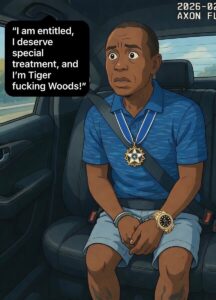 I’ve sat in rooms with men who built empires and men who lost them. The ones who survive the fall are the ones who refuse the shortcuts when the lights are flashing. They own the mess. They don’t outsource the reckoning to a presidential contact list. Tiger’s move didn’t save him from the cuffs. It just painted the picture clearer: here is a man who still believes the game owes him an extra mulligan.
You feel it in your chest when you watch it-the small fracture in the myth. Tiger wasn’t just a golfer; he was the proof that focus and fire could rewrite bloodlines. Black kid from a military family becomes the face of a country-club sport, changes everything about access and expectation. We needed that story. Still do. But the same fire that forged him also forged the blind spots. The belief that the rules are suggestions when you’re the exception.
That’s the part that hits different for me. I’ve mentored enough brothers who came up the hard way-street corners, second chances, the kind of grind that leaves scars you don’t show in press conferences. None of us had a president on speed dial. When the police lights found us, we sat with the weight. We learned the hard way that influence is earned every single day, not borrowed in a crisis.
So what now? The article isn’t a pile-on. It’s a mirror. Tiger’s got choices in front of him again. Treatment. Reflection. The long road back that doesn’t lean on the Rolodex. The same road I sketched in the first piece. This time the stakes feel heavier because the mask slipped on camera. The world saw the reflex. The question is whether he sees it too.
Entitlement doesn’t announce itself with fanfare. It whispers in the quiet moments when pressure hits and you reach for the easy out instead of the honest one. Tiger reached. We all saw it. The rest of the story-the recovery, the next chapter, the man he decides to become when nobody’s filming-belongs to him.
But the phone call? That moment lives now. A small, telling fracture in the armor. A reminder that even the greatest among us can forget, for one heartbeat, that the ground under our feet is the same ground under everybody else’s. And when you forget that, the fall feels longer than it needs to.
The deputy didn’t flinch. The cuffs still clicked. The system kept turning the way it turns for the rest of us. Maybe that’s the truest part of the whole scene. Power can make the call, but it can’t always change the outcome.
And maybe, just maybe, that’s the lesson worth carrying forward. Not the name-drop. Not the reach. The quiet truth that shows up after the phone goes dark: you still have to sit with what you did. Alone. On the same earth as everybody else. No presidents required.
I’ve sat in rooms with men who built empires and men who lost them. The ones who survive the fall are the ones who refuse the shortcuts when the lights are flashing. They own the mess. They don’t outsource the reckoning to a presidential contact list. Tiger’s move didn’t save him from the cuffs. It just painted the picture clearer: here is a man who still believes the game owes him an extra mulligan.
You feel it in your chest when you watch it-the small fracture in the myth. Tiger wasn’t just a golfer; he was the proof that focus and fire could rewrite bloodlines. Black kid from a military family becomes the face of a country-club sport, changes everything about access and expectation. We needed that story. Still do. But the same fire that forged him also forged the blind spots. The belief that the rules are suggestions when you’re the exception.
That’s the part that hits different for me. I’ve mentored enough brothers who came up the hard way-street corners, second chances, the kind of grind that leaves scars you don’t show in press conferences. None of us had a president on speed dial. When the police lights found us, we sat with the weight. We learned the hard way that influence is earned every single day, not borrowed in a crisis.
So what now? The article isn’t a pile-on. It’s a mirror. Tiger’s got choices in front of him again. Treatment. Reflection. The long road back that doesn’t lean on the Rolodex. The same road I sketched in the first piece. This time the stakes feel heavier because the mask slipped on camera. The world saw the reflex. The question is whether he sees it too.
Entitlement doesn’t announce itself with fanfare. It whispers in the quiet moments when pressure hits and you reach for the easy out instead of the honest one. Tiger reached. We all saw it. The rest of the story-the recovery, the next chapter, the man he decides to become when nobody’s filming-belongs to him.
But the phone call? That moment lives now. A small, telling fracture in the armor. A reminder that even the greatest among us can forget, for one heartbeat, that the ground under our feet is the same ground under everybody else’s. And when you forget that, the fall feels longer than it needs to.
The deputy didn’t flinch. The cuffs still clicked. The system kept turning the way it turns for the rest of us. Maybe that’s the truest part of the whole scene. Power can make the call, but it can’t always change the outcome.
And maybe, just maybe, that’s the lesson worth carrying forward. Not the name-drop. Not the reach. The quiet truth that shows up after the phone goes dark: you still have to sit with what you did. Alone. On the same earth as everybody else. No presidents required.