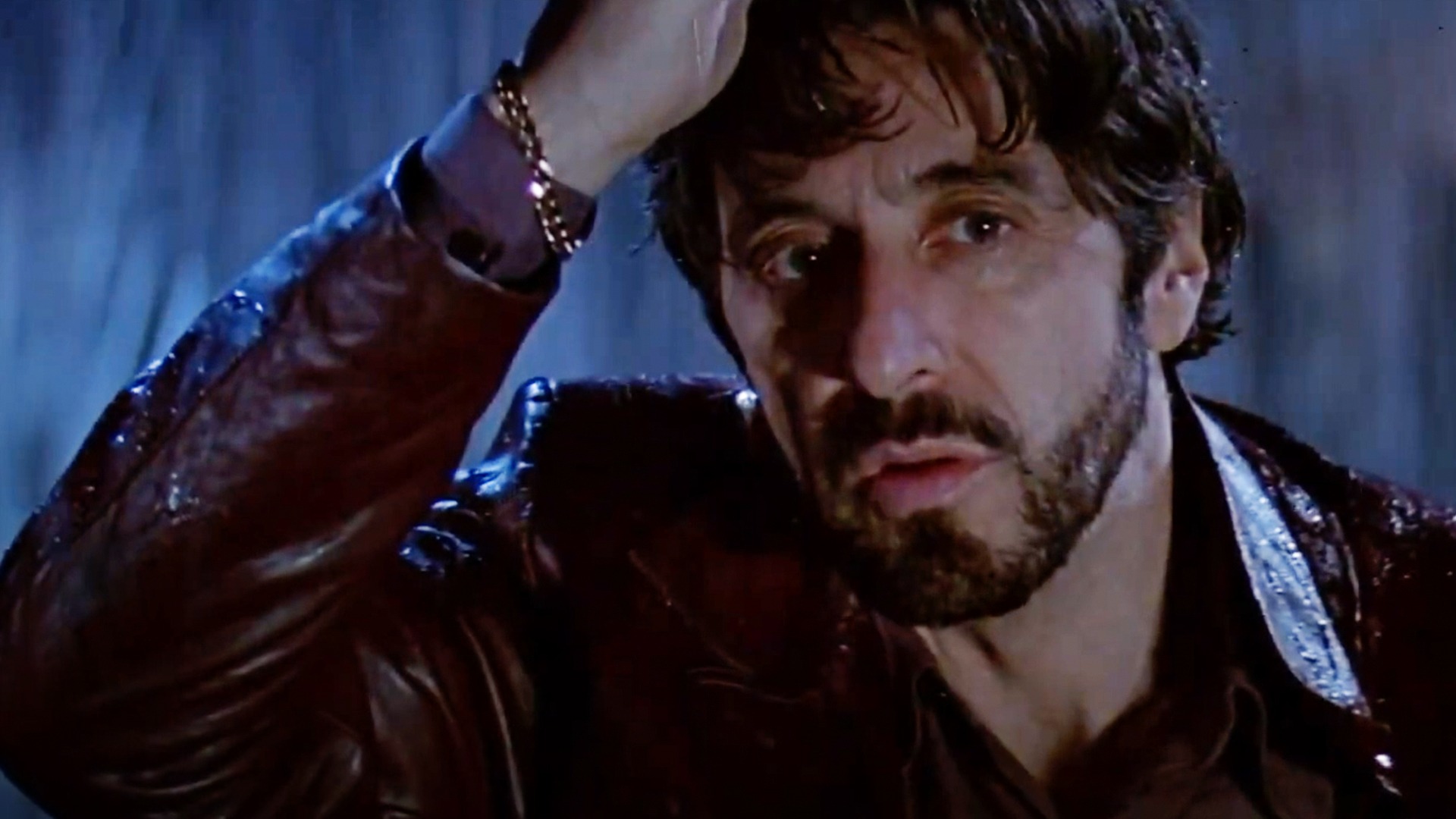
You’re watching Carlito’s Way and the recognition hits like a late-night streetlight. A face steps into the frame—someone you clocked years ago in Scarface—and the whole picture shifts. This isn’t just Pacino doing another De Palma crime story. It’s a network. The same actors who gave Tony Montana’s Miami its teeth show up here in Carlito Brigante’s New York, carrying the weight of prior betrayals, prior codes, prior blood. Trace them and the lines run out to Denzel Washington thrillers, to The Sopranos flashbacks, to every corner where American screen crime needs a body that already feels lived-in and dangerous.
De Palma didn’t hire strangers for texture. He reached back into the Scarface company for continuity and cultural weight. Three faces returned in small but pointed roles: Ángel Salazar, Al Israel, and Michael P. Moran. Salazar had been Chi-Chi, Tony’s loyal shadow who took bullets in the final siege. Here he plays Walberto, one more body in Carlito’s circle—familiar muscle, familiar face, the same man who once stood beside a different doomed king. Al Israel had been Hector the Toad, the chainsaw Colombian who ended Manny’s life in that bathroom. In Carlito’s Way he surfaces as Rolando, another hard presence in the Latin underworld scenes. Moran had played Nick “the Pig” in Scarface, one of the disposable soldiers. De Palma brought him back too. These weren’t stunt casting. They were stitches. The director was telling you the streets remember their own.
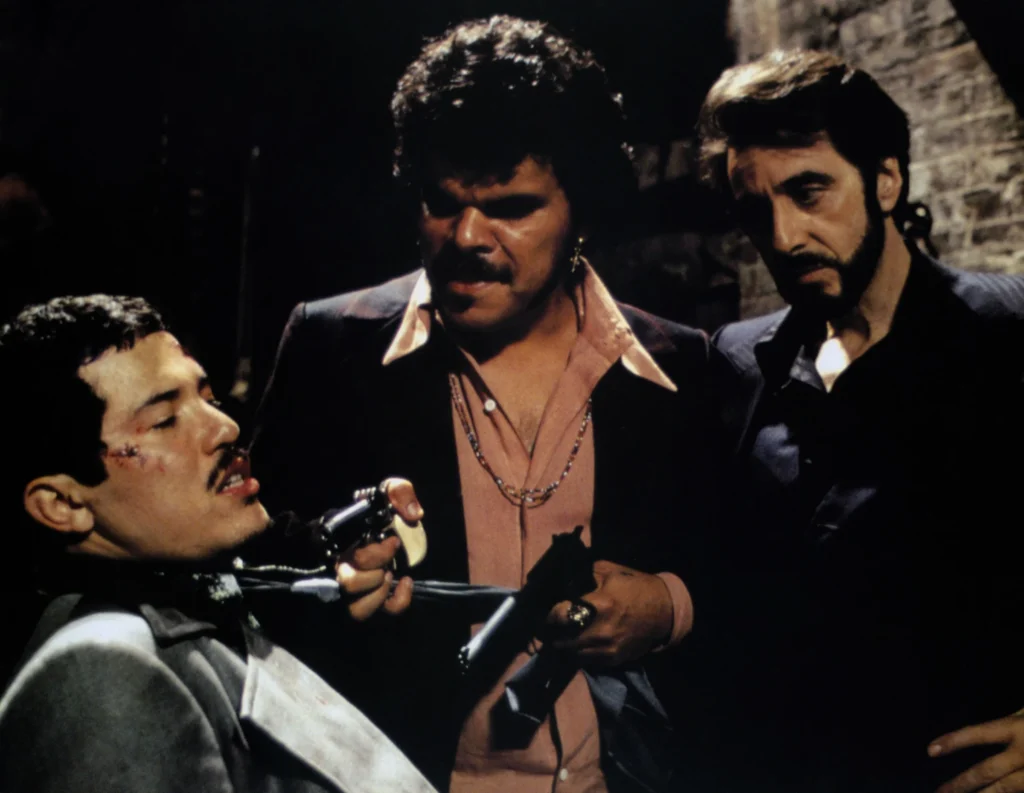
Luis Guzmán walks in as Pachanga, Carlito’s right hand—pragmatic, watchful, the guy who knows when to push and when to fade. Guzmán has spent decades playing men who live close to the edge, whether they’re holding the gun or trying to survive the one pointed at them. Watch him here, then watch him again in The Bone Collector opposite Denzel Washington: he’s Eddie Ortiz, the detective riding shotgun with a paralyzed Denzel, reading crime scenes and carrying the procedural weight. Flip the script and he shows up in Tony Scott’s The Taking of Pelham 123 as Phil Ramos, part of John Travolta’s hijack crew, now on the wrong side of the train while Denzel coordinates from the command center. Guzmán moves fluidly between cop and crook because the films need that authenticity—the sense that these New York streets don’t care which side of the badge you claim. He’s the connective tissue. Carlito trusts him. Denzel’s characters have to read him. The same face does both jobs without breaking character.
John Leguizamo detonates as Benny Blanco from the Bronx—the young, hungry, flash-and-danger upstart who wants Carlito’s spot and doesn’t care how much blood it costs. Leguizamo brings a coiled, verbal energy that feels like it could go off in any direction. He’s not just scenery; he’s the future Carlito is trying to outrun. His career threads through urban crime stories—Empire as a dealer navigating Wall Street temptation, later turns in Righteous Kill and The Lincoln Lawyer—always carrying that New York street grammar. He came close to another Denzel landmark: offered the role of Miguel in Jonathan Demme’s Philadelphia alongside Denzel and Tom Hanks, but passed. The brush is there. The same performer who can play menace in a De Palma joint can pivot to courtroom drama or drag comedy and still feel rooted. Benny Blanco isn’t a villain in a vacuum. He’s the next wave these older gangsters fear, and Leguizamo makes you feel the threat in your chest.
Viggo Mortensen appears late as Lalin Miasso, the wheelchair-bound ex-partner whose reunion with Carlito becomes one of the film’s rawest tests of loyalty and survival. It’s a small role but it lands like a body blow—Mortensen plays the physical damage and the moral fracture without sentiment. This was early in his film career, before the world knew him as Aragorn or the star of Eastern Promises and A History of Violence. Those later crime stories carry the same current: men whose bodies and pasts have been broken by violence, trying to navigate codes that no longer protect them. Lalin’s scene with Pacino is quiet and loaded; you feel the history between them even if the script only sketches it. Mortensen already knew how to make damage look earned.
Joseph Siravo plays Vinnie Taglialucci, son of the old-school Italian boss whose reach still touches Carlito’s world. Siravo specialized in these men—volatile, tied to tradition, dangerous because they believe the old rules still apply. His most famous turn came later as Johnny Boy Soprano in The Sopranos, the father whose rages and absences shape Tony’s entire life. He also stepped into John Gotti territory in films and TV. The line is direct: Carlito’s story sits in a New York where Puerto Rican street crews and Italian organized families share the same sidewalks and the same grudges. Siravo carries that overlap in his posture. When Vinnie shows up, you understand the larger map—Carlito isn’t just dodging his own past; he’s navigating ethnic layers that predate him and will outlast him.
The rest of the ensemble fills the frame the same way. Jorge Porcel as Saso brings real Cuban entertainer energy—the kind Steven Bauer brought to Manny in Scarface. James Rebhorn’s Norwalk gives the straight world its cold authority. Richard Foronjy, Frank Minucci, and the others populate the clubs, the prisons, the back rooms with faces that already know the score. Even the smaller roles—Angel Salazar’s return, Al Israel’s presence—function as echoes. De Palma wasn’t just directing a sequel in spirit. He was building a repertory company for the American crime film.
These actors didn’t chase stardom. They held the frame. They made the violence feel personal and the codes feel ancient. When Guzmán moves from Carlito’s side to Denzel’s investigation, when Leguizamo’s ambition collides with Pacino’s weariness, when Siravo’s mob son brushes against street-level survival, you’re not watching isolated performances. You’re watching the same ecosystem breathe across decades and directors and ethnic lines. Scarface gave these faces their first big scars. Carlito’s Way gave some of them another chapter. Denzel’s thrillers and the Mafia sagas that followed kept using them because the streets don’t reset. They remember.
Next time a familiar mug appears in another crime story—another Denzel standoff, another mob funeral, another De Palma shadow—you’ll feel the tug. These performers didn’t just act the part. They carried the map. And once you see the lines, every rewatch of Carlito’s Way becomes a deeper excavation of the same living city.