This was never just a concert. It was an empire placing its music, money, relationships, conflicts and cultural memory on one field.
By Relentless Aaron
Part One of a Six-Part Relentless Times Investigation
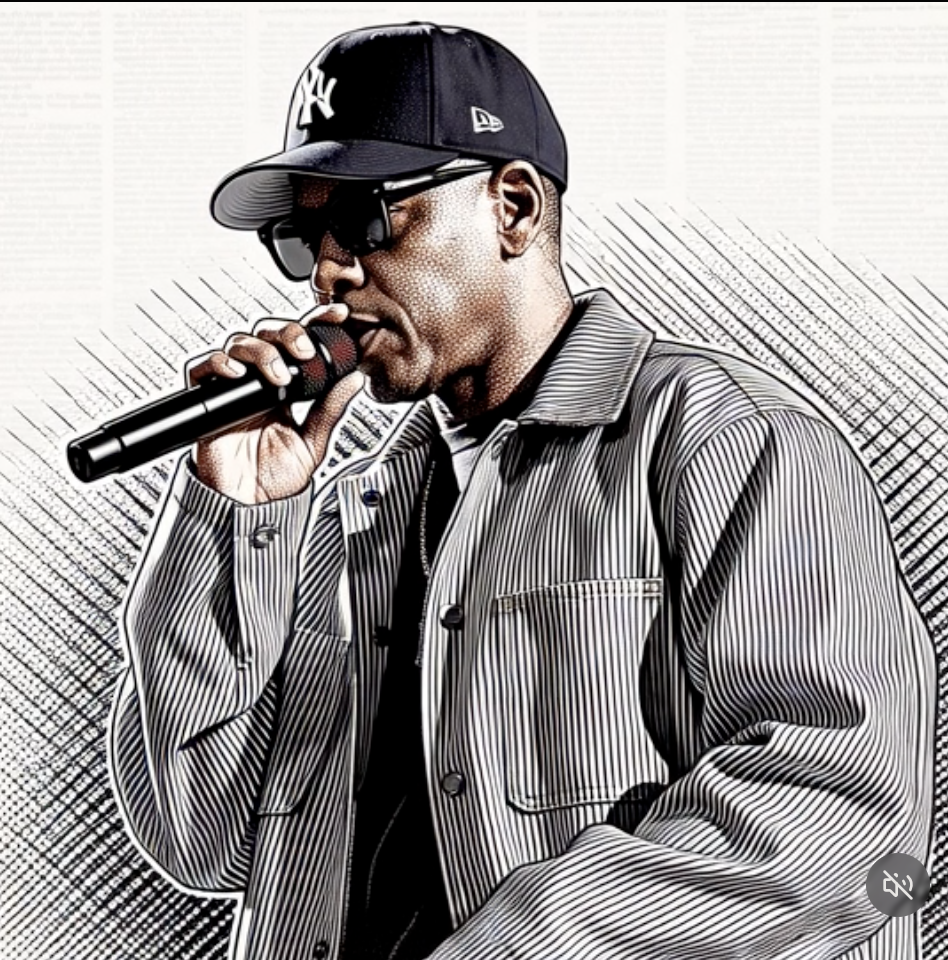
The Bronx was cooking that week. Heat coming off the pavement, heat coming off the people, and something else in the air that you couldn’t buy a ticket for. History, waiting to see if it would show up.
Yankee Stadium stopped being a ballpark for three nights. Jay-Z turned it into a walk-through of his own life.
Night One brought back Reasonable Doubt, front to back. That’s the record where a young man from Marcy took street math and started drawing blueprints nobody knew were blueprints yet.
Night Two was The Blueprint itself, the album that moved him past “successful rapper” into a different weight class entirely.
Night Three they called Extra Innings, and it earned the name the hard way. The show didn’t start until after midnight, because hundreds of people with no tickets rushed the stadium entrances. Gates got shut. Thousands of paying customers stood outside waiting while security tried to hold the line. Nervous energy on the sidewalk. A different kind of energy inside.
Jay-Z walked out at roughly 12:17 a.m.
And here’s the part I respect. He didn’t act like nothing happened. He spoke on it, apologized, and explained the math: starting the show while people were rushing the gates could’ve turned into a crowd surge, and crowd surges kill people. The Yankees, Roc Nation and Live Nation backed that up in a joint statement. The Associated Press reported that hundreds of ticketless people had pushed past folks waiting peacefully, and some of them got through security altogether.
The schedule lost. Human life won. That’s the right order.
Then the music started, and the night stopped being about the delay.
Rihanna came out. Beyoncé came out. Usher, Pharrell, Clipse, Teyana Taylor, Jeezy, Jermaine Dupri, Fat Joe, Jadakiss, Swizz Beatz, The-Dream. One after another, deep into the morning.
Across the full three nights, add Nas, Eminem, Alicia Keys, Slick Rick, Jaz-O, Memphis Bleek, and Blue Ivy Carter on piano while her father performed “Feelin’ It.”
That guest list alone could feed a week of headlines.
And it’s still just the surface.
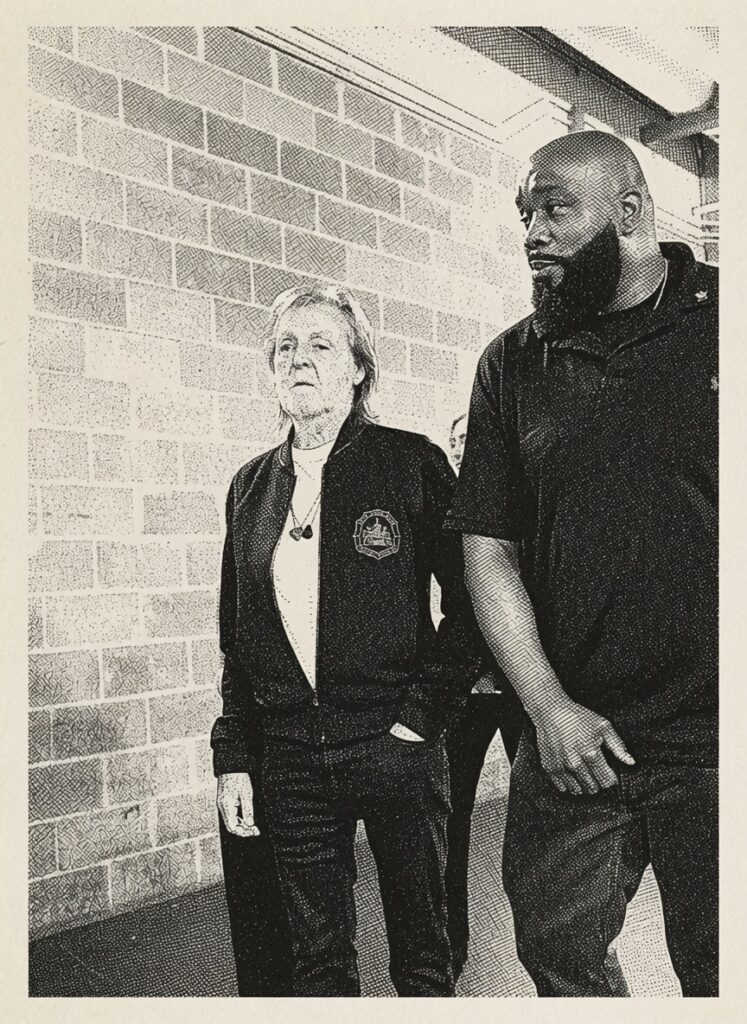
The G.O.A.T. Paul McCartney arrives.
No fanfare required. He’s played all the largest stadiums in the world. He’s met all the world’s most notable celebs, royals and been on every movie and TV screen. If you were born yesterday, you still need to know who this man is and what he represents.
The show had two stages
The obvious stage held the performers.
The second stage was the crowd.
People came to hear Jay-Z. But plenty came to be seen hearing Jay-Z, to be photographed acknowledging what the man has become. That’s not shade. That’s how power works. Presence is a statement.
Look at who got reported, photographed or caught in fan footage: Tyler Perry. LeBron James. Michael B. Jordan. Gayle King. Megan Thee Stallion. GloRilla. Leonardo DiCaprio. Tobey Maguire. Chris Rock. Cedric the Entertainer. Deon Cole. Film, sports, comedy, television, music, business. Influencers with six-figure followings sprinkled through the seats like everybody else.
Then there was DJ Khaled, who seemed to move through the whole event with a level of access most attendees could only dream about. Cameras rolling. Content flowing. He wasn’t just attending. He was doing something I’ve been calling “Riding the Tiger” for years.
When you’re close to something bigger than you, you don’t have to fight its power. You align with it. You add value to it. You let some of its momentum carry your own platform further than you could push it alone.
Khaled understood the assignment.
He made content from the stadium, from the spaces around it, from the whole celebrity ecosystem orbiting the event. Was his access friendship? Partnership? Sponsorship? Some blend of all three? Nobody’s confirmed it publicly. What’s confirmed is what he did with it: he turned proximity into media.
D-Nice held down the musical atmosphere across all three nights. Other DJs, producers and culture-keepers moved through the building. Some were onstage, some in the seats, some there because their work decades ago made a production this size possible in the first place.
Which brings me to Paul McCartney.
His presence has been reported but not nailed down, so I’m treating it the way it deserves to be treated: as a maybe, until reliable documentation says otherwise. But sit with the maybe for a second, because most of that stadium wouldn’t have understood what they were looking at.
The Beatles played Shea Stadium on August 15, 1965. Not Yankee Stadium. Shea. And the promoter behind that night was Sid Bernstein, not John Scher. More than 55,000 people showed up, and that concert became the founding document of modern stadium entertainment. The Washington Post described it as a moment that changed live music.
John Scher belongs to a related chapter, a different one. Through the 1970s, he helped prove that stadium concerts in the New York and New Jersey market could be a repeatable business, not a one-off miracle.
So if McCartney really was in that building, watching Jay-Z command a New York baseball stadium sixty-one years after The Beatles shook Shea, then that’s not a celebrity sighting. That’s one stadium era standing in the crowd, witnessing the next one.
A Black man from Marcy Projects, holding his place in that conversation.
Did everybody in the building catch that?
Probably not.
That’s why this series exists.
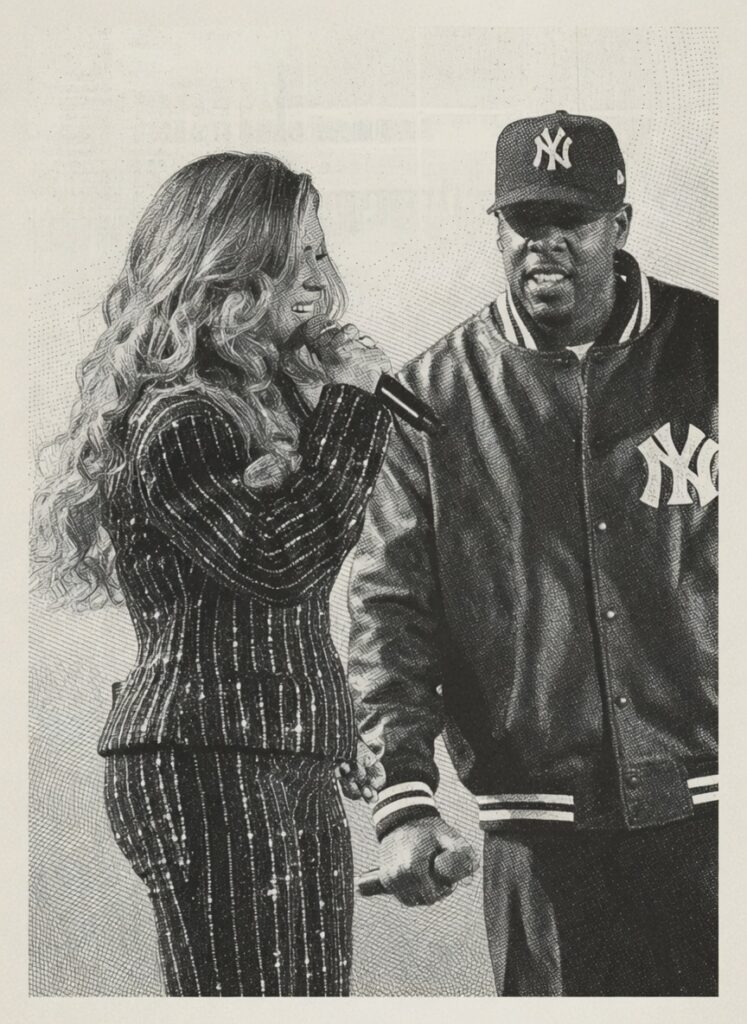
This was an economic organism
When people talk concert money, they usually stop at ticket sales.
Ticket sales are the front door. The house is much bigger.
Think about everything three nights at Yankee Stadium set in motion. Hotels filled rooms. Planes and trains carried people into New York. Rideshare drivers worked the surrounding blocks until sunrise. Parking garages collected. Restaurants fed the pre-show crowd, and bars caught them coming out. Street vendors moved water, food, shirts and bootleg memories. Stadium workers earned wages. Security companies staffed up. Photographers, stylists, makeup artists, editors and content creators all ate off the moment.
Then the official merchandise. Vinyl, jerseys, books, hats, pins, collectibles, limited editions, pop-up stores. History, shrink-wrapped and priced.
Then the catalog itself woke up. Songs cut decades ago pulled fresh streams. Old videos circulated again. Kids met records their parents lived through. Media companies filed stories. Influencers cut reels. Critics posted takedowns. Supporters posted tributes. Haters generated outrage.
Everybody ate off this event, including the people attacking it.
That’s what I call spillage.
Direct concert revenue is one stream. The full picture takes in local spending, sponsorship exposure, merchandise, media impressions, streaming growth, catalog appreciation, future licensing, and intellectual property that could become a documentary, a film or a concert special down the road.
I’ve seen speculation about a Netflix production. I can’t confirm that, and I won’t pretend to. What the current reporting actually points to is an upcoming HBO documentary project. Everything past that is possibility, not fact, and this series doesn’t trade in the two like they’re the same currency.
Could the whole international run eventually add up to a billion-dollar attention-and-money ecosystem?
Possibly.
But let’s not confuse that with Jay-Z personally pocketing a billion off some concerts. Two different claims. A billion-dollar ecosystem would include tickets, travel, hotels, retail, sponsorship, merchandise, licensing, film rights, catalog growth, media value and global exposure, spread across companies, workers, vendors, artists, governments and every business within walking distance of a stadium.
Tomorrow, we follow that money.
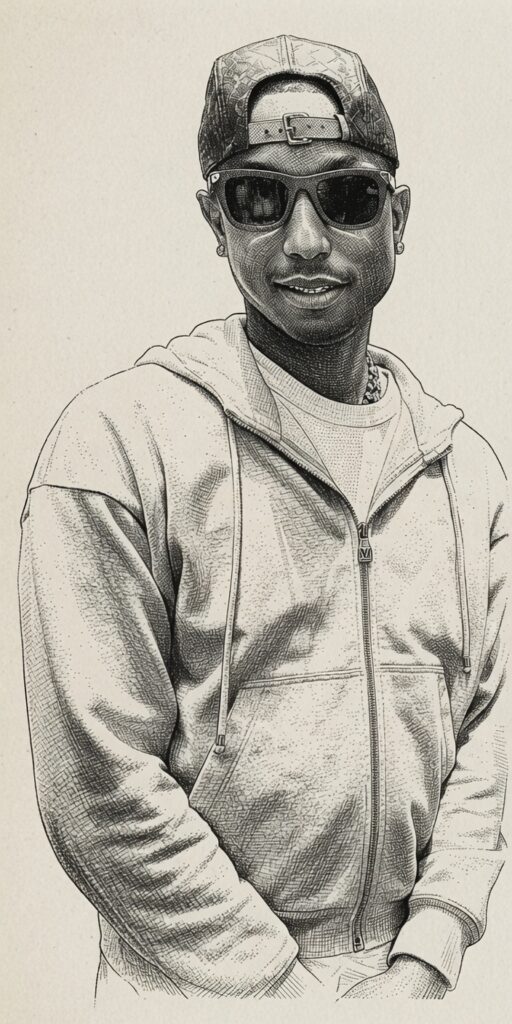
Pharrell has been busy in the fashion world, but he took time out to celebrate and perform some of his smash hits for shows 2 & 3. Other features included Alicia Keys, Swizz Beatz, Teyana Taylor, Rihanna, the Clipse, Fat Joe & Jadakiss, Usher, Nas, Beyoncé, D-Nice, Jeezy, Blue Ivy and others. You know who wasn’t there and feeling hurt?
Kanye & Dame Dash. Because they don’t know how to behave or conduct themselves as grown adults.
He does not need fifty cities
The New York experience is going on the road. Barely.
Live Nation currently lists Tottenham Hotspur Stadium in London on September 4, Stade de France in Paris on September 10, and SoFi Stadium in Los Angeles on October 23. The confirmed dates are here.
Read that short schedule again, because it’s telling you something.
Jay-Z isn’t dragging the same show through fifty cities like a man who still has something to prove. He’s consolidating attention into a handful of massive destination events. More resources per city. More guests, more sponsors, more merchandise, more media per date. Every show becomes scarce. Every city becomes an appointment. Every performance becomes a cultural package instead of a tour stop.
I call it scarcity architecture.
Instead of grinding the artist down across an endless routing sheet, the strategy concentrates demand. Fans travel to the show. Celebrities gather in one place. Influencers manufacture content. Sponsors get a bigger stage. And the production itself can be more ambitious, because nobody has to tear it down and rebuild it in another market every other night.
Three nights in New York can out-talk thirty ordinary tour stops.
That’s power.
Then comes the heat
Success doesn’t shield Jay-Z from scrutiny. It magnifies it. The bigger the stadium, the bigger the target painted on it.
The Target partnership drew criticism because some Black consumers are actively boycotting the retailer, and the argument writes itself: a billionaire with every option on the table could’ve picked a different distribution partner for the anniversary vinyl.
The NFL relationship stays controversial because of how the league treated Colin Kaepernick. Jay-Z’s recent freestyle comments reopened old wounds. Settlements, non-disparagement agreements, corporate compromise, and the question that won’t die: did that partnership serve the culture or sedate it?
Some critics hear Jay-Z push back on selective boycotts and believe he’s mocking working people who can’t realistically escape Amazon, Google, Meta, Target and the rest of the corporate machinery of daily life.
Others hear something less comfortable: that modern consumers are tangled in contradictory systems every single day, and moral purity becomes close to impossible when a handful of corporations control the plumbing of ordinary living.
Those are real discussions. Grown discussions.
Criticism is not the same thing as hatred.
But there’s also an industry of resentment out here, and we should call it what it is. Some people build whole identities around attacking artists they can’t outperform, businessmen they can’t outmaneuver, and rich men whose existence makes them re-examine their own choices. The internet lets somebody with a blank profile, a microphone and decent Wi-Fi manufacture accusations daily, with none of the accountability that comes with actually building something.
Outrage pays.
If you can’t get known for creating, you can get known for opposing someone who did.
And here’s the irony: every attack circulates his name. Every angry video plays his music or flashes his face. Every reaction sends new people hunting for the original freestyle. Criticism becomes free promotion unless it exposes conduct serious enough to crack the foundation.
So far? The stadiums still fill. The catalog still moves. The alliances still form.
The work keeps outrunning the noise.
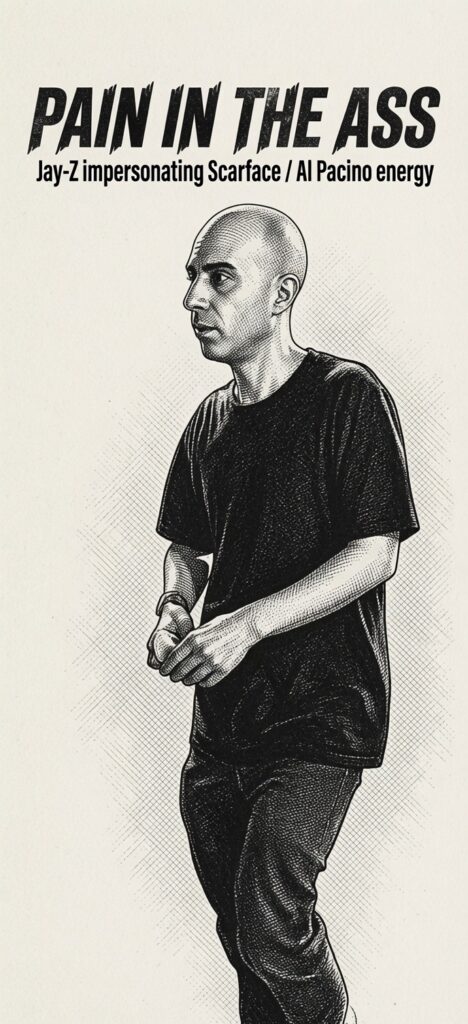
Pain In The Ass is his name. You hear his presence and his impersonation of Scarface on Reasonable Doubt. This celebration is as much about him as it is Jay-Z. His voice glues pieces of the album together with skits that slay.
Love runs deeper than the algorithms can measure
It would be a mistake to stare at the heat and miss the love, because the love is the bigger story.
People traveled to New York because these songs walked beside their lives. They came carrying who they were when Reasonable Doubt first hit the streets. They remembered where they stood when The Blueprint dropped while America shifted under everybody’s feet. They remembered the Nas-versus-Jay arguments, the mixtapes, the CDs, the burned discs, the radio premieres, the barbershop debates, the lyrics repeated so many times they hardened into personal philosophy.
Seeing Nas and Jay-Z share a stage wasn’t a guest spot. It was living proof that men can outlast ego, conflict and public warfare long enough to become something bigger than the feud.
Seeing Jaz-O mattered because he’s the mentor who existed before the empire had a name.
Seeing Eminem perform “Renegade” with Jay-Z for the first time in years mattered because that record has been argued over in hip-hop for a quarter century, and everybody in the building knew the argument by heart.
Seeing Beyoncé and Blue Ivy mattered because legacy stopped being theoretical. It was standing onstage, playing piano, as a family.
And seeing Deon Cole show up without making himself the center mattered too. Sometimes support is simply presence. No backstage performance. No microphone. No demand to be included. You come because you love the culture and you understand the moment.
Chris Rock came. Cedric the Entertainer came. Gayle King came. Athletes, actors, moguls, rising influencers.
They weren’t all chasing camera time.
Some of them were there because Jay-Z’s catalog belongs to their personal history too.
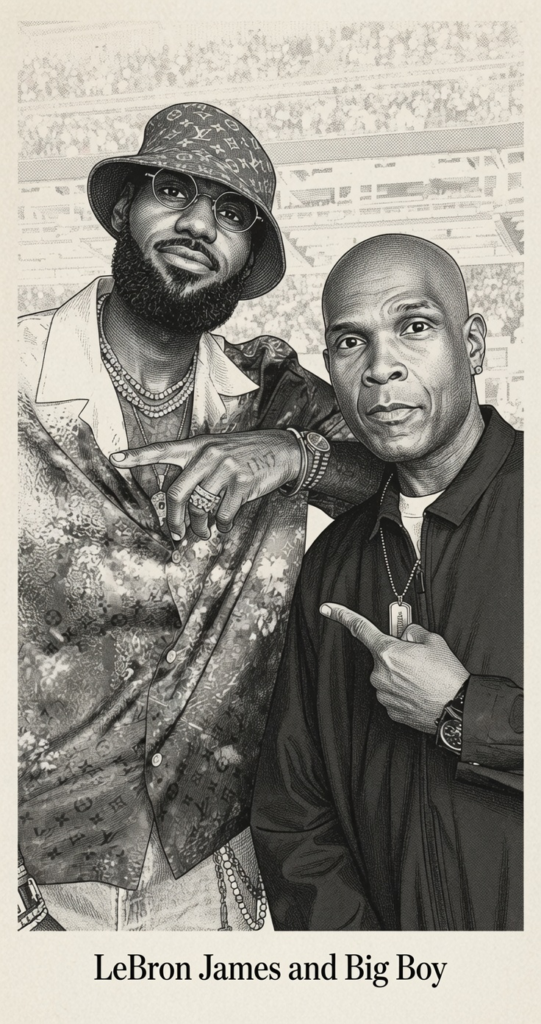
So many industries represented: Basketball, Radio, I saw Chris Rock & Cedrick The Entertainer as well.
The criminal who refused to remain a criminal
There’s another reason Jay-Z stirs up so much emotional conflict, and it goes deeper than a Target deal.
He survived the life America expected to kill or imprison him.
His music has never hidden his years in the street drug economy. He took that history and turned it into confession, warning, mythology, strategy and art. He didn’t go legitimate by pretending Marcy never existed. He carried Marcy into corporate rooms that were never built to receive it, and made those rooms adjust.
That doesn’t make every decision he’s made correct. It doesn’t erase accountability. Wealth doesn’t wash away harm, and I’m not here to pretend it does.
But it forces a bigger question, and America keeps ducking it.
Does this country actually believe in rehabilitation, or does it just enjoy saying the word?
Jay-Z escaped the permanent identity of criminality. He built legitimate businesses and stayed legitimate. He created jobs, institutions, partnerships and cultural property. He lived long enough to become a husband, a father and an elder while so many men from environments just like his were killed, incarcerated or swallowed by addiction.
Some people admire that escape.
Others will never forgive him for it.
We sit with that tension on Wednesday.
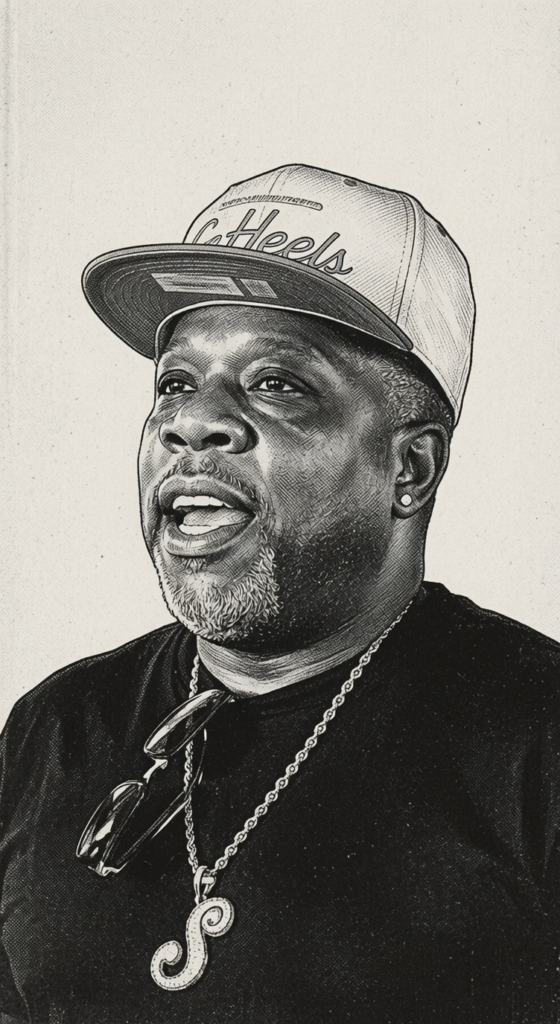
Don’t get it twisted; Michael Bivins cracked the code for New Edition and other artists. Legends in the building.
The legacy is larger than music
You can’t measure this man’s cultural weight in albums and valuations alone.
There’s the museum-scale Book of HOV exhibition at the Brooklyn Public Library. The library, not the Brooklyn Museum, a distinction worth getting right. It preserved lyrics, artifacts, recordings, photographs, the architecture of a career, and it functioned like a museum show in every way that counts.
He executive produced TIME: The Kalief Browder Story, which documented how a Black teenager spent three years at Rikers Island, much of it in solitary confinement, without ever being convicted of anything. The project won a Peabody Award. The Peabody Awards described the series as an examination of bail, poverty, race and brutal prison conditions.
He was connected to Rest in Power: The Trayvon Martin Story. He helped push The Harder They Fall onto the screen with Idris Elba, Regina King and a major Black ensemble. Roc Nation’s justice work has stepped into wrongful convictions, police violence, and families staring up at institutions a hundred times their size.
His relationship with politics is complicated. His relationship with capitalism is complicated. His relationship with activism is complicated.
Good. That’s exactly why it deserves real examination instead of worship or dismissal.
A complete legacy includes the contradictions. Anything less is a commercial.
This is only the beginning
This is Part One of a six-part Relentless Times investigation into the Jay-Z experience in 2026.
Tuesday: The Stadium Is a City. We follow the money through tickets, hotels, parking, merchandise, restaurants, labor, sponsorship, streaming and after-parties. We look hard at DJ Khaled, strategic alliances, “Riding the Tiger,” and the spillage a concentrated stadium event creates.
Wednesday: Love Versus Heat. Principled criticism versus professional hatred. Target. The NFL. Colin Kaepernick. Criminality, rehabilitation, and why some people cannot allow Jay-Z to stay redeemed.
Thursday: The Work Beyond the Mic. Prison reform. Kalief Browder. Trayvon Martin. Film. Community investment. Political influence. Whether the public is seeing the complete record or a cropped photo.
Friday: The Second Stage. A deeper roster of the performers, celebrities, athletes, executives, DJs and influencers inside Yankee Stadium, and what their presence says about power, lineage and cultural reach.
Saturday: The Alchemist and the Connectors. The bonus article. This one is more personal to me than anyone reading this currently understands. I’ll tell you about Fort Dix. Emory Jones. A.B. Butler. Chris Lighty. Violator. 50 Cent. Thirty novels written inside federal prison. An unofficial connection to the Roc ecosystem that existed behind barbed wire before anyone knew my name.
That story changes everything.
Jay-Z in 2026 is not flawless. He’s not beyond criticism, and he’s not obligated to satisfy every political expectation stacked on a successful Black man’s shoulders.
But he can’t be shrunk down to a Target deal, an NFL partnership, a freestyle, a billionaire label, or three sold-out nights in the Bronx either.
He’s a cultural system. Music runs through it. Money runs through it. Relationships, criticism and opportunity run through it. And sometimes those resources travel farther than the man at the center will ever know.
The concert ended.
The fireworks faded.
The bigger story is just getting started.
Relentless Aaron