Yesterday a critic said the seat at the table only serves the table.
Today we open the books. The prison work, the films, the library, the politics, and the honest verdict on what one man’s escape actually bought for the people still inside.
By Relentless Aaron
Part Four of a Six-Part Relentless Times Investigation
There’s a category of work that never trends.
No stadium lights. No surprise guests. No drone footage. It happens in courtrooms and legislative sessions and documentary edit bays, and it moves slower than any album cycle, and the internet has no idea how to argue about it because most of the internet has never heard of it.
That’s the work we audit today.
Yesterday I gave the structural critique its full weight, and I meant it. The NFL’s ownership numbers are what they are. The exception-to-the-rule machine is real. And the critic’s conclusion, that Jay-Z’s seat at the table serves consumption rather than collective empowerment, is a theory that deserves to be tested against evidence rather than shouted at.
So here’s the evidence. Judge for yourself. That’s not a figure of speech. I’m going to lay the record out and then tell you honestly where it’s strong and where it’s thin, because a complete legacy includes the contradictions, and worship is just dismissal wearing cologne.
The boy at Rikers
Start with the heaviest file.
But let me interject here, maybe digress, but wtf…
I negotiated a book deal and film options with Kalief Browder and his attorney WAY before Jay-Z and Roc Nation came into the picture. We were in the early throes of it all. Contracts were signed. I went up to NYC for our first meeting, long after Paul Prestia, Kalief’s attorney, told me “YOU’RE THE GUY!” and our finalization of paperwork. Yes, I paid an attorney to help usher me through the interaction, and from there we were good.
The meeting went well. Documents signed, I was invested. We all know Kalief’s story, but my angle was a plan to not only write the story but to mentor him. Phone calls and meetings didn’t close the gap. Kalief was going through local shit. Neighbors and family were closing in. He was popular, but couldn’t escape the confines of those hood-pressures. I felt the tension, but I honestly didn’t have the resources to pull him up out of the hysteria. I was planted in Conyers, Georgia, dealing with my own shit. And Kalief was carrying more weight than any of us fully measured. The back story…
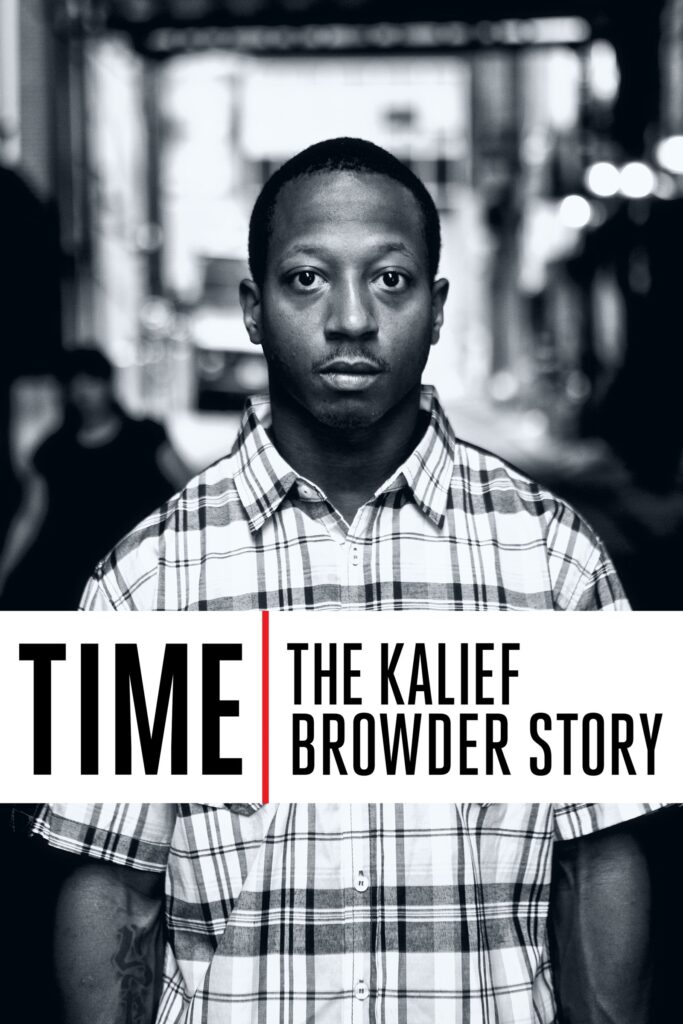
Kalief Browder was sixteen years old when he was accused of stealing a backpack. He spent three years at Rikers Island without ever being convicted of anything, roughly two of those years in solitary confinement, because his family couldn’t make bail and the system couldn’t be bothered to try him. He came home broken. In 2015, he took his own life. At that point, I figured my whole project was out the door. But look who came lurking…
I’m super-certain that Emory Jones, Jay’s right hand man, ushered this deal and negotiated with whoever they had to pay to close in on the story. It was basically up for grabs. That’s my read, and Saturday I’ll show you why my read on that world carries weight. Eventually, Jay-Z executive produced TIME: The Kalief Browder Story, the documentary series that put that name into millions of households that would never have learned it otherwise. The project won a Peabody Award. The Peabody Awards described it as an examination of bail, poverty, race and brutal prison conditions.
Am I upset about losing the project to Roc Nation? Nah. I’m good. I’m more happy that the story was told, and that it was told correctly. Aside from that, as much as I was on tap for the writing, I wasn’t on tap for the business muscle. But, I digress.
Understand what that documentary is, in the terms of yesterday’s critique. It is not a seat at anyone’s table. It is a spotlight aimed at the table nobody wanted lit: cash bail, solitary confinement of minors, the machinery that warehouses poor Black teenagers before any verdict exists. In the years after that series aired, bail reform went from an activist niche to a mainstream legislative fight. Nobody can credit one documentary for a national shift. But nobody honest can pretend the amplification didn’t matter.
He followed it with Rest in Power: The Trayvon Martin Story, doing the same thing for the case that birthed a movement: keeping the record human when the news cycle had already moved on.
This is a pattern, not a one-off. He helped push The Harder They Fall to the screen, an all-out Western built on the real Black cowboys and outlaws that Hollywood spent a century erasing, with Idris Elba and Regina King leading a cast that would have been unthinkable in that genre a generation earlier. History reclaimed as entertainment. Entertainment as correction.
The justice file
Then there’s the work with no camera crew at all.
Roc Nation’s justice efforts have stepped into wrongful conviction cases, police violence cases, and fights where a family with nothing stares up at an institution a hundred times its size. Legal muscle, publicity muscle, and money, deployed for people whose names you mostly don’t know, which is rather the point. A machine that only defended famous people would be marketing. This isn’t that.
And there’s the Reform Alliance, the organization Jay co-founded with Meek Mill and a table of billionaires after Meek’s probation ordeal exposed how supervision itself became a trap: millions of Americans cycling back into cells not for new crimes but for technical violations, a missed meeting, a crossed state line. Reform’s stated target is changing probation and parole laws state by state. That is the least glamorous cause in the entire criminal justice conversation. There is no anthem in it. There is no merch drop. It’s statutes and lobbying and unglamorous arithmetic about who goes back to prison for what.
Notice something about all of it. The through-line is the same wound: a system that decides early who is disposable. The teenager at Rikers. The man on eternal probation. The wrongfully convicted. Jay-Z’s philanthropy is not scattered. It’s autobiographical. Every cause traces back to a fate that was statistically supposed to be his.
The library card
Now the civic layer, which looks softer but might be the deepest play of all.
The Book of HOV exhibition filled the Brooklyn Public Library, the library, not the Brooklyn Museum, a distinction this series has corrected before, with lyrics, artifacts, recordings and photographs: the full architecture of a career, admission free, in the borough that made him. And when the Jay-Z 30 campaign rolled out this summer, the library came back with limited edition library cards.
Think about what a library card is. It’s the one piece of institutional membership in America that costs nothing, judges nobody, and opens everything. Putting Jay’s iconography on it isn’t merch. It’s a message aimed at a kid in Marcy right now: this building is yours, and the proof is that somebody from your block is on the card.
You want to talk about doors versus decorations? A stadium ticket cost hundreds. The library card is free. Both carry the same face this summer. That tension is the whole legacy in one image, and I’d argue the card answers it.
The political ledger
His relationship with politics is complicated, and I won’t pretend otherwise.
The high-water mark is historical fact: Obama tapped Jay-Z as a validator in his first run for the White House, before winning was assumed. A candidate needing to be believed in rooms that didn’t trust politicians borrowed credibility from a man those rooms did trust. That is political capital of a kind no consultant can manufacture.
Since then, the ledger gets messier. The NFL partnership, launched in Kaepernick’s shadow, remains the single most contested line item, and yesterday’s article gave that argument its full day in court. The freestyle’s challenge to selective boycotts reads to some as truth-telling and to others as a billionaire scolding the boycott class. The dinner-with-Jay-Z discourse, where critics tell their followers to keep their money because a seat near him buys nothing, is the newest entry in an old argument about whether proximity to Black wealth ever trickles anywhere.
Here’s my honest accounting. The structural critic from yesterday claims the table only serves the table. The record above says that’s too simple: the Browder series, Reform’s statute fights and the justice cases are documented instances of access converted into pressure on the system itself. But the critic isn’t wholly wrong either, because the conversion rate is the real question. A billionaire’s giving, however real, will always be a fraction of a billionaire’s getting. Both books are open. Both facts are true at once. Anyone who tells you only one of them is true is selling a cleaner story than reality stocks.
The exception and the door
So let’s answer yesterday’s hardest charge directly: that power showcases Jay-Z as the exception to the rule, one Marcy-to-billionaire miracle dangled in front of a generation while the actual doors stay shut, and that he participates in it.
The first half of that charge is true, and it isn’t about Jay. America has always loved a singular Black success story precisely because singular is manageable. One exception flatters the system that produced ten million exclusions.
But the second half, that he guards the door, runs into the receipts. Rihanna came through his Def Jam presidency. A generation of Roc Nation artists, athletes and executives came through his infrastructure. Memphis Bleek, on television this week, described a thirty-year education: how to carry yourself, how to command a room, if you’re not fifteen minutes early you’re thirty minutes late. The critic says nobody becomes the next him except his children. The roster of people who ate off his table for three decades says the door has hinges.
Does that absolve the compromises? No. Does the exception-to-the-rule machine still operate around him, with or without his consent? Yes. Can a man be both a beneficiary of that machine and a builder of real doors? That’s the adult answer, and adults can hold it.
What the record can’t show
One more thing belongs in this audit, and it came from the most striking commentary I collected all week.
A voice reflecting on Reasonable Doubt at 30 said the culture knows how to celebrate people who die young. Murals. T-shirts. Word to my mans and them. What it forgot is how to celebrate the ones who made it through. Surviving has its own kind of wisdom, he said. You can’t Google it, can’t stream it, can’t download it. You have to sit with it.
That’s the asset no ledger captures. Beyond the documentaries and the statutes and the library cards, there is the brute demonstration value of a 56-year-old man from the Marcy Houses standing healthy, free, wealthy, married, raising his children, performing his own thirty-year-old poems to a full stadium. For men from environments engineered to produce funerals and sentences, that image is infrastructure. It is proof of a life stage most were never shown.
We don’t ask who’s next often enough, that voice said. We ask who’s still here even less.
He’s still here. That’s not the whole record.
But don’t let anybody tell you it isn’t on the record.
Tomorrow: the building itself testifies
We’ve followed the money. We’ve weighed the heat. We’ve audited the work.
Tomorrow the stadium itself takes the stand: the complete night-by-night roster, Beyoncé opening the vault with Can’t Knock the Hustle, Slick Rick and the Neptunes catalog, Eminem in full uniform for Renegade, Rihanna’s first performance since 2024, Pharrell’s war cry, and what every face in that building, onstage and off, reveals about power, lineage and who the culture calls when it wants to witness itself.
The verdict on the work is yours to render.
Just render it on the full file.
Friday: The Second Stage. Part Five of the Relentless Times investigation.