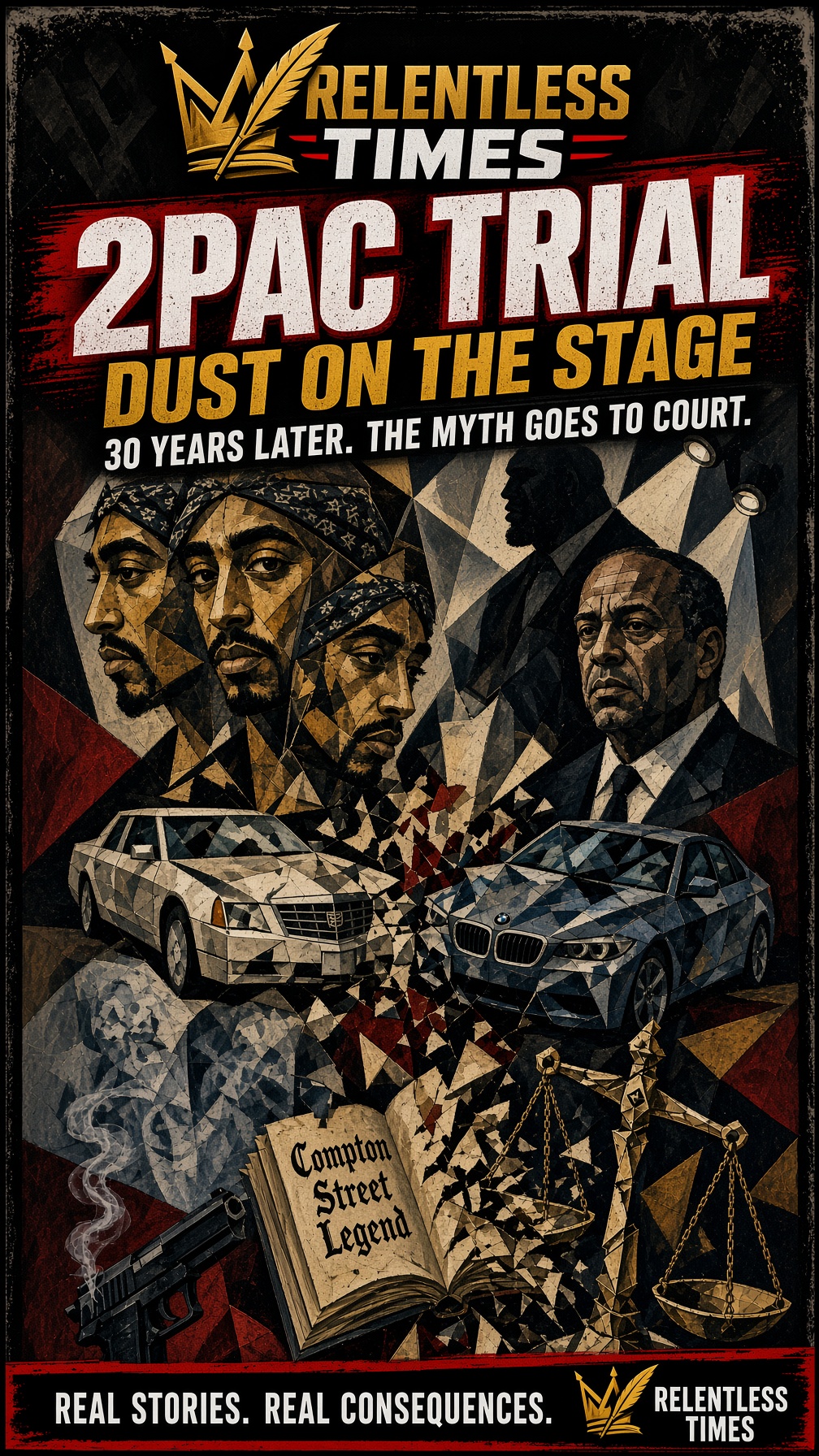
The OGs Get One More Shot at the Global Stage (Part 1 of 3)
There’s a man in a suit in a Las Vegas courtroom right now, and the suit doesn’t fit him the way a street corner used to. Sixty-three years old. Duane Keith Davis. The world knows him as Keffe D. Jury selection wrapped a few days ago: ten women, six men, four alternates, a mailman and a self-improvement coach among them, ordinary people pulled off the street to decide something the streets themselves couldn’t settle for thirty years. Opening statements landed this week. Witnesses are already on the stand. By the time this trial closes out, it’ll have run close to a month.
He’s not charged with pulling a trigger. He’s charged with something colder than that: murder with a deadly weapon, tied to a gang enhancement, for allegedly ordering the hit and handing over the gun. Prosecutors say he ran it like a commander runs an operation: a white Cadillac pulls up next to Suge Knight’s BMW on a Las Vegas side street, September 7, 1996, and the night ends with Tupac Shakur dying in a hospital bed a week later at twenty-five years old.
You feel where I’m going with this, right? Because here’s what’s sitting underneath the legal language, underneath the exhibits and the expert witnesses: almost everybody who could speak to that night with real firsthand weight is gone. Orlando Anderson, the nephew Davis says he was avenging after Tupac’s entourage put hands on him inside the MGM, is dead. The other men prosecutors say rode in that Cadillac are dead too. The detectives who worked the case in ’96, mostly retired or gone. Suge Knight is still breathing, but he’s twenty-eight years into a manslaughter sentence of his own, about as far from a witness stand as a man can get while still being alive.
The building blocks of that whole world have gone the way of everything that ages out of relevance. The clubs from that circuit are shuttered or repackaged into something with a different name and a different clientele. The cars are collector pieces now, the kind you see roped off at an auction instead of idling outside a casino. The phones people used to page each other on wouldn’t power on if you found one in a drawer. And the language (“we posted up,” “that’s how we roll,” “the homies”) gets spoken into a Clark County courtroom microphone now like testimony, like it still carries the same charge it carried when it was just how people talked. It doesn’t. It sounds like a costume. Everybody in that room can feel it, even if nobody says it out loud.
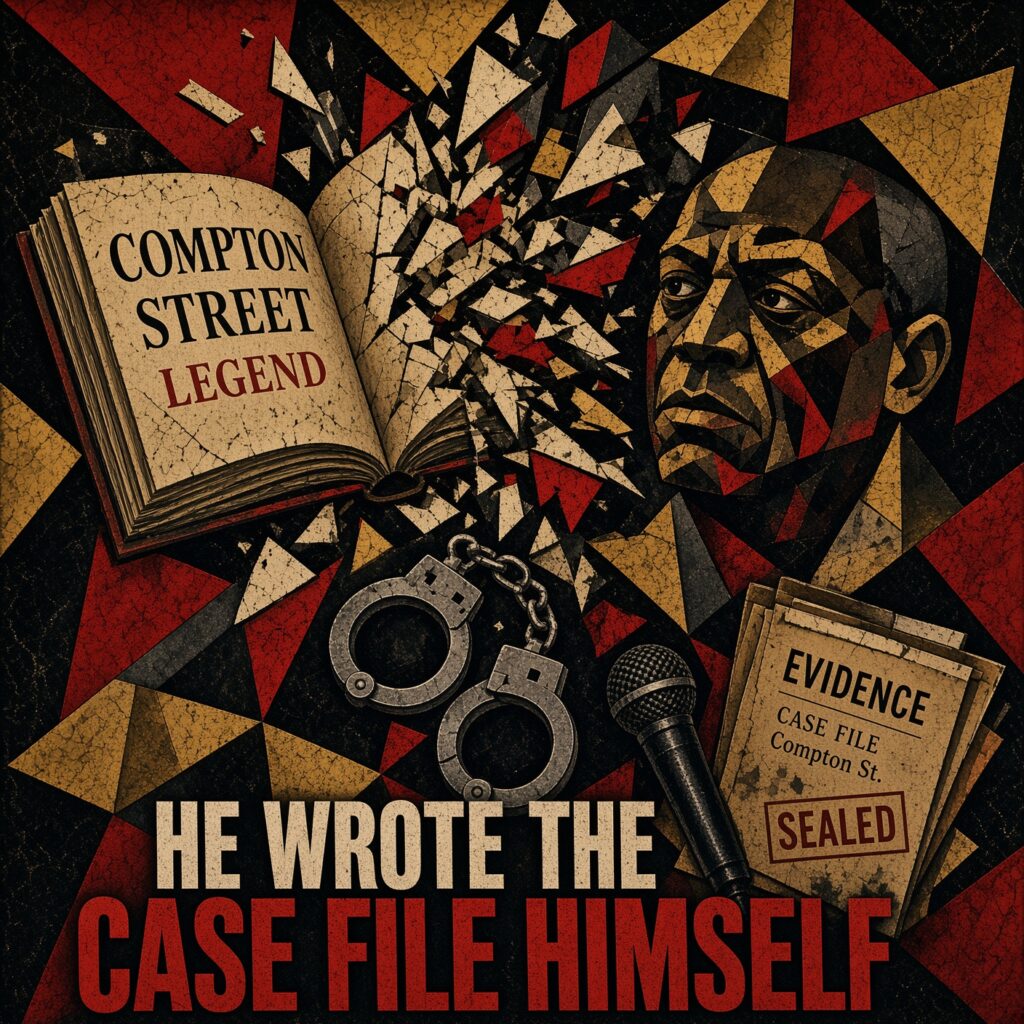
So here’s the question I can’t shake, and I don’t think I’m alone in asking it: is this what real accountability looks like thirty years late, or is this what happens when a case finally has a defendant who’s still alive to sell tickets? Because let’s be honest about something: the man on trial mostly landed there through his own mouth. He wrote a book, Compton Street Legend, that placed him at the center of the story. He sat for interviews, took the money, built content around a night that killed a twenty-five-year-old. The prosecution said it plainly in that courtroom: without the book, without the interviews, he’s probably not sitting at that defense table today. His own lawyers argue the opposite angle now, that it was never confession, just a man selling a version of himself for a check, no gun, no vehicle, no living witness from that car to back up the order they say he gave.
Murder doesn’t come with an expiration date. I know that. The law is built that way for a reason, and there’s something right about a system that doesn’t just let a case go cold and stay cold forever. But cases like this make you sit with a harder question than guilt or innocence: they make you ask why now, specifically. Tupac isn’t just a name from 1996. He’s one of the biggest cultural figures the planet has produced, full stop. Connect him to Suge, to Biggie, to Tyson, to the entire East Coast/West Coast fire that never fully went out, and you don’t just have a murder case anymore. You have a stage. Cameras rolling. Livestreams running. Every outlet with a courtroom feed treating it like the return of a series everybody thought got cancelled.
I keep thinking about DJ Vlad. Not as an insult. As a comparison that won’t leave me alone. The old beefs getting pulled back out. The survivor still talking, still explaining himself, still working an audience. The reveal dangled out for the next episode. Somebody in a legal office, at some point, had to look at this file and understand exactly what they were sitting on: the biggest true-crime story hip-hop has ever produced, with a living body attached to it. I’m not saying that thought makes the case fake. I’m saying it would be dishonest to pretend that thought never crossed anybody’s mind.
So which is it. A real reckoning built on real evidence, chasing a man who genuinely gave the order and supplied the weapon. Or a system that spent decades with no one to charge, until the one man who talked too much for money finally became the only name left standing under the lights, guilty of vanity, maybe, guilty of greed for a book deal, but not necessarily guilty of murder. Both of those things can be true about the same man at the same time. That’s what makes this hard. That’s what makes it worth sitting with instead of picking a side before the evidence even finishes coming in.
The clubs are gone. The cars are gone. The men who could’ve settled this with a straight answer are gone. What’s left is a courtroom speaking a dead dialect about a still-living wound, and a defendant who once wrote himself into the legend, only to find out the legend doesn’t let you walk back out clean.
That’s the setup. That’s the dust, and that’s the stage.
Part 2 goes where the real fight lives: inside the evidence they actually have, and the holes in it that thirty years hasn’t closed.
Relentless