How Jay-Z’s Greatest Business Was Never the Music
Part Six of a Six-Part Relentless Times Investigation. The Finale.
By Relentless Aaron
I told you the final article would change everything.
For five days I walked you through the money, the heat, the work, and the roster. I quoted the critics and the fans, checked the facts, and corrected the record. I wrote it the way an investigator writes, at arm’s length.
There is no arm’s length today.
Because when Jay-Z stood in that spotlight at Yankee Stadium, I wasn’t there.
Like millions of other people, I watched through YouTube clips, interviews, photographs, and news coverage. But I wasn’t watching a celebrity.
I was watching the only other proof I’ve ever needed that the thing I believed was possible.
That a man can walk into the worst chapter of his life and walk out carrying a catalog instead of a case number.
People spend a lot of time asking how Jay-Z became Jay-Z.
It’s an understandable question.
It’s also the wrong one.
The better question is this.
How does someone take the worst chapter of their life and transform it into the foundation of everything that follows?
That question has nothing to do with rap.
It applies to entrepreneurs.
Authors.
Athletes.
Inventors.
Anyone who refuses to let failure become identity.
Earlier in this series, I argued that Jay-Z’s greatest talent wasn’t writing lyrics.
It was converting experience into assets.
Marcy became Reasonable Doubt.
The hustler became a businessman.
The businessman became an institution.
Pain became intellectual property.
That isn’t luck.
That’s alchemy.
Turning something ordinary into something people believe is impossible.
As I wrote those words, I realized I’d spent most of my adult life trying to do the same thing.
My raw material simply looked different.
Not a housing project.
Federal prison.
People hear the word prison and imagine one long experience.
It isn’t.
Every institution has its own culture, its own rhythm, and its own unwritten rules.
When I first entered the federal system, I landed at Allenwood.
Allenwood was controlled, but it was also volatile. Conflict never seemed far away. You learned quickly that survival wasn’t about becoming the loudest man in the room. It was about becoming the least interesting.
All along, my approach was a safety device.
I was a hummingbird sitting on a vulture's shoulder.
I watched everything.
I participated in almost nothing. I wanted no parts of the war stories, the exaggerated stories of wealth and thrills.
While other men measured time by court dates, appeals, arguments, and prison politics, I measured mine by pages.
Writing became my escape long before it became my profession.
About six months into my sentence, the Bureau of Prisons acknowledged they had made a mistake.
I had been misclassified.
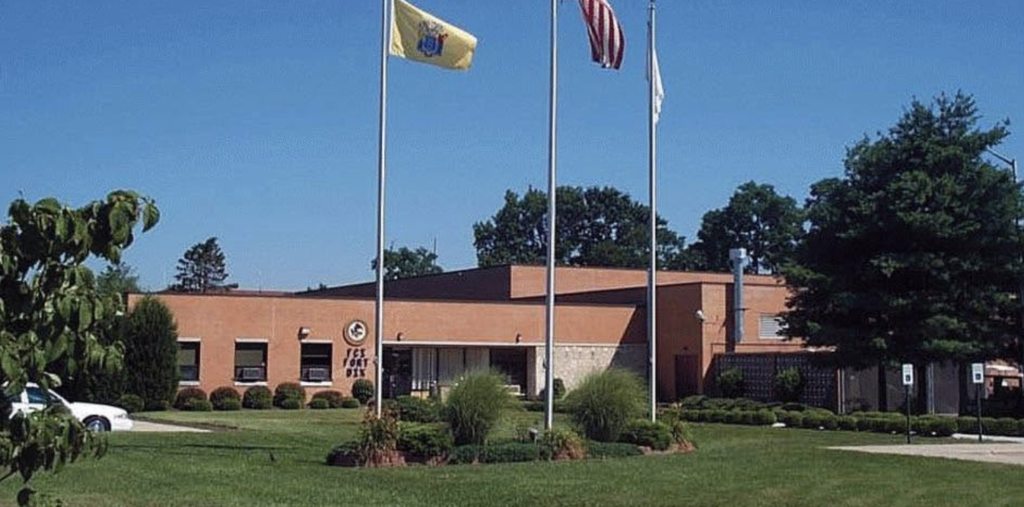
I was transferred to Fort Dix.
Let me take you there.
The alchemist
Federal prison strips a man down to time. That’s the whole punishment when you get past the fences and the counts and the noise: they take your years and dare you to watch them burn.
I decided mine wouldn’t burn.
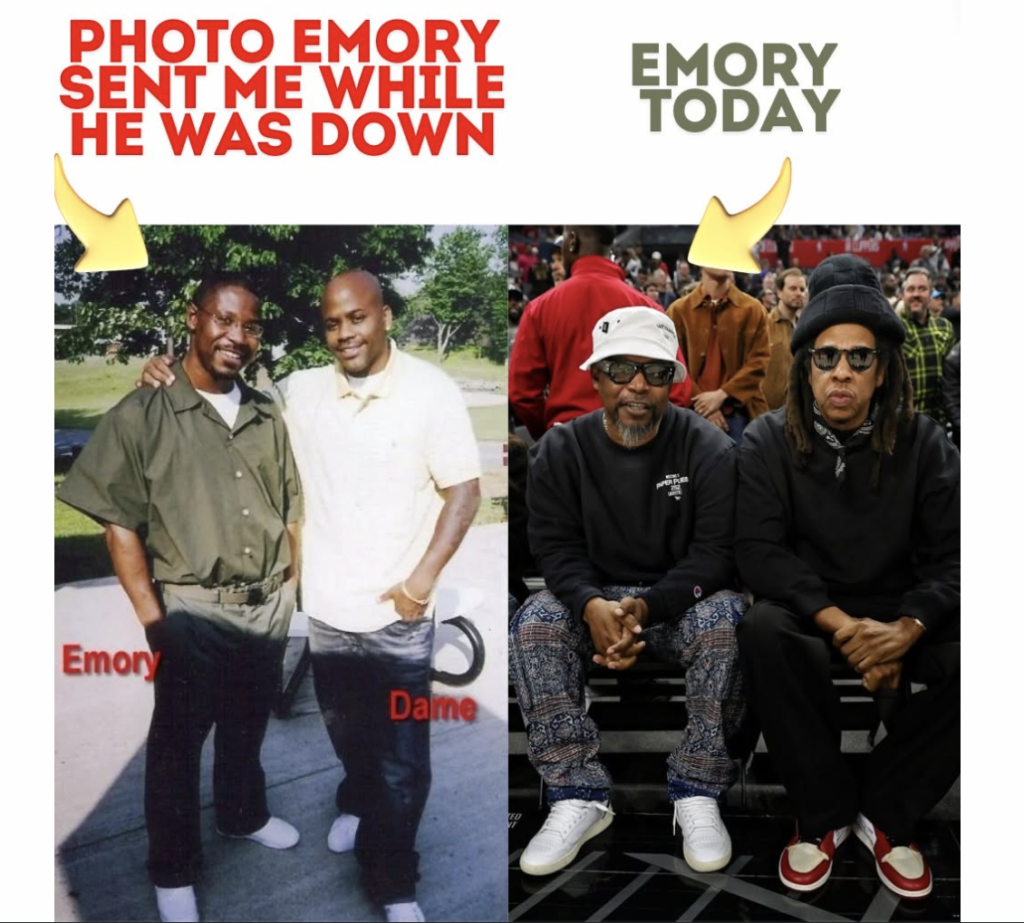
Fort Dix reminded me of another life.
The first thing that struck me wasn’t the fences.
It was the layout.
The buildings.
The sidewalks.
The order.
For reasons I couldn’t immediately explain, Fort Dix reminded me of Parris Island.
Years earlier, the Marine Corps had taught me discipline through repetition. Wake up. Execute. Improve. Repeat.
Prison gave me another opportunity to use that same discipline.
Only this time, my weapon wasn’t an M16.
It was a legal pad.
I built a routine.
Read.
Write.
Exercise.
Write.
Play softball.
Write.
Visit with family.
Write.
Everything eventually pointed back toward creating.
I stopped counting days.
I started counting manuscripts.
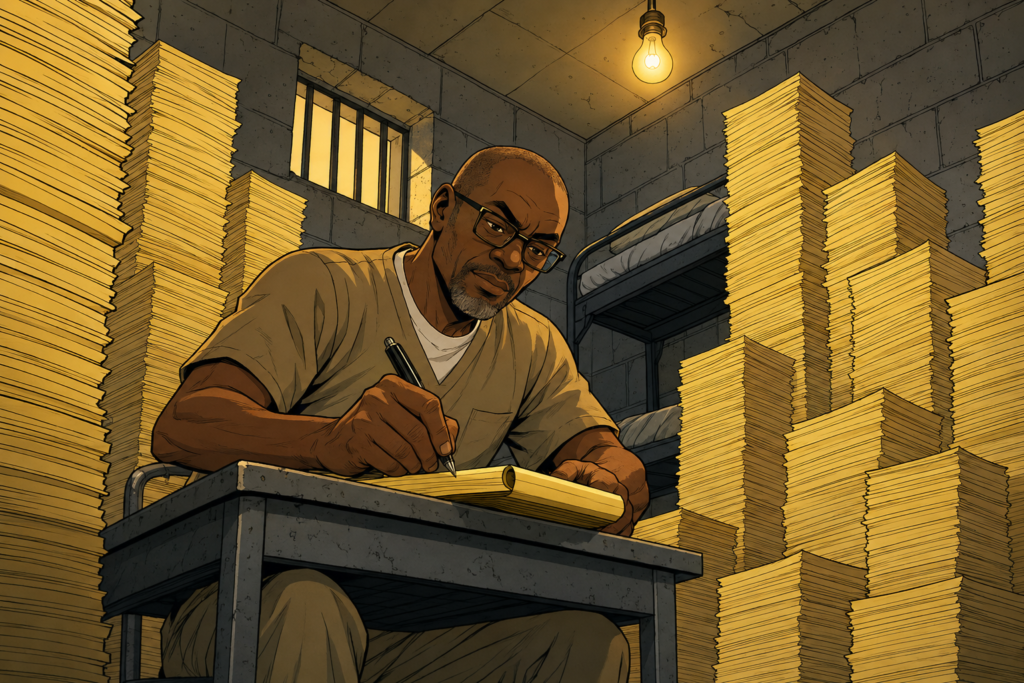
Then someone told me Michael Franzese wanted to see me.
Not suggested.
Wanted.
Another convict escorted me up the hill to Michael Franzese’s housing unit.
If you know anything about organized crime, you know the name.
Michael Franzese was one of the most recognizable captains in the Colombo crime family. His story has been told in documentaries, books, television interviews, and lectures around the world.
As I walked toward his unit, my mind started racing.
My father had struggled with gambling years earlier.
I didn’t know whether some old debt, old relationship, or old misunderstanding had somehow followed me into federal prison.
By the time I reached his housing unit, I had imagined every possible scenario.
Instead, Michael greeted me warmly.
He smiled. He thought he was calling for my father, since Dad and I have the same name.
Then he said something I’ll never forget.
“Your father was a stand-up guy.”
That was the entire reason he wanted to meet me.
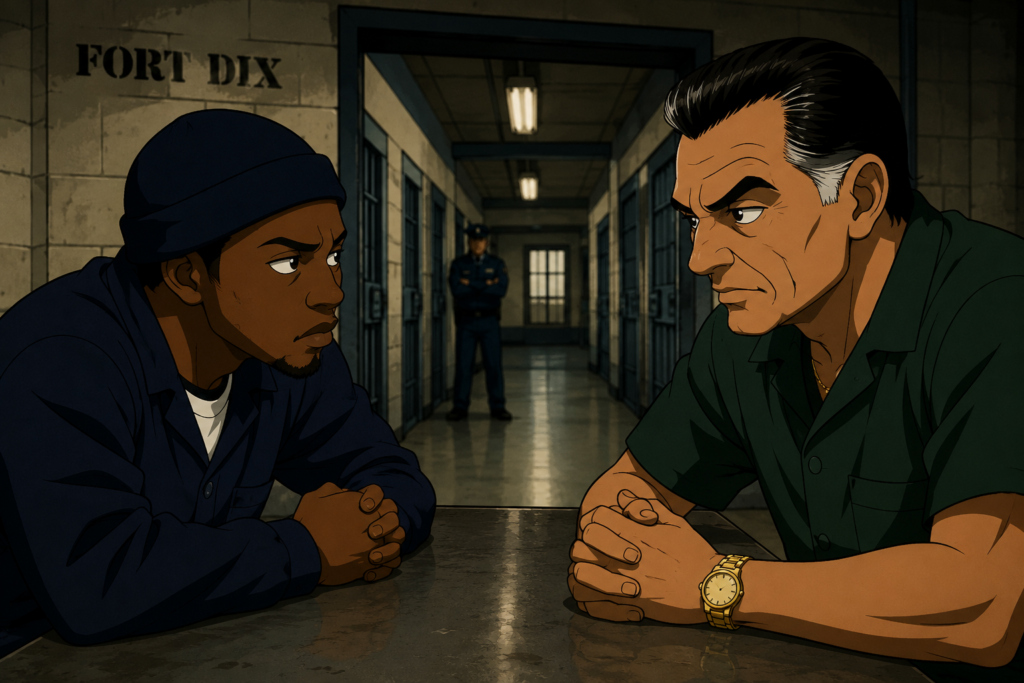
No threats.
No intimidation.
No requests.
Just respect.
As I prepared to leave, he offered one more sentence.
“If you ever have any problems in here, let me know.”
The meeting lasted only a few minutes.
I’ve carried it with me for decades.
Power fades.
Money disappears.
Influence changes hands.
Character keeps traveling long after the man is gone.
Months later, another meeting changed my future.
By then I’d settled into my routine.
Every day I wrote.
Notebook after notebook.
Story after story.
Legal pad after legal pad.
Eventually I wasn’t simply passing time.
I was building an inventory.
One afternoon, while I was writing in the study room, another inmate stopped to ask what I was working on.
His name was Emory Jones.
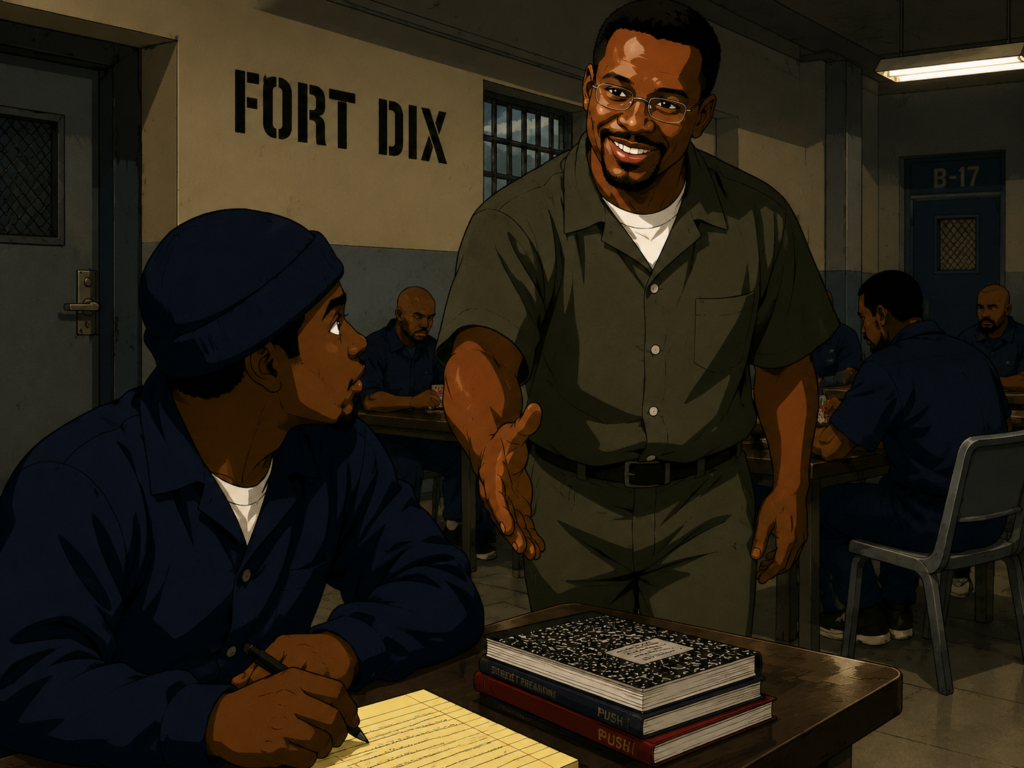
Today, the world knows Emory as Jay-Z’s longtime friend, business partner, and one of the architects behind the Roc ecosystem.
Back then, he was simply another man serving time.
We talked.
I told him I was writing novels.
Then I said something that probably sounded ridiculous inside a federal prison.
“I’m going to become a bestselling author.”
Not “I hope.”
Not “Maybe.”
“I am.”
He asked if he could read one of my manuscripts.
The novel was called Push.
I handed it to him.
Several days later, Emory came back.
Instead of immediately talking about the book, he opened his locker.
Inside was a photograph.
Jay-Z.
Damon Dash.
Biggs Burke.
He looked at me.
Then he smiled.
“You’re the Michael Jordan of this book game.”
Those words stayed with me.
From that point forward, Emory made sure I always had what I needed.
Paper.
Typewriter ribbons.
Writing supplies.
Encouragement.
He invested in my work years before anyone outside those prison walls knew my name.
When people ask me why I speak about the Roc ecosystem with confidence, this is part of the answer.
I didn’t learn about relationships by reading headlines.
I watched them operate.
The day I went home
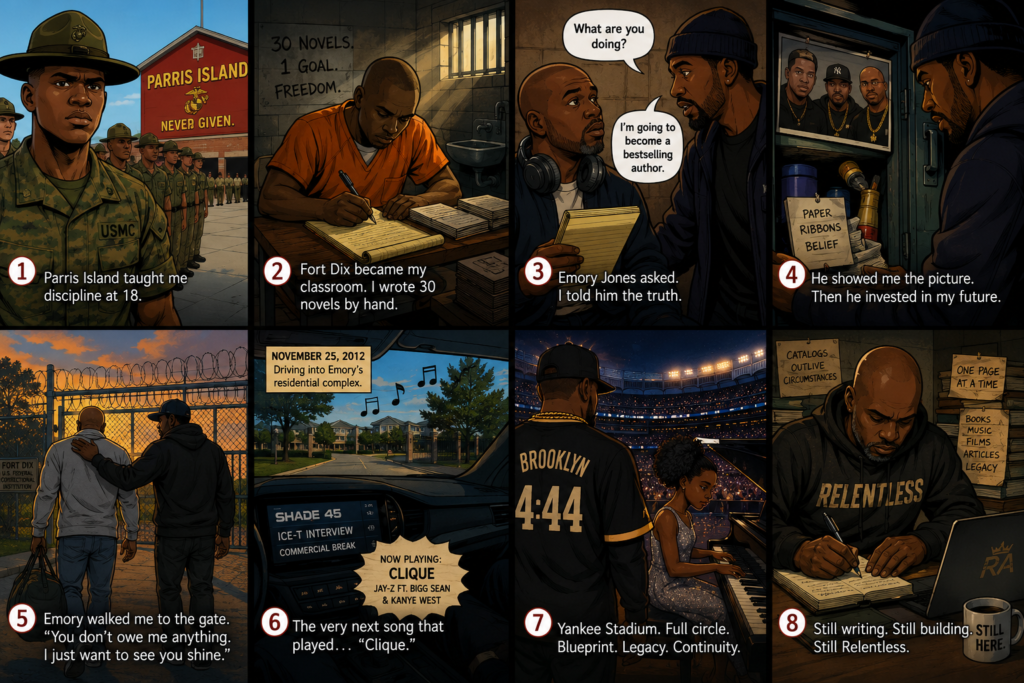
By the time my sentence ended, I had completed thirty handwritten manuscripts.
Thirty.
Most people leave prison carrying boxes of legal paperwork.
I left carrying a publishing catalog.
On the day I was released, Emory walked me all the way to the gate.
Before we said goodbye, he gave me one last piece of encouragement.
“You don’t owe me anything.”
“I just want to see you shine.”
I’ve never forgotten those words.
Years later, I became a bestselling author.
I was named Author of the Year.
I spoke before audiences across the country.
Nearly two hundred books followed. Over 6 billion media impressions.
Looking back, I realize something.
That conversation wasn’t about prison.
It was about possibility.
Years later, people ask me why I speak so confidently about the Roc ecosystem.
Because I didn’t discover it through social media.
I watched it.
I watched loyalty.
I watched relationships.
I watched people invest in one another without cameras documenting every interaction.
When I wrote earlier in this series that I’m convinced Emory helped shepherd the Kalief Browder story toward Roc Nation, I wasn’t making a random guess.
I was connecting decades of observation.
Networks have habits.
Cultures have habits.
Organizations have habits.
Once you’ve lived inside one, you begin recognizing its fingerprints.
That’s why this series kept returning to the same idea.
The music built the audience.
The relationships built the empire.
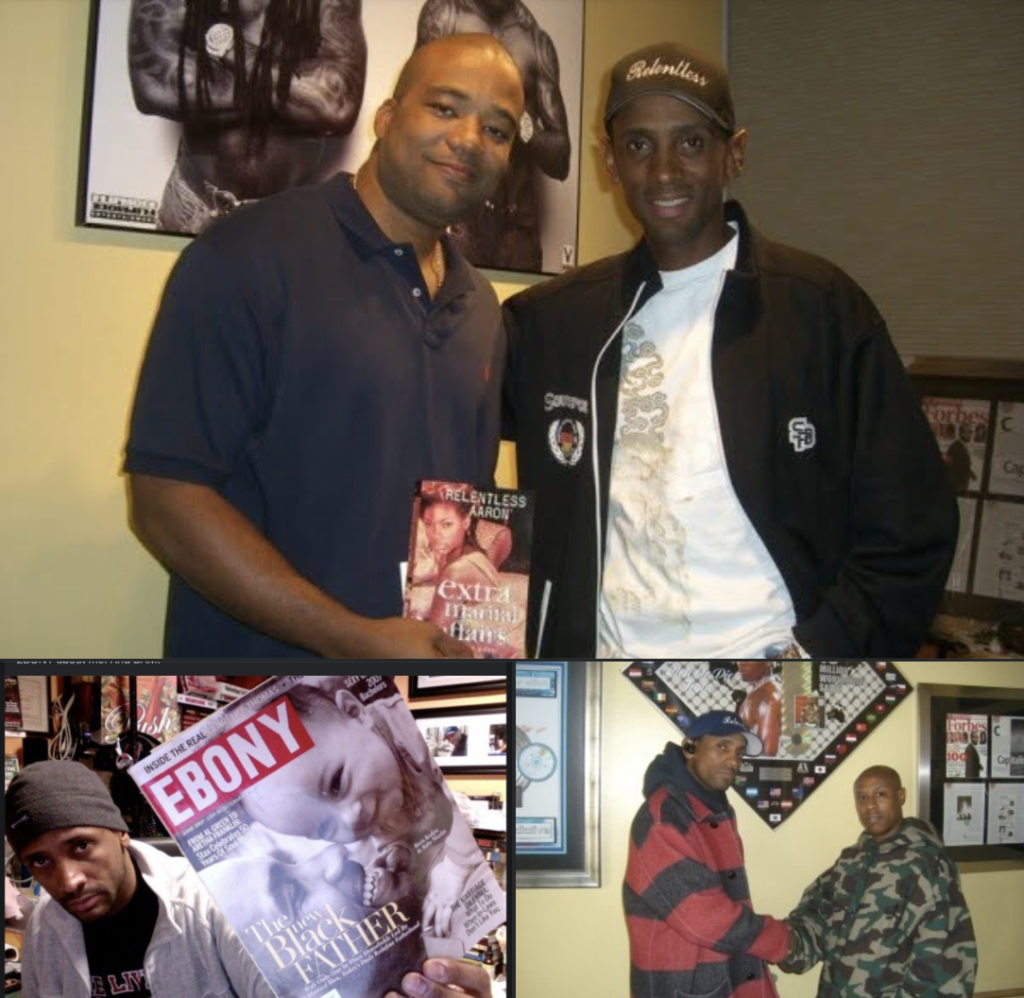
RIP Chris Lighty of Violator Entertainment. Chris took me in as the only novelist on his rooster. He had a big roster, too. 50 Cent, Busta Rhymes, Missy Elliott, Michael Blaxton, LL Cool Jay, etc. I was a fly on the wall.
That understanding also helped me make peace with another chapter of my own life.
Years ago, I had an opportunity to tell Kalief Browder’s story.
The conversations happened.
The paperwork existed.
The intention was real.
Then life intervened.
Kalief was gone.
Eventually Roc Nation helped bring his story to millions through TIME: The Kalief Browder Story.
It won a Peabody Award.
Some people assume I would resent that.
I don’t.
Never have.
The mission was always bigger than my name on a cover.
The story mattered.
The country needed to hear it.
The right machine ultimately carried it farther than I could have at the time.
Sometimes maturity means celebrating the outcome even when someone else finishes the race.
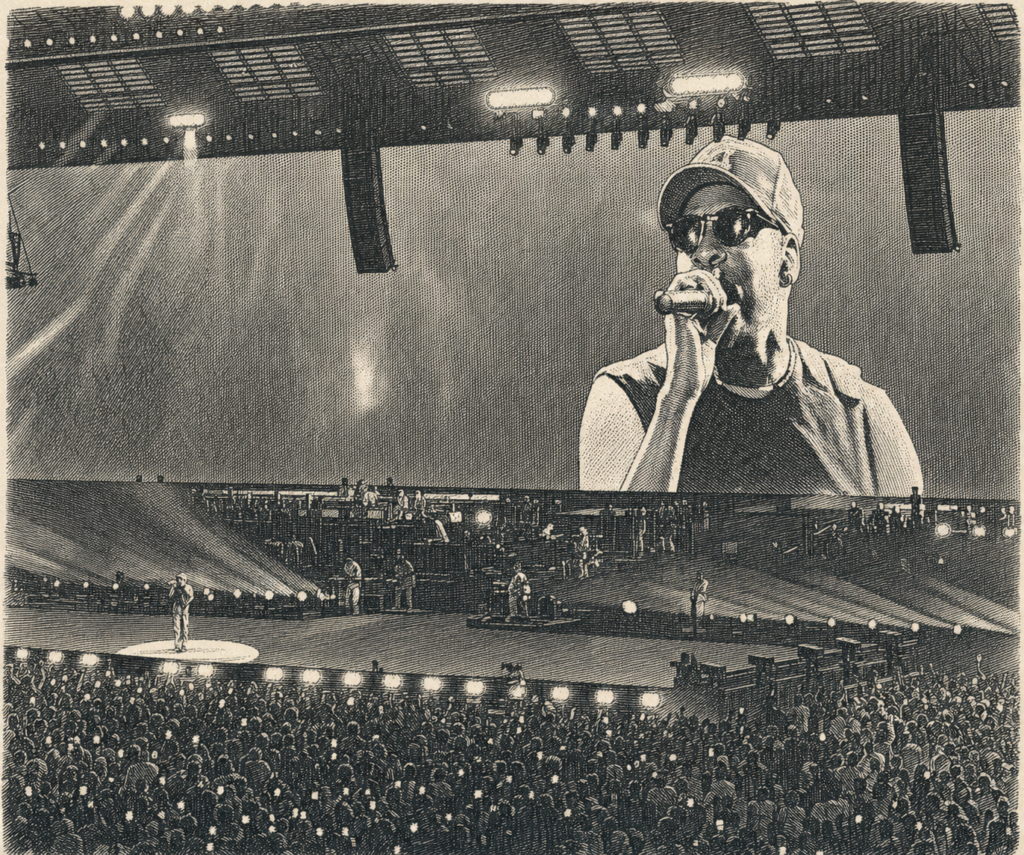
Yankee Stadium
Like millions of other people, I experienced the three-night Yankee Stadium run through YouTube clips, interviews, social media posts, photographs, and news coverage. I wasn’t sitting in the Bronx. I was sitting where most of the world was, watching from a distance. Ironically, that distance made it easier to see what many people missed. While others debated guest appearances and set lists, I was studying infrastructure. I wasn’t watching a concert. I was watching thirty years of relationships compound into a single weekend. Every person who walked onto that stage represented an investment made years earlier. Every standing ovation represented work that happened long before the lights came on. That’s what this series has really been about. Not celebrity. Infrastructure. Not fame. Relationships. Not one extraordinary weekend in July. Thirty years of disciplined, intentional construction.
One final confession.
This series was never just about Jay-Z.
It was about survivors.
People who refuse to let their worst chapter write their final one.
Some survive prison.
Some survive poverty.
Some survive addiction.
Some survive public failure.
The circumstances change.
The blueprint doesn’t.
Take what life gives you.
Build with it.
Protect your relationships.
Create more than you consume.
Leave behind something that continues working after you’re gone.
That is what I saw in Yankee Stadium.
That is what I recognized in my own life.
And that is why this investigation had to end here.
Not with a concert.
With a blueprint.
One that any of us can choose to follow.
And if nothing else happens in my life, at leaast the world will know about me, this lil chocolate womnder from Mt. Vernon, New York who had some ups and downs, who was resourceful with his time here, and who was recognized for his gifts on this Roc.