
By Relentless Aaron
D-Nice did not become important during the pandemic.
The pandemic simply forced the rest of the world to stop moving long enough to recognize how long he had already been moving us.
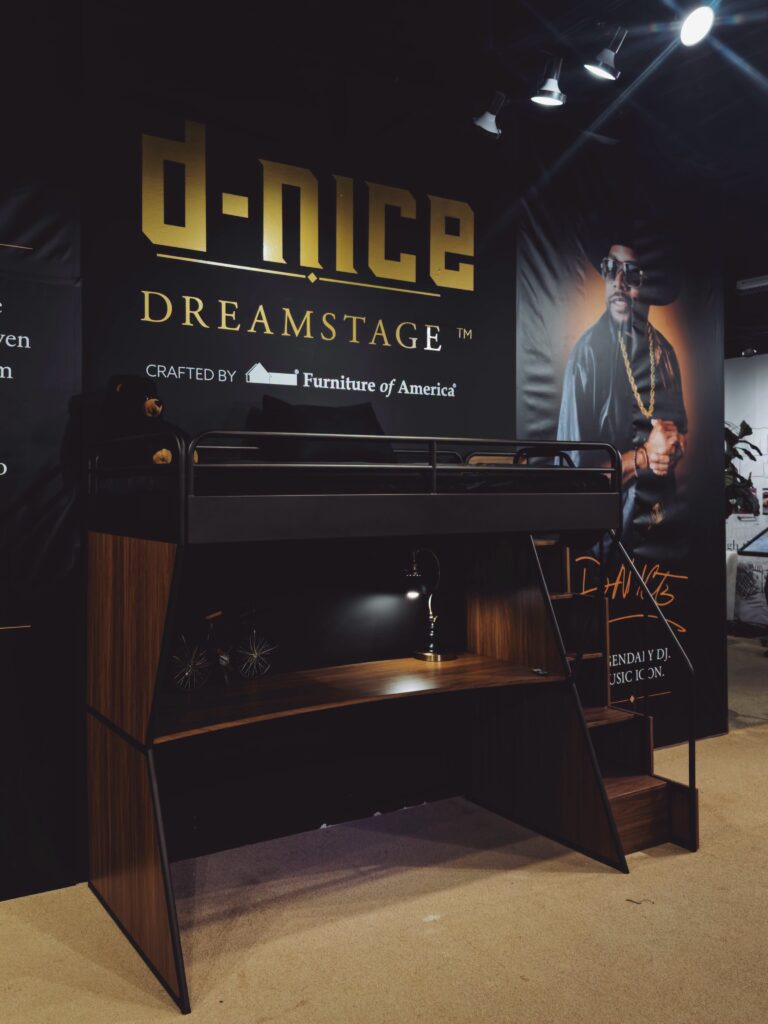
Now Derrick “D-Nice” Jones has unveiled Dreamstage, a youth loft bed created with Furniture of America. It combines a sleeping area with a creative workstation designed to give children room to study, produce music, build beats or imagine themselves behind a DJ setup.
The product is impressive. The story behind it is even greater.
“I went from not having my own bed as a kid to creating my own bed for kids,” D-Nice wrote when announcing Dreamstage at Las Vegas Market.
That sentence contains the foundation of the entire project.
This is not simply a celebrity attaching his name to furniture. D-Nice says he wanted to create a bunk bed where children could make beats, build a DJ setup and explore their creativity inside their own rooms.
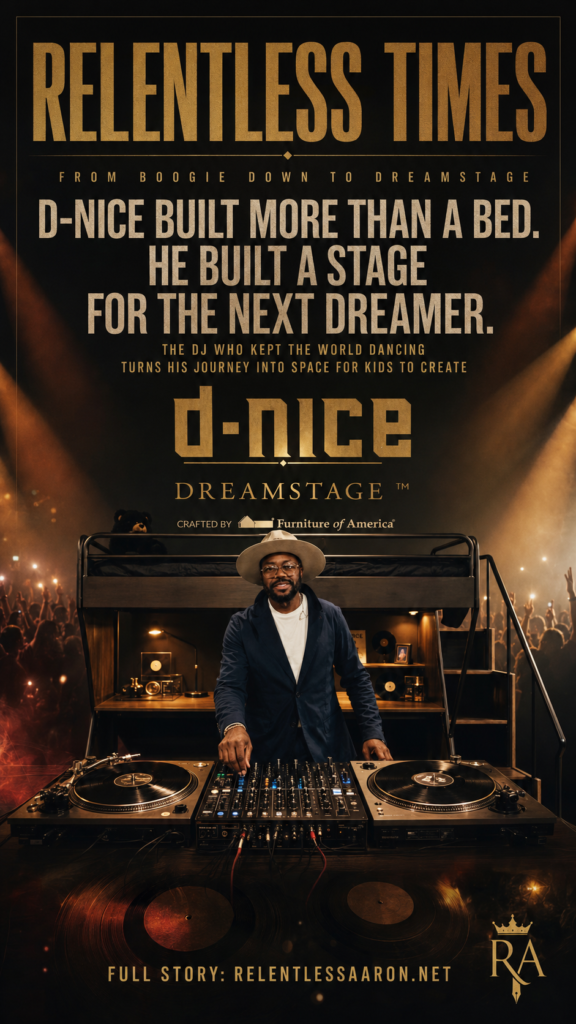
That matters because he does not appear to chase every available brand deal. His choices have generally felt deliberate, personal and connected to how he actually lives.
I know something about the quality attached to his name. I got my hands on one of his sweatsuits and nearly wore it to pieces. The material, the feel and the fit made it one of the most comfortable and complete sweatsuits I have owned. It did not feel like disposable celebrity merchandise. It felt considered.
Dreamstage feels considered, too.
But to understand why this bed carries so much meaning, we must go back long before Club Quarantine.
Before the livestream, there was Boogie Down
D-Nice entered hip-hop history as a teenager.
He became part of Boogie Down Productions alongside KRS-One and the late DJ Scott La Rock, emerging from the Bronx during one of the most formative periods in hip-hop. Known in those early years as the “Human TR-808,” D-Nice was not merely standing around greatness. He was contributing to it.
His production work included the historic Stop the Violence Movement recording “Self Destruction,” which assembled some of hip-hop’s most important voices around a message against violence.
He later stepped forward as a solo artist. His debut album, Call Me D-Nice, arrived in 1990, followed by To tha Rescue in 1991. The title track “Call Me D-Nice” remains embedded in hip-hop memory.
He had already made history before many people now praising him had heard his first DJ set.
The Violator connection
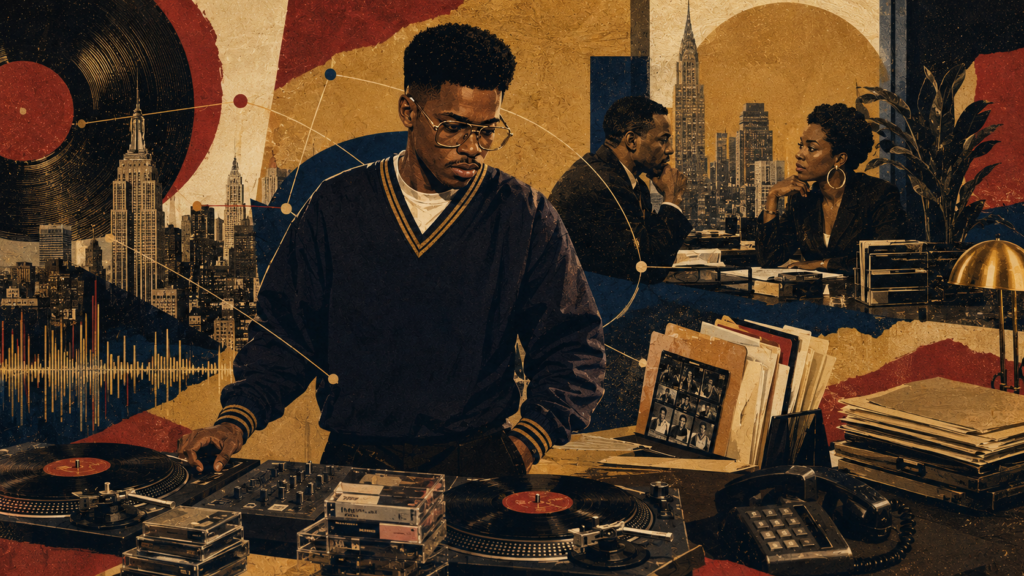
D-Nice and I also occupy a particular stretch of hip-hop history through Violator.
Violator Management was built by the late Chris Lighty and Mona Scott-Young. Chris became one of hip-hop’s most consequential management and branding minds. Mona later expanded her influence into television and became the force behind the Love & Hip Hop franchise. Essence documented how their work at Violator helped shape the careers and brands of major artists including LL Cool J, Missy Elliott and 50 Cent.
D-Nice was part of that Violator universe. I was the only author inside it.
That gives me a personal appreciation for what this moment represents. We were not doing the same work, but we stood inside the same cultural consortium, surrounded by people who understood that hip-hop could become more than records. It could become publishing, television, fashion, marketing, technology and global business.
Dreamstage is another extension of that philosophy.
It is hip-hop turning lived experience into design.
When the music changed, he changed with it
The recording business does not always provide a clean road forward. Many artists disappear when the industry stops calling their names.
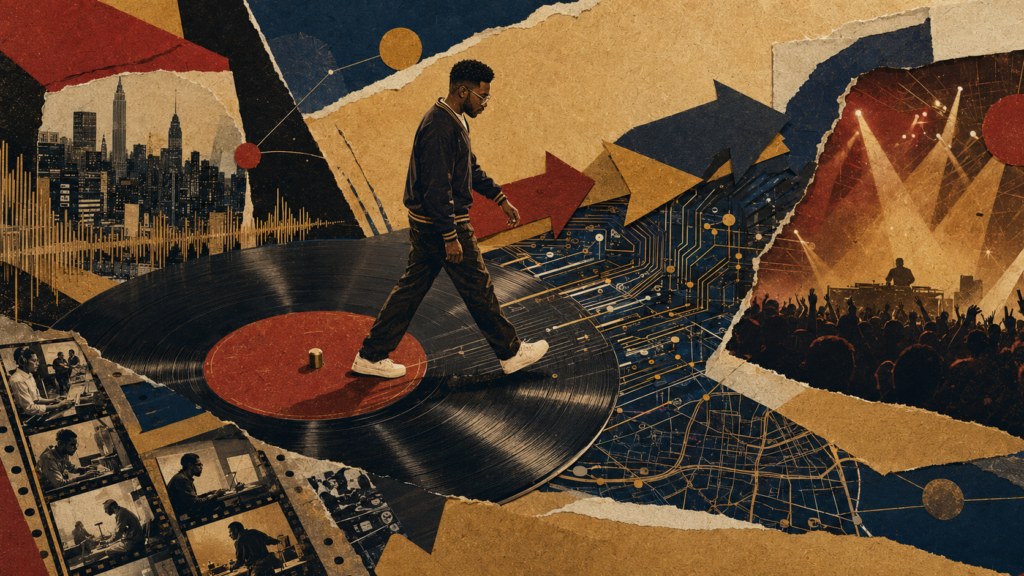
D-Nice expanded his name.
He developed digital skills and moved into web design and creative services. He became an accomplished photographer, shooting album artwork and images for artists including Carl Thomas, Pharoahe Monch, Talib Kweli and Kenny Lattimore. Pollstar chronicled his transition into photography and his continued development as a DJ.
The important lesson is not that he changed careers.
It is that every career still involved composition.
A producer arranges sound. A photographer arranges light. A DJ arranges emotion. A designer arranges space.
D-Nice kept arranging.
The night the whole world entered his apartment
In March 2020, COVID-19 closed venues, separated families and placed millions of people inside their homes with fear, uncertainty and no clear ending in sight.
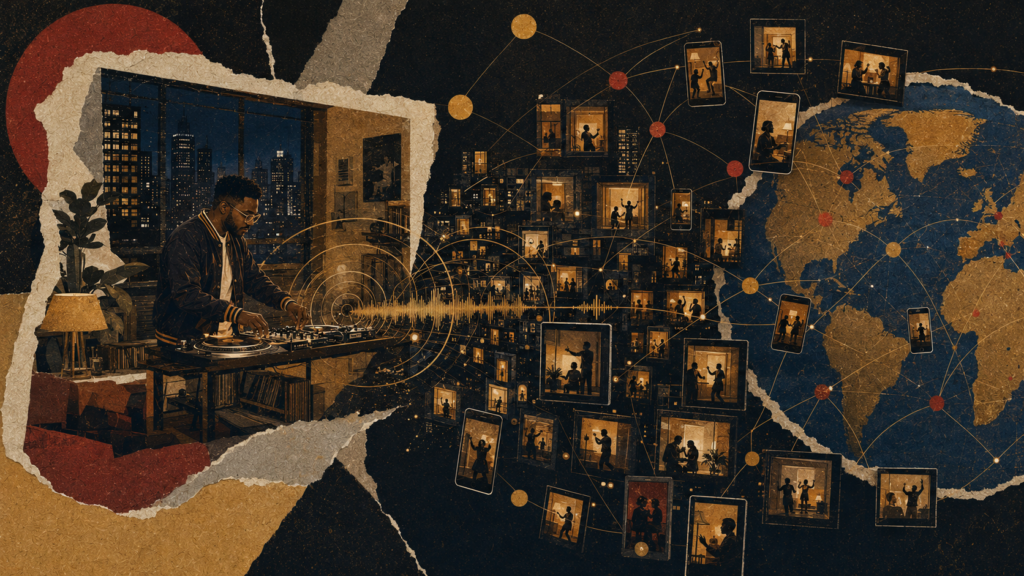
D-Nice turned on Instagram Live.
What began with a small audience grew into Club Quarantine, a virtual gathering that crossed geography, celebrity, politics, age and class. Michelle Obama, Oprah Winfrey, Rihanna, Drake, Jennifer Lopez, Joe Biden, Bernie Sanders, Mark Zuckerberg and countless others entered the same digital room.
More than 100,000 people were watching simultaneously during the breakthrough session. D-Nice later explained that, because viewers continually entered and exited, the cumulative audience reached far beyond that number. GQ’s April 2020 interview captured how the audience grew from hundreds into a massive global gathering.
Those sets were not important merely because celebrities attended.
They mattered because ordinary people were frightened.
We were trapped inside. We were watching death counts rise. Some were alone. Some were grieving. Some were wondering whether their businesses, careers or families would survive.
Then D-Nice played another record.
For a few hours, an apartment became a nightclub, a sanctuary and a family reunion. People dressed for a party with nowhere to go. They poured drinks in their own kitchens. They danced in bedrooms and living rooms. They found one another in the comments.
He did not cure the virus.
He treated the silence.
Club Quarantine became so meaningful that D-Nice received the 2021 NAACP Image Award for Entertainer of the Year and ASCAP’s Voice of the Culture Award.
From the phone screen to Carnegie Hall
When public venues reopened, Club Quarantine did not simply vanish. It stepped out of the phone.
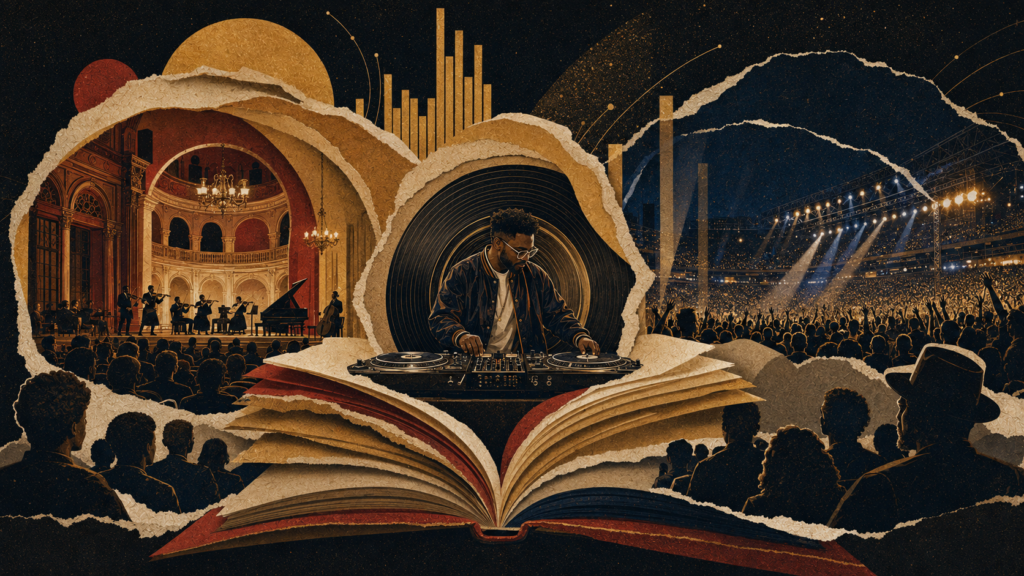
D-Nice brought the experience to major venues, including the Hollywood Bowl and Kennedy Center. On August 4, 2022, he made his Carnegie Hall debut with Club Quarantine Live, joined by artists including Ashanti, Jadakiss, El DeBarge, Hezekiah Walker, Styles P and Stephanie Mills. Carnegie Hall announced the performance as D-Nice’s debut in its historic Stern Auditorium.
Think about that journey.
A teenager from the foundation of Bronx hip-hop. A rapper. A producer. A photographer. A DJ broadcasting alone from his apartment. Then Carnegie Hall.
He has also performed within the orbit of Barack and Michelle Obama, including presidential celebrations and events associated with the Obamas. His ability to move comfortably between hip-hop spaces, political rooms, museums, galas and massive concert stages is part of what makes his career unusual.
He does not abandon one audience to impress another.
He brings the records with him.
Three nights at Yankee Stadium
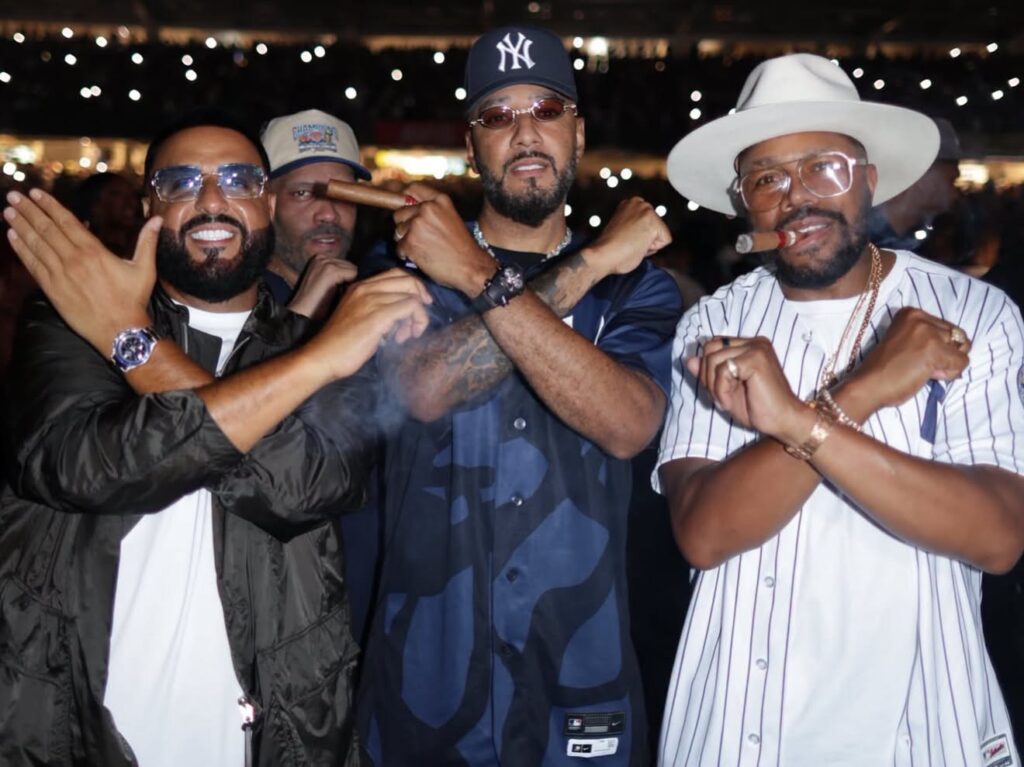
In July 2026, JAY-Z returned to Yankee Stadium for three major concerts celebrating the 30th anniversary of Reasonable Doubt and the 25th anniversary of The Blueprint.
D-Nice opened all three nights.
“Jay wanted me to open all three nights at Yankee Stadium,” he shared. “I was truly humbled.”
The three-show run stretched from July 10 through July 12, with the third night added after demand for the first two performances. Billboard documented the final “Extra Innings” concert, while Ticketmaster confirmed the July 12 Yankee Stadium date.
From helping build Boogie Down Productions to opening three nights for JAY-Z at Yankee Stadium, D-Nice has lived enough hip-hop history to fill several museums.
Yet he is still creating the next room.
Dreamstage is the full-circle record
That brings us back to the bed.
Dreamstage is not disconnected from the music. The workstation beneath the loft is where a child might first experiment with beats, photography, video, design, homework or entrepreneurship.
A child may go to sleep above the same type of creative space where a future career begins.
That is why this partnership works. D-Nice is not selling children a fantasy that he has never lived. His life demonstrates what can happen when creativity is given room to evolve.
He went from not having a bed of his own to designing one for children.
He went from helping shape the sound of the Bronx to helping the world survive its quietest nights.
He went from a teenage Human TR-808 to Carnegie Hall and Yankee Stadium.
Now he has turned a bedroom into a stage.
Some people survive their childhood and spend the rest of their lives trying to forget it.
Others return carrying blueprints.
D-Nice came back with Dreamstage.
Pricing, retail availability and the full consumer rollout have not yet been publicly confirmed. What has been confirmed is the collaboration, the Las Vegas Market unveiling and the purpose behind the design.
This is more than furniture.
It is what happens when survival grows up, learns design and makes room for the next dreamer.
For more full stories, cultural commentary and original reporting, visit RelentlessAaron.net.
WordPress excerpt
From Boogie Down Productions and Violator to Club Quarantine, Carnegie Hall, JAY-Z’s Yankee Stadium run and Dreamstage, D-Nice has spent four decades turning creativity into cultural service.