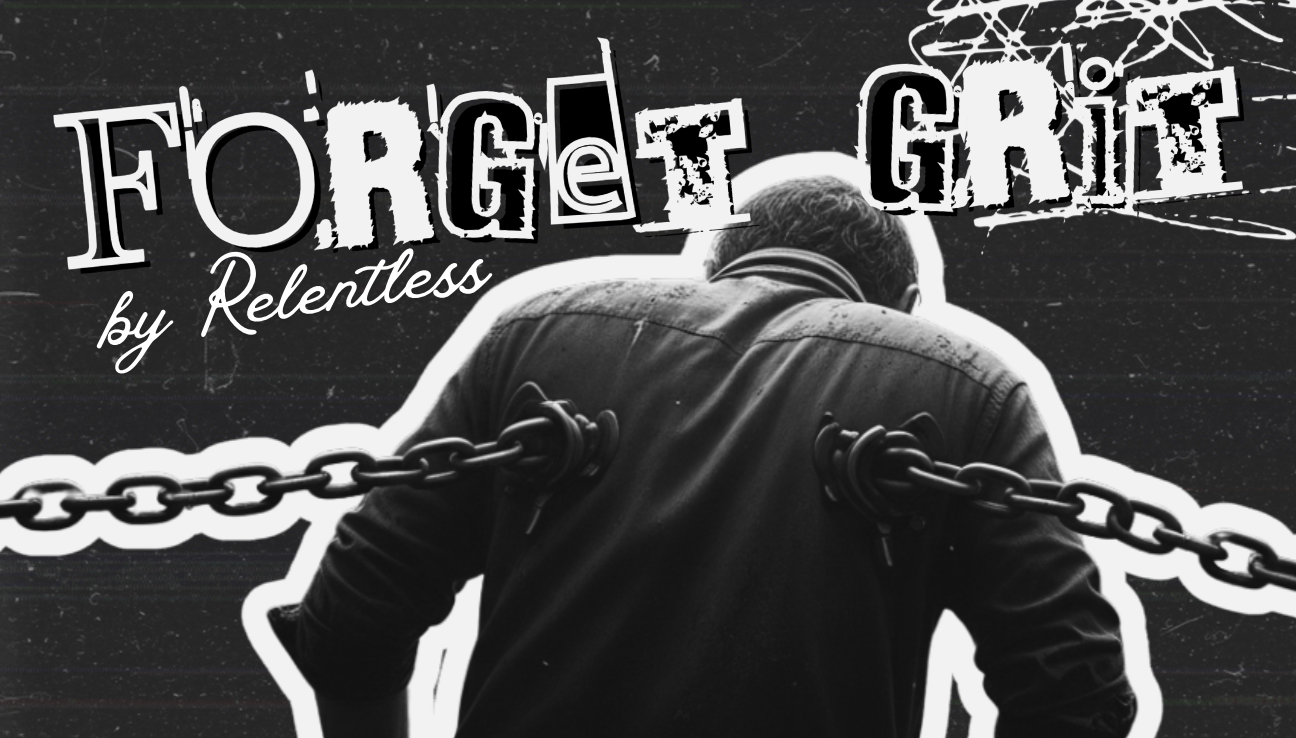
The Psychology of Getting Knocked Down and Standing Up Meaner.
Let’s get one thing straight. The world has gotten soft, romanticizing struggle with pretty words peddled in five-minute talks and bestselling books. They call it ‘grit.’ Passion and perseverance. Sounds good on a coffee mug, right? But out here, on the pavement where the real knocks happen, we call it something else: scar tissue.
It ain’t pretty. It’s the thick, ugly, hardened skin that grows over a wound. It’s a permanent reminder of the damage, and it’s tougher than the skin that was there before. Grit is a choice. Scar tissue is what you’re left with when you had no choice but to heal. That’s the difference. One is a motivational poster; the other is a roadmap of survival written on your soul.
Angela Duckworth and her whole crew sold ‘grit’ to the masses as the secret sauce. A cute little combo of passion and stick-to-it-iveness. But let’s peel that back. Critics, the ones who live in the real world, started pointing out the obvious. Calling it ‘grit’ is a slick way to put the blame on the individual. Got no resources? System stacked against you? Facing roadblocks the size of skyscrapers? Just be grittier. It’s a convenient narrative for a system that doesn’t want to fix the problems that knock people down in the first place. Some have even called it what it is: trauma in disguise, where survival mechanisms like hypervigilance get rebranded as virtues. It’s moral gaslighting, celebrating your endurance while ignoring your chains.
That’s where the conversation needs to change. We’re not talking about ‘bouncing back.’ That’s resilience, and that’s just part of the story. Bouncing back implies returning to who you were before the hit. Scar tissue means you never go back. The injury fundamentally changes you. The break heals stronger. Psychologists have a term for this, a clinical, sanitized name: Post-Traumatic Growth (PTG). It’s not about just getting back to baseline; it’s about being transformed by the fire. It’s when the trauma forces you to rebuild your entire belief system, your understanding of the world, your place in it. Researchers have found this growth happens in five key areas: a renewed appreciation for life, stronger relationships, seeing new possibilities, a deeper sense of personal strength, and a shift in your spiritual or philosophical core.
But here’s the part they don’t like to talk about in polite company. That growth isn’t always about becoming kinder or more empathetic. Sometimes, getting knocked down and getting back up makes you meaner.
Not cruel. Not evil. But meaner.
Think of a fighter who gets dropped in the early rounds. He gets up, and the look in his eye has changed. The playful bounce is gone. The smile is gone. He’s all business now. That’s the psychology of scar tissue. It’s a hardening. A narrowing of focus. The bullshit gets stripped away. You’ve felt the pain, you’ve tasted the canvas, and you have an intimate understanding of what failure feels like. That knowledge makes you dangerous.
This is where adversity sharpens you into a weapon. The experience rewires you to see stress not as a threat, but as a challenge. Your tolerance for trivialities plummets. Your patience for excuses—from yourself or others—evaporates. You develop a controlled aggression, a drive that’s fueled by the memory of the pain. Michael Jordan getting cut from his high school team didn’t just make him practice more; it lit a fire of competitive rage that defined his entire career. Steve Jobs getting fired from Apple, the company he built, didn’t just lead to a comeback; it led to NeXT and Pixar and a return to Apple that was so focused and ruthless it changed the world. That’s not grit. That’s revenge on circumstance.
This ‘meanness’ is a survival trait. It’s the focus that comes when you realize that nobody is coming to save you. It’s the determination you develop when you’ve had to rely on nothing but your own will to get off the mat. You learn to filter out the noise and lock onto the signal. Your circle gets smaller. Your goals get clearer. You become more deliberate, more calculating. Every move has a purpose because you know the cost of a wasted one.
So forget the feel-good story of grit. It’s an incomplete truth. The real story is written in scars. It’s the story of being broken and healing into something harder, sharper, and more formidable. It’s understanding that true strength isn’t about never falling down. It’s about what you become when you stand back up—and the cold, hard clarity in your eyes that says you’re not going down like that ever again.