



[ad_1]
When Hurricane Helene struck Western North Carolina in September 2024, the storm didn’t just damage buildings and roads. It disrupted the economic fabric of the region, shuttering small businesses that had served their communities for generations, displacing workers from jobs they’d held for years, and leaving families uncertain about their financial futures.
In Helene’s immediate aftermath, Cisco Crisis Response quickly mobilized to restore connectivity and help local organizations meet the urgent needs of affected communities. But as the region began transitioning from relief to recovery, we worked alongside local leaders to identify priorities and understand how we could best support that work.
In Western North Carolina — the first site in Cisco’s 40 Communities initiative — that meant aligning our engagement with long-term economic recovery efforts and supporting partners who were already positioned to advance that work. Now, a little more than a year after the storm, we’re proud to partner with the Local Initiatives Support Corporation (LISC) and Per Scholas, two community-centric organizations with deep experience working in areas to build and maximize economic opportunities. Together, we’re working to strengthening the resilience of hundreds of small and medium businesses, train a new generation of tech workers, and build the economic capacity Western North Carolina needs to recover and thrive.
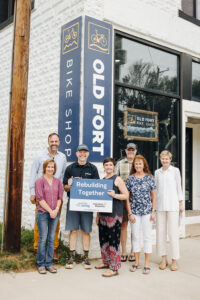
Supporting small businesses: Western North Carolina’s economic backbone
For more than 40 years, LISC has connected communities with resources they can’t easily access on their own, bridging capital and opportunity by working through trusted local partners who know how to put resources to work. In Western North Carolina, where small and medium businesses form the backbone of the local economy, that expertise is critical.
Through our partnership with LISC, we’re working to strengthen both the small businesses themselves and the local business development organizations (BDOs) that already serve as trusted intermediaries in the region. LISC is building the capacity of BDOs across the region, equipping them to better serve small businesses through disaster recovery and beyond. In turn, these organizations are providing assistance to hundreds of small and medium businesses on everything from financing and disaster planning to digital tools that can help them reach new customers. For these businesses — many of which were already struggling before the storm — this support can make the difference between closing their doors and finding a path forward.
“Small businesses are the heart of our country. They employ our neighbors, keep local dollars circulating within communities, and give local regions, like Western North Carolina, its character,” said Michael Pugh, president and CEO of LISC. “Through our partnership with Cisco, we’re helping to ensure that more small business have resources available to them to ensure that they are able to not only rebuild after disasters strike, but also uncover new pathways to build more sustainable, stronger businesses in the process.”
The tech partnership upskilling Western North Carolina’s workforce
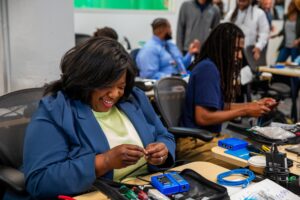
While supporting existing businesses is critical, long-term economic recovery also requires developing the skilled workforce that can support the region’s growth. That’s why Cisco is partnering with Per Scholas, a national nonprofit with three decades of experience creating pathways to tech careers and connecting skilled workers with employers who need them.
In the aftermath of Hurricane Helene, Cisco is supporting Per Scholas as it expands its footprint in Western North Carolina. Over the next year, Per Scholas will provide rigorous training, at no cost to the learner, for aspiring tech professionals statewide, including residents in the western part of the state. As a Cisco Networking Academy, Per Scholas incorporates both Networking Academy and Splunk curriculum in their programming, ensuring participants receive training in IT skills critical to businesses and essential services. In a region recovering from disaster, these aren’t just marketable skills; they’re the technical capacity communities need to stay connected and operational during crises and beyond.
“What makes this partnership powerful is our shared commitment to lasting impact,” says Per Scholas North Carolina Senior Managing Director Michael Terrell. “By leveraging Cisco’s technology and expertise, we’re creating pathways to opportunity for people in Western North Carolina who are ready to rebuild not just their own futures, but their community’s future, and power the region’s long-term recovery.”
Moving forward together: A long-term commitment to recovery and resilience
The work in Western North Carolina through Cisco’s partnerships with LISC and Per Scholas shows what recovery can look like when technology, local knowledge, and committed partners come together. It’s not about quick fixes or temporary interventions. It’s about building the foundations — skilled workers, resilient businesses, reliable digital infrastructure —that allow communities to not just bounce back, but to grow stronger.
As a testament to this commitment, in December 2024, Cisco selected Western North Carolina as the first of 40 Communities — our ambition to bring the full force of our capabilities, technology, and people to engage, support, and invest in 40 communities worldwide. These partnerships with LISC and Per Scholas exemplify that approach: working alongside trusted organizations who understand their communities and are committed to creating lasting change.
Long-term recovery takes time. The road ahead is long, but Western North Carolina isn’t walking it alone. Working alongside partners like LISC and Per Scholas, Cisco remains committed to helping rebuild the economic foundations the region needs — not just to recover, but to thrive for years to come.
[ad_2]
Source link