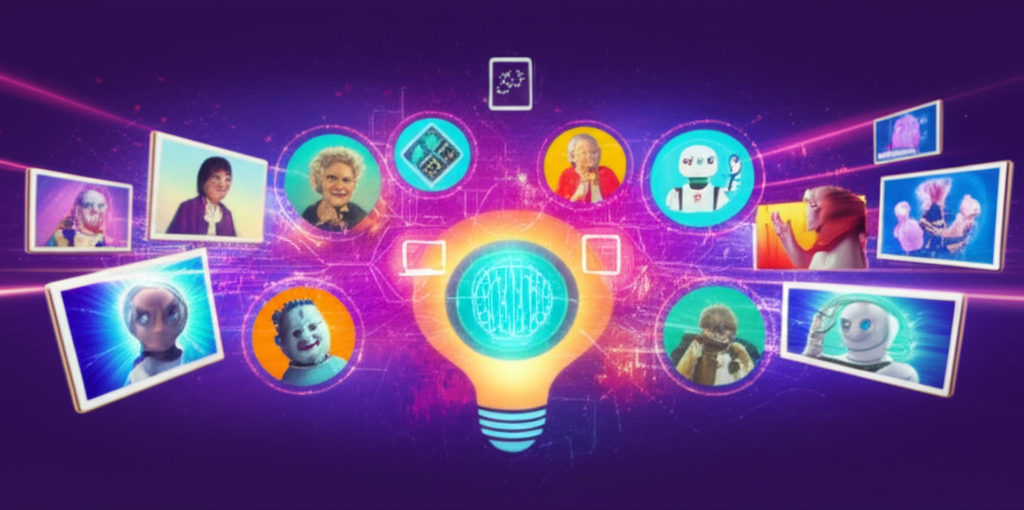
You’ve paid your dues. You’ve raised families, started companies, survived recessions and reinventions. You’ve watched technology evolve from dial‑up to high‑speed, from walkmans to wireless earbuds, from typewriters to tablets. Now, just as you’re finding your groove, the world is hurling artificial intelligence at you with the urgency of a TikTok trend. It’s tempting to shrug it off as another passing fad. Don’t. What’s happening right now isn’t just about keeping up with the kids — it’s about capturing your legacy, future‑proofing your retirement and building streams of income that work while you sleep.
The adoption gap (and why it matters)
The stereotype that folks over 40 are tech‑averse is lazy. AARP research shows that 85 percent of people aged 50 and above have heard of generative AI, and the number actually using it doubled in 2024. Yet usage remains low: only 9 percent used generative AI tools last year. Even among those familiar with the technology, just 31 percent said they were excited about it and nearly a third worried AI could make the digital world less safe. Still, momentum is building. A separate AARP survey cited by Kiplinger found that generative‑AI use among Americans over 50 shot from 9 percent to 18 percent in a single year, with about 30 percent saying they’re eager to explore it. Fifteen percent of mid‑career and older workers now use AI tools regularly, mostly as self‑taught “power users”.
Those numbers reveal two truths: our age group isn’t clueless, but we’re hesitant. That hesitation often comes down to design and trust. Many older adults feel technology isn’t built for them. They prioritize function over flash, while Silicon Valley obsesses over novelty. There’s also a digital divide: concerns about privacy, algorithmic bias and the sheer complexity of AI products. Recognizing those barriers is the first step to knocking them down.
Legacy: telling your story in full color
Our generation has always been about storytelling. We passed down lessons over kitchen tables and barbershop chairs, through mixtapes and letters. AI can supercharge that instinct. Generative models can turn your journals into memoirs, your photos into animated stories, your voice into a dynamic audiobook. Picture an app that uses voice‑cloning to preserve your grandmother’s laugh or your own baritone for future generations. Imagine feeding decades of letters and emails into a model that helps you craft a personal history in your own cadence and slang. Those aren’t pipe dreams. They’re available right now in consumer tools that let you train an AI on your writings and have it answer questions in your style.
Legacy isn’t only about nostalgia; it’s about impact. AI can help you digitize and index your life’s work — novels, music, businesses — so that family members and fans can access them long after you’re gone. It can translate your work into new languages, making your story global. It can turn your experiences into interactive lessons for the next generation. You don’t have to be a software engineer to do this; you need curiosity and a willingness to play. Start small: record a conversation with an elder and feed it into a transcription tool. Use image‑enhancement apps to restore faded photos. Each experiment chips away at the myth that AI is just for kids.
Retirement: AI as your co‑planner
Money doesn’t care how old you are; it cares how prepared you are. Retirement planning has always been a maze of unknowns — market swings, health‑care costs, longevity. AI isn’t a crystal ball, but it does crunch numbers faster and more comprehensively than any human can. Robo‑advisors and AI‑driven planning tools analyze your spending, risk tolerance and goals, then build personalized portfolios and decumulate strategies. They adjust to market conditions in real time, rebalancing automatically to maximize returns. That’s especially useful when you’re juggling mortgages, college tuition for kids and caring for aging parents.
The benefits go beyond investing. Predictive models can forecast how long your savings might last under different scenarios. AI‑powered systems monitor your transactions and catch signs of fraud quicker than you or your bank’s call center. Voice‑activated assistants simplify tasks like tracking expenses or checking Social Security benefits. These tools democratize financial advice by making sophisticated planning affordable to those who might not meet a traditional advisor’s minimum account size.
But there are caveats. Algorithms are only as good as their data. Biases in training datasets can skew recommendations and harm those who don’t fit average assumptions. Privacy and data‑security are real concerns. And no AI can replace the nuanced wisdom of a seasoned human advisor. The smart move is to use AI with your advisor, not instead of one. Let the machine handle the math and scenario analysis, then bring those insights into a conversation with a professional who understands your values and personal quirks. It’s the difference between a GPS and a seasoned driver who’s been down the road before.
Residual income: automating your side hustle
If retirement is about security, residual income is about freedom. You want money coming in whether you’re on a beach, writing your next novel or taking a much‑needed nap. AI opens up creative ways to make that happen. Here are a few:
- Digital products. AI design tools can help you create e‑books, stock music, logos and digital art. You can generate variations quickly, refine them with your own style and sell them on platforms that automate the delivery and payment. You control the rights and collect royalties. It’s like licensing your music catalogue, but for every creative idea you’ve ever had.
- Online courses and coaching. Use AI to outline course content, build slide decks and even generate practice quizzes. Combine it with your decades of expertise — whether in writing, music production, entrepreneurship or credit strategy — to produce a course that sells while you sleep. Hosting platforms handle enrollment and payments; AI chatbots handle basic questions so you don’t spend all day in your inbox.
- Content automation. AI can produce drafts of blog posts, social media captions, marketing emails and videos. You still need to inject your voice and authenticity — remember, bland content is a dime a dozen — but AI cuts down the grunt work. That means you can maintain multiple revenue streams (books, blogs, merchandise) without cloning yourself.
- Data analysis and marketing. Tools that once required a team of analysts are now subscription services. AI can help you identify niches in Amazon listings, trending keywords for YouTube videos or underpriced real‑estate markets. It can generate marketing copy tailored to your audience, schedule posts at optimal times and retarget ads to readers who’ve shown interest.
Will AI‑generated hustles make you a millionaire overnight? Probably not. Residual income takes consistency and quality. AI is a multiplier, not a miracle. It can accelerate production and expand reach, but you still need to bring the genius. Your lived experience, cultural insight and authenticity are the secret sauce. Without them, you’re just another bot in the crowd.
Bridging the divide: training and trust
Numbers don’t lie: our generation is warming up to AI, but skepticism lingers. Part of that skepticism comes from feeling excluded from the design process. To close the gap, tech companies must involve older adults in building the tools — not as token beta testers, but as co‑creators who define what “user‑friendly” actually means. They need to account for differences in dexterity, hearing and vision. They need to build explainable models that aren’t black boxes. Policies must enforce transparency and guard against bias and abuse.
For our part, we need to invest in our own digital literacy. That doesn’t mean becoming coders; it means understanding how AI works enough to use it wisely. Take a workshop at your local library or community college. Partner with younger family members — AI is a perfect excuse for intergenerational bonding. Start with low‑stakes experiments: ask ChatGPT to help plan a family reunion or use a translation app during travel. Each positive experience builds confidence and demystifies the tech.
Finally, question the narratives. Tech hype swings between utopian and apocalyptic. The truth is somewhere in the messy middle. AI isn’t going to steal your soul, nor is it going to save you if you’re irresponsible. But it can be a powerful ally. It can help you document your story, plan your financial future and create new streams of income. It can extend your reach, amplify your voice and ensure that your legacy isn’t lost in the noise. If you engage with it thoughtfully, you can ride this wave instead of watching it pass you by.
Closing note
At forty and beyond, you’re not obsolete — you’re prime. You’ve lived through analogue and digital revolutions; now you’re standing on the edge of an intelligent one. Embrace AI not as a replacement for your hard‑won expertise, but as an amplifier. Use it to make smarter moves with your money, craft stories that outlive you and build income that flows even when you’re off the clock. The future isn’t reserved for the young. It’s for the relentless — for those who take the time to learn, adapt and own their narrative. Don’t just leave a legacy; design it. Don’t just retire; reinvent. Don’t just survive; thrive, with AI riding shotgun.