


How to Adopt, Adapt, and Advance
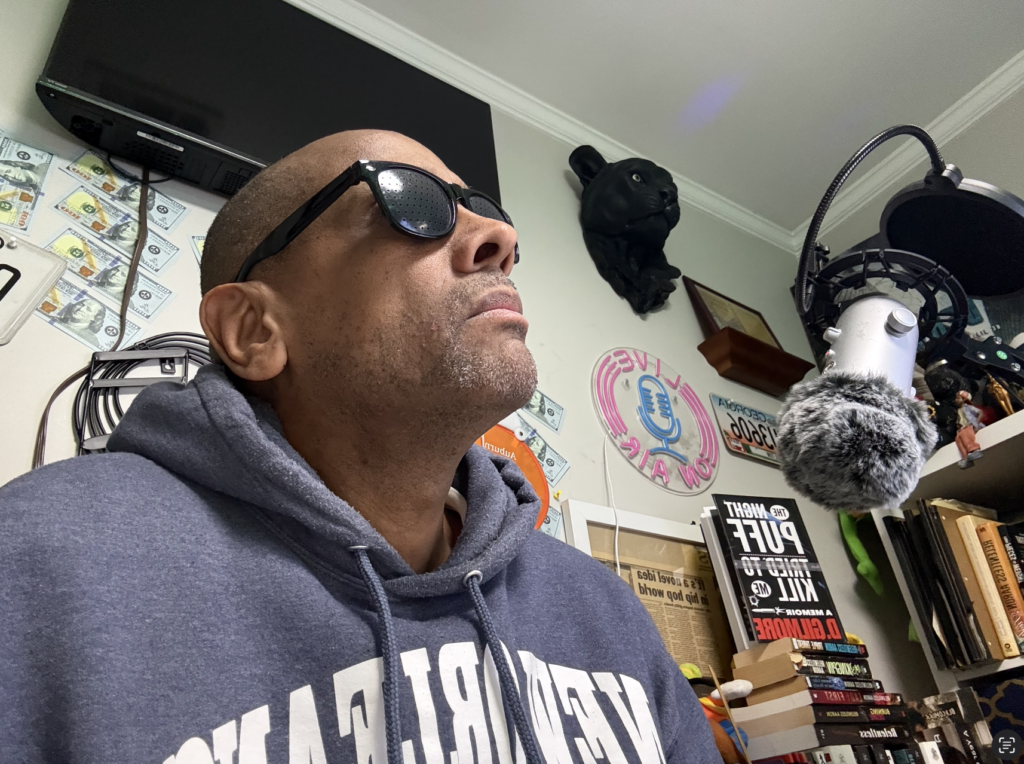
I’m 60 years old. And I’m just getting re-started.
That’s not a line I expected to be writing at this point in my life. Most people my age are thinking about winding down, wrapping up careers, simplifying, preparing for what comes next. But something unexpected happened to me over the last couple of years. I discovered AI, not as a tech toy or a productivity hack, but as a genuine partner. And it changed everything. All of the novels I’ve written over the years now being re-purposed for films. All of my scripts now coming to life. Waiting for budgets is OVER. But besides that…

I’m earning a living. I’m building toward retirement. I’m writing my stories: real ones, fiction ones, the kind I always said I’d get to “someday.” I’m locking in my legacy. Not because I suddenly found extra hours in the day, but because something shifted in how I thought about what was possible. And thank God for my good health and the drive and passion to push!
That’s the part most people miss when they talk about AI. They don’t consider mortality and llegacy. Meanwhile, they’re treating it like a new tool, a smarter Google, a faster assistant, fancier software. And yes, it can do those things. But the real change isn’t in what it can do. It’s in what you start to believe you can do.
The conversation we’re actually having
There’s a lot of noise around AI right now. Some people are certain it’s going to ruin everything. Others swear it’s going to save everything. Most of us are somewhere in the middle, a little curious, a little skeptical, and honestly a little overwhelmed by how fast it’s all moving.
But here’s what I’ve come to believe: the question isn’t whether AI is good or bad, transformative or overhyped. It’s already here. The more useful question is what you’re going to do with it. And that starts not with signing up for a new app, but with shifting how you see yourself in relation to this thing.

Adopt: Lower the bar for beginning
The hardest part of adopting anything new isn’t learning it. It’s believing you’re the kind of person who can. A lot of people have quietly decided that AI is for younger people, for tech-savvy people, for people who already have a plan. That belief is the only real barrier.
Adopting AI doesn’t mean becoming an expert. It means starting a conversation. Literally. You type something, a question, an idea, a half-formed thought, and something responds. You go back and forth. You get a little further than you would have on your own. That’s it. That’s the beginning. You can do it for free right now, on any of the platforms. Wanna know what is the best platform? RESEARCH IT! Try the brands you know… Claude, Perplexity, ChatGPT, META, Grok, Gemini… to name a few. Just go into their chat box and ask questions. ANY questions. And are the answers too advanced for you? Ask (in that same chat box) for the ai to speak to you on a 8th grade level… even a 3rd grade level. wherever you’re at, ai will meet you there and get you leveled-up.
For me, it started with something simple: I wanted to get my writing into audio & film formats, but every time I sat down, I got stuck. I had to learn some new software or tool. AI gave me a place to start that wasn’t a blank page staring back at me. It wasn’t magic. It wasn’t just removing one of the obstacles that had been stopping me for years. All I had to do was run (not walk) to youtube! The 24/7 college educator.

Adapt: Make it yours
Here’s where the mindset piece really kicks in. AI, on its own, is just potential. It becomes useful when you bring your experience, your voice, your judgment to it. That’s the adaptation: figuring out how this fits into the specific texture of your life.
For someone starting a business, it might mean using AI to draft emails faster, think through problems, or map out a plan without needing to hire a whole team. For a teacher, it might mean building curriculum, generating examples, or just having a thought partner who’s available at midnight. For a 60-year-old with a lifetime of stories to tell, it means finally having the support to actually tell them.
The people who get the most out of AI aren’t the ones who use it the most. They’re the ones who’ve figured out how it complements what they already bring. You are not replaceable in this equation. You’re the reason it works.
Advance: Redefine what’s possible
This is the part that still surprises me, even now.
I didn’t expect that AI would help me feel more like myself: more productive, more creative, more clear-headed about what I want to leave behind. But that’s what’s happened. I’ve written pieces I’m proud of. I’ve put plans in place for my future that I wouldn’t have known how to build before. I’ve started thinking less about what’s behind me and more about what I still want to build.
Advancing with AI doesn’t mean becoming someone new. It means finally having enough support to become more fully who you already are.
There’s a version of this conversation that’s about market disruption and economic transformation. That conversation matters, and it’s worth having. But there’s another version, quieter and more personal, about people who thought their best chapters were behind them, and discovered they weren’t.
That’s the version I want to be part of.
Where to go from here
If you’re still on the sidelines, I get it. It’s a lot. The technology is moving fast, the claims are enormous, and it’s hard to know what any of it actually means for you and your life.
Start small. Pick one thing you’ve been putting off: a letter you haven’t written, a project you haven’t started, a question you haven’t known how to answer. Bring AI into it. Not because it will do it for you, but because it might help you do it yourself.
That’s what adoption looks like. That’s where adaptation begins. And if you stick with it, if you start to see it less as a tool and more as a collaborator, you might find yourself advancing in directions you didn’t know were still open to you.
I’m 60. I’m just getting started. You might be too.