



- Email: neill@outloudculture.com
An accomplished writer, Denton teamed up with Ryan Curtis to pen the upcoming crime thriller Hollywood Grit. The film follows the story of a detective who is forced to battle mobsters, starlets, and his own demons to unearth the sinister truth lurking behind LA’s neon lights after his daughter disappears from a Hollywood jazz club. The all-star cast includes Max Martini, Tyrese Gibson, Patrick Duffy, and Linda Purl just to name a few.
Denton is also set to make her debut as a first-time author with her forthcoming memoir You Don’t Know Dick which chronicles her time working at a men’s erectile dysfunction clinic. The book, which takes a raw and funny approach to this sensitive topic, explores how the experience helped Denton develop a new perspective as she navigated through her own issues surrounding grief, identity, and modern masculinity. It is set for release in early 2026.
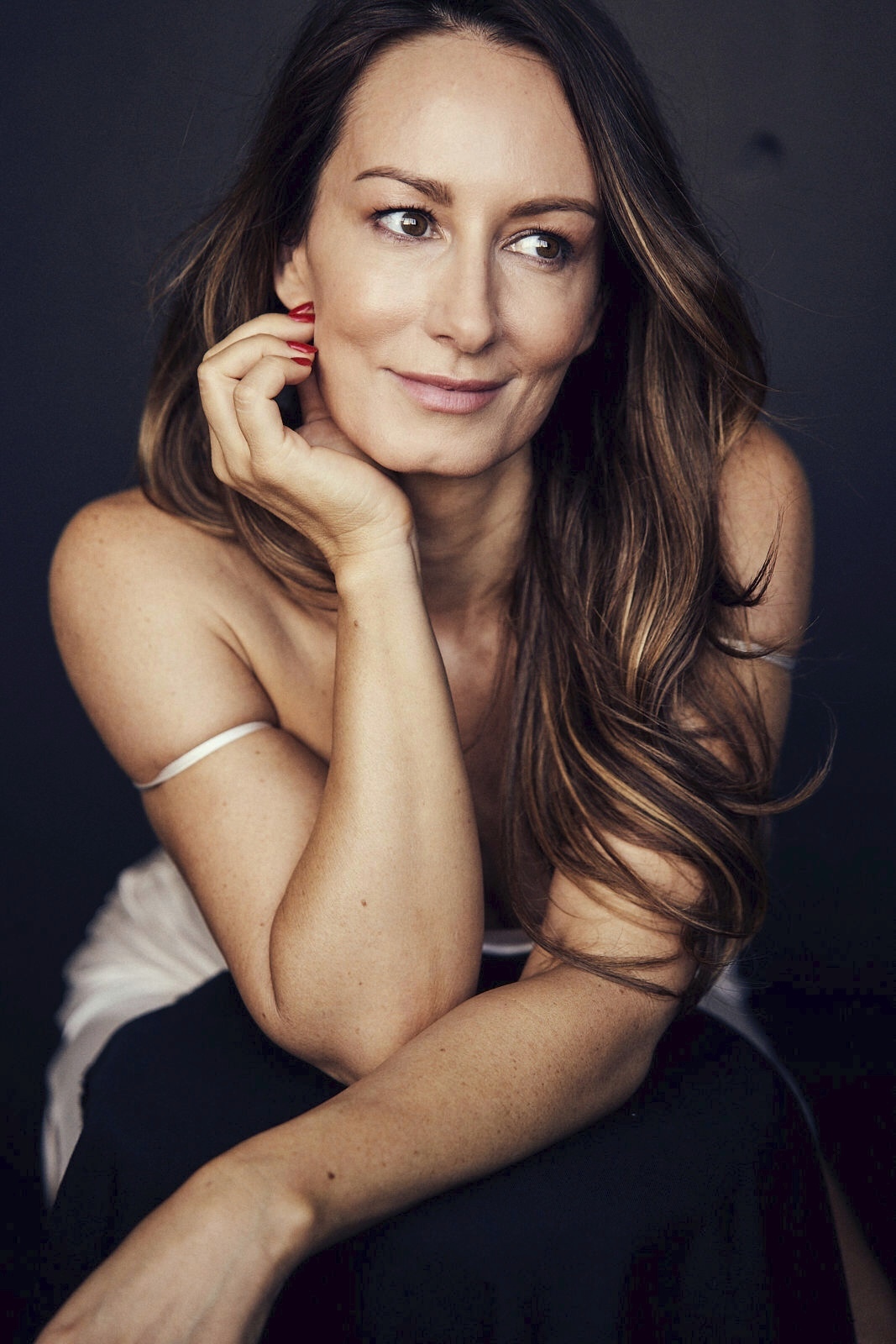
Photographer: Matt Kallish @matt_kallish
Hair: Jenn Montoya Palmore @jenn_starr12
Makeup: Kristine Lisman @makeup_by_kristine_
1. Kristina welcome to OLC! So what inspired the storyline of Hollywood Grit, and how did you incorporate elements of LA’s underbelly into the narrative?
Ryan Curtis, my co-writer/director, called me right before I moved to Hawaii and asked if I could write a movie in two weeks. It should’ve been an impossible yes, but I said it anyway. Ryan was looking to get his first feature off the ground and had some of the elements in place: a limited budget, a small cast of friends, and he wanted to shoot in LA. We figured out the genre and once I learned one of the actors was a singer, I had this idea of centering the story around a Hollywood Night Club. I pulled from my own experiences in Hollywood to build the world. Having chased the “price of fame” myself as a performer, I wanted to capture both the glitter and the grit of the city. Ryan is a combat veteran and loves action and really wanted to pump up the noir elements, The darker side of Hollywood felt like the perfect backdrop to explore themes of ambition, failure, and redemption.
2. Can you describe your collaborative process with Ryan Curtis on writing Hollywood Grit, and what unique perspectives each of you brought to the script?
Ryan and I come at storytelling from opposite angles, which is why it works. He’s a combat veteran and director, so he sees the big picture — the action, the tone, the world-building. I come from acting, so I always start inside-out: character, dialogue, emotional truth. Together we marry those perspectives and get grit and heart. He’ll pitch an explosive chase sequence, and I’ll ask, “Okay, but what’s the character feeling in this moment?” That tug-of-war shapes our scripts in the best way. We’ve written a ton of projects together, starting back during the pandemic when we’d get on Zoom everyday together to work. We developed a great shorthand and know each other’s strengths to pull things together quickly.
Ryan is an incredible visual story teller and really brought out the noir elements. I wanted to explore the pressure of making it in Hollywood and how the estranged father/daughter relationship from my own life would play out in this world. I thought throwing our main character, Grit, into overcoming the guilt that his absence might be why his daughter is missing would make for a charged thriller.
3. As a writer transitioning to her first memoir, You Don’t Know Dick, what challenges did you face in blending humor with sensitive topics like grief and identity?
The hardest part was giving myself permission to be brutally honest. I was writing about grief, shame, and identity — while also talking about erectile dysfunction. The absurdity and the pain had to live side by side. My acting background helped; I know if I’m not digging into the raw truth of a moment, or “bleeding on the page” I’m not doing my job. Humor became the pressure valve. It kept the story human and reminded me that sometimes the only way through heartbreak is with laughter. I think that’s the most honest, authentic human experience, when we allow ourselves to play all the emotional notes out, even if they feel misplaced. I don’t think there is one way to grieve, just that it’s necessary. Even a penis that doesn’t work needs to be grieved.
4. Among your writing credits like Bonded, Ladysitter, and CLIMAX! The Series, which project was the most rewarding to develop, and why?
Bonded will always have my heart. It was the little dark comedy short that wouldn’t leave me alone. I eventually sold my car just to make it — five people, one sweltering garage, and a script that dared to poke fun at sexual taboos. That project won an audience award, traveled the festival circuit, and put my comedic voice on the map. More than that, it taught me the power of betting on myself when no one else was handing out opportunities.
5. In your acting career, what drew you to the role of Betty Hughes in the Chinese TV series Seven Days, and how did filming internationally impact your performance?
Years before this project, I was cast as the lead in a graduate thesis project for this graduate directing student, Jeremy Chen, who was from China. He took that project back home and it helped land him a lot of work there. He approached me on his way to make Seven Days and asked me to play Betty. What drew me in was how surreal the whole setup was: I was flying to Vegas to shoot a huge Chinese TV series. I love learning about new cultures and working internationally, so it felt like a dream. Of course, there was a very different work ethic and a language barrier. I was on call seven days a week and I had scripts handed to me moments before shooting without any prep or context for the whole story. But it forced me to drop control and play purely with actions and instinct, which stretched me as an actor. Filming in Saipan for six weeks was life-changing, the intensity of the shoot cracked me open emotionally, and it ended up being a pivotal time in my grief and creativity.
6. Playing the Vice President in Redemption Day seems like a departure from some of your other roles; how did you prepare for that character?
That role was a departure from my comedy work, but also such a fun challenge. Playing someone with authority and composure in a high-stakes political environment meant tapping into a different energy, one less about vulnerability, and more about control. I did a lot of observation of female leaders, their cadence and body language, and layered in my own take on what it means to hold that much responsibility under pressure.
7. You’ve appeared in numerous short films, such as Orange Lipstick and After Her; how does the intensity of short-form storytelling differ from longer formats in your acting approach?
Short films are like sprints, you don’t have the luxury of time to build arcs the way you do in features. You have to drop into the character immediately, sometimes with little backstory to lean on. It forces you to be efficient, instinctive, and deeply present. I love shorts for that reason; they sharpen your craft like nothing else. I also love the challenge of needing the audience to care about your character within a few minutes to stay invested. It’s both a challenge as a writer and actor in short form content.
8. Turning to producing, what were the biggest hurdles you encountered while executive producing Bonded, especially since you also wrote and starred in it?
Finding money. Finding money. Finding money. Yes, three times over. I’ve never been concerned about wearing many hats or shifting between roles while filming. I thrive having my hands in everything. Getting any project off the ground always comes down to finding the funds for me. I put Bonded on the back burner for years because I didn’t have the money. I made other projects with crowdfunding that had a deeper reason why I could get people to care and back the film, but Bonded was purely for entertainment and I knew I needed to finance it myself. So, I sold my car and the movie was made. Finally! I don’t recommend this, but also… a dream is a dream.
9. How do you decide which projects to produce, like Womanhood or So Extra!, and what criteria do you use to select stories that align with your vision?
Often, it’s timing. If I’m between writing or acting, which always takes priority for me. If it’s something I am solely producing, it comes down to two things: voice and impact. Does the story challenge a stigma, flip a narrative, or humanize something we usually judge? And does it have a point of view that feels fresh? If the answer is yes, then I know it’s worth producing and using my resources for. I’m drawn to material that makes people laugh but also makes them stop and reconsider what they thought they knew.
10. Balancing multiple hats, how has your experience as a producer influenced your work as a writer and actress?
It has been instrumental. I feel like every writer or actor needs to have an experience producing so they can understand what it takes to put the full scope of a project together. It makes you a better team player. It helps you as an actor, specifically, so you know exactly what everybody’s doing around you on set and helps you realize that you are just a piece of the puzzle, not the whole show until the camera is recording your face. You are replaceable. As a writer, I believe it’s instrumental and helps with understanding how to work with a budget so when you’re writing something, it can actually be produced if you’re working with a limited budget. We’d all love to write huge Marvel movies with seemingly endless budgets, but so many stories can be told without huge budgets and figuring out how to translate that, to me, comes from producing.
11. With upcoming projects like Hollywood Grit and your memoir, how do you envision your career progressing as a multifaceted storyteller in writing, producing, and acting?
I see my career as building bridges. Hollywood Grit is a stepping stone to show that I can create longer format commercial stories that entertain, and You Don’t Know Dick shows that I can dig into raw, uncomfortable truths and still make people laugh. Moving forward, I want to keep straddling those spaces with stories that are both bold and human. I’d love to turn my memoir into a TV series and continue to bring stories to life that make people feel seen in the messy, complicated places we usually avoid.
SOCIALS: Instagram


