


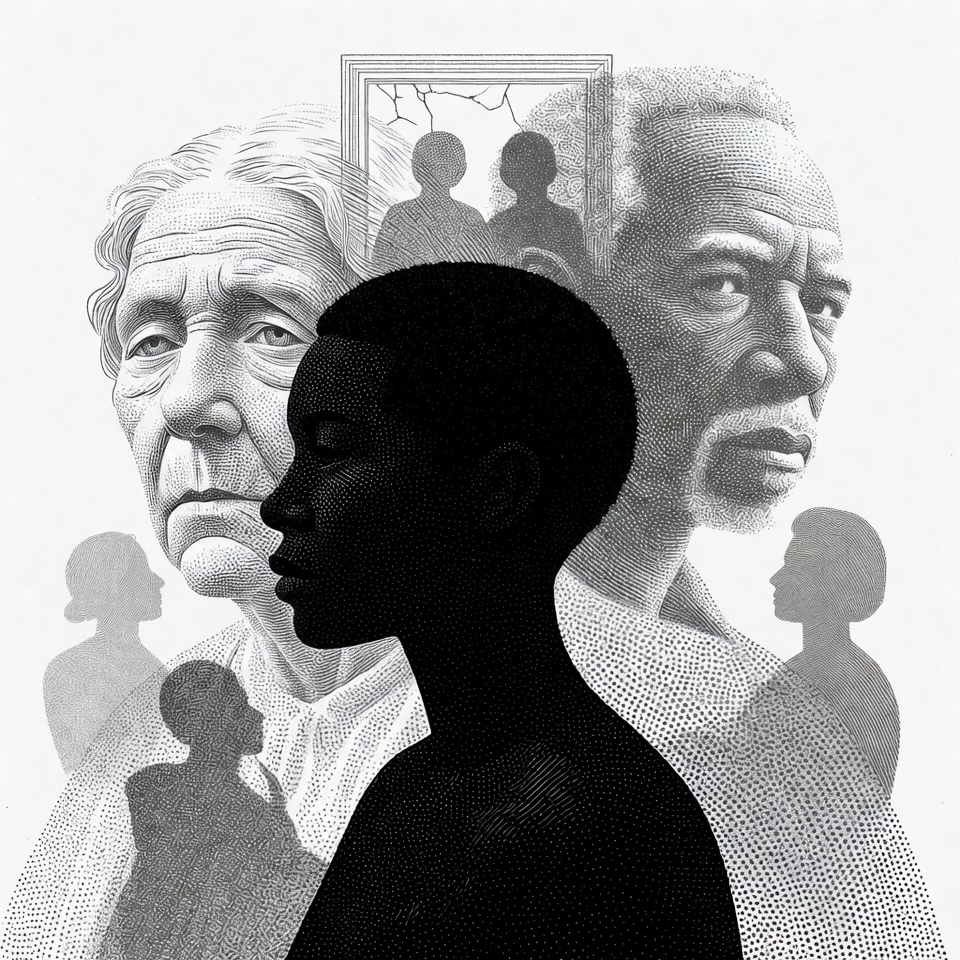
The ghosts of our ancestors don’t just haunt old houses—they live in our text messages, our arguments over dinner, and the way we flinch when someone raises their voice. Generational trauma is the uninvited guest at every relationship table, the shadow that follows us from our childhood bedrooms into our adult partnerships, whispering the same old scripts we swore we’d never repeat.
I’ve watched it play out countless times, in my own life and in the lives of those around me. The woman who can’t accept love without suspicion because her grandmother taught her mother that men always leave, and her mother passed that gospel down like a family recipe. The man who shuts down emotionally the moment conflict arises because three generations of men in his family learned that feelings were weapons that could be used against you. These aren’t choices we make consciously—they’re survival mechanisms encoded in our DNA, patterns so deeply embedded we mistake them for personality traits.
The cruelest part about generational trauma is how it masquerades as protection. Your great-grandfather lived through the Depression, so your grandfather hoarded everything, so your father never spent money on anything that wasn’t absolutely necessary, so you feel guilty every time you want something beautiful or unnecessary. Your great-grandmother was abandoned with children, so your grandmother never fully trusted men, so your mother stayed hypervigilant in relationships, so you find yourself checking your partner’s phone at 2 AM, searching for evidence of inevitable betrayal.
Relationship or relation-shit?

In romantic relationships, this trauma shows up like a terrible magic trick—now you see it, now you don’t, but the damage is always there. It’s in the way we choose partners who feel familiar, even when familiar means chaotic or emotionally unavailable. It’s in how we love: too hard, too fast, or not at all. It’s in the stories we tell ourselves about what we deserve, stories written by people who lived through wars and poverty and heartbreak we can’t even imagine, but whose pain we carry like inherited debt.
I remember being in a relationship where every argument felt like the end of the world because, to me, it was. Not because the relationship was actually ending, but because I was hardwired to believe that conflict meant abandonment. My nervous system couldn’t tell the difference between a disagreement about whose turn it was to do dishes and the chaos of a household where arguing meant someone might not come home. I was fighting ghosts, defending against threats that existed thirty years before I was born.
The insidious nature of generational trauma is that it feels like truth. When you’ve been raised in patterns of instability, stability feels boring, wrong, like waiting for the other shoe to drop. When you’ve inherited anxiety about money, love languages get confused with financial security. When your family tree is full of people who never learned to communicate emotions in healthy ways, you find yourself either exploding or imploding, never finding that middle ground where adults discuss feelings like the complex but manageable things they are.
But here’s what I’ve learned through years of stumbling through relationships like a bull in a china shop: recognizing these patterns is the first step toward changing them. The trauma isn’t your fault, but healing from it is your responsibility. Not because you owe it to anyone else, but because you owe it to yourself to live a life that’s truly yours, not a rerun of your ancestors’ unresolved pain.
Breaking generational patterns requires a kind of courage that doesn’t get celebrated enough. It means being willing to feel uncomfortable in healthy relationships because healthy doesn’t feel familiar. It means having conversations with your partner about why you react certain ways, even when those explanations make you feel exposed and vulnerable. It means learning new languages of love and conflict resolution when the only models you had were silence or screaming.
The work isn’t pretty or linear. You’ll find yourself reverting to old patterns just when you think you’ve made progress. You’ll catch yourself saying things your mother said, reacting in ways that feel automatic and shameful. But every time you pause, every time you choose a different response, every time you communicate instead of assuming, you’re literally rewiring decades of programming.
Some of the most beautiful relationships I’ve witnessed are between people who’ve done this work, individually and together. They’ve learned to see their trauma responses not as character flaws but as information about what they need to feel safe. They’ve created new traditions, new ways of handling money and conflict and intimacy that honor their histories without being enslaved by them. They’ve become ancestors for future generations who will inherit healing instead of hurt.
This isn’t about blaming previous generations or pretending that trauma isn’t real. Our ancestors did the best they could with what they had, and sometimes what they had was survival mode, scarcity, and limited emotional vocabulary. The trauma they passed down often came wrapped in love, in their desperate attempts to prepare us for a world they experienced as dangerous and unpredictable.
But we have opportunities they didn’t have. We have language for things they couldn’t name, resources they couldn’t access, and most importantly, the chance to choose differently. We can love our families and their stories while refusing to let their pain dictate our present. We can honor their struggles while creating our own definitions of what it means to be in relationship.
The truth is, we’re all carrying something. Every person you love, every person you’ll ever love, is walking around with invisible wounds passed down through generations of people who were just trying to make it through another day. Understanding this doesn’t excuse harmful behavior, but it creates space for the kind of compassion that makes real intimacy possible.
When you can look at your partner’s triggers and see not just their individual psychology but the echoes of their ancestors’ survival strategies, when they can do the same for you, something profound becomes possible. Not perfect love, but conscious love. Not the absence of pain, but the presence of choice in how you respond to it.
What would your relationships look like if you could love each other’s wounds as tenderly as you love each other’s strengths?
And BTW, I’m doing the ABSOLUTE best to address these issues using my own creativity. Have you heard the music I produce? The videos ” produce? Join us:


