

I’m building an underground shelter.
Not for clout. Not to copy the Tates or match Bill Gates. I’m doing it because the surface world feels thinner every year, and I want a place that belongs only to me and whoever I choose to let in.
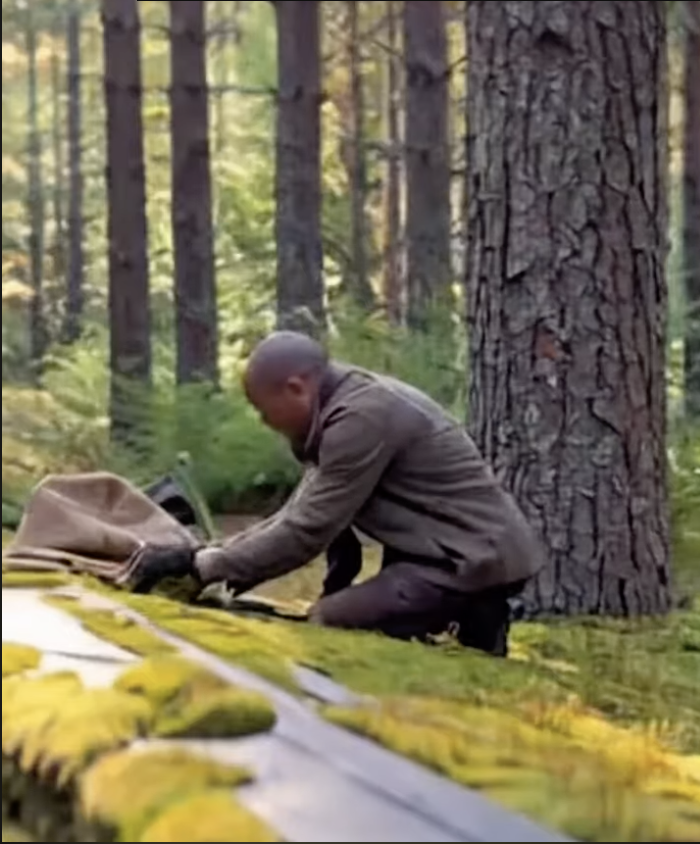
The images you see scattered through this post are AI-generated from my own face and vision. I fed the model my bald head, my build, my posture, and watched it return frames of me actually doing the work: gripping the rail on those stairs, staring up at raw concrete panels, shoveling dirt, pressing moss into place like I’m sealing the deal with the ground itself. They started as digital sketches. They’re becoming my blueprint.
Most men laugh off the “man cave” label. They picture a basement with a big TV, a fridge full of beer, and maybe a recliner that smells like old takeout. That’s not this. This is a real shelter carved below the surface — reinforced, private, stocked, and quiet enough that the noise of daily life can’t follow you down.
I looked at what others have done. The Tate brothers poured serious money into their Bucharest setup: multiple bedrooms, living space, even a recreation room. Reports say it’s rated for fallout and built to ride out whatever comes. Bill Gates has long been tied to underground layers on his properties. Zuckerberg’s Hawaiian compound includes a 5,000-square-foot shelter with its own power, water, and food systems. Plenty of other high-net-worth guys keep theirs quieter, but the demand for companies like Atlas Survival Shelters keeps climbing.
I don’t need their budget or their scale. I just need something that works for me in Atlanta — somewhere the Georgia heat and traffic and constant alerts can’t reach. A spot where I control the air, the light, the temperature, and the company.
The build itself forces hard questions. What do I actually need down there to stay comfortable for weeks or months? Air filtration that actually works. Redundant power. Water storage. Food that won’t make me hate life after day ten. Space that won’t drive me insane when I’m alone with my own head. And the toughest one: who gets through the door if the surface gets ugly?
Those questions strip things down fast. They make you look at what you value when comfort isn’t guaranteed and distractions aren’t available.
Right now it’s still in the vision stage. I’m generating more frames to test layouts, lighting, storage ideas. Each new image puts me deeper in the scene — me kneeling in the dirt, me standing inside the finished space, me locking the door from the inside. It’s rehearsal. It’s also commitment. Once you see yourself in the frame, turning back feels like quitting on a version of yourself that already exists in pixels.
I’m not rushing the physical dig yet. Codes, permits, soil tests, and neighbors all get a vote before the first shovel hits real ground. But the decision is already made. The surface no longer gets the final say on where I feel secure.
If you’ve ever felt the same pull — that low sense that systems are fragile and you want a pocket of control — start the same way I did. Put yourself in the picture first. Generate the images. Sketch the stairs. List what matters most when the lights go out. Then translate one piece at a time into the real world.
The man cave isn’t about hiding. It’s about choosing the terms of your own peace. A place where the world above can spin however it spins, and you still have solid ground under your feet.
I’ll keep updating as the real build moves forward. For now, these AI frames are enough to keep the vision sharp and the motivation steady.
The stairs are waiting. I plan to walk down them for real.