Notice: Function _load_textdomain_just_in_time was called incorrectly. Translation loading for the td-cloud-library domain was triggered too early. This is usually an indicator for some code in the plugin or theme running too early. Translations should be loaded at the init action or later. Please see Debugging in WordPress for more information. (This message was added in version 6.7.0.) in /home/releande/public_html/wp-includes/functions.php on line 6170 News Magazine | Get The Most Freshy News Every Day | Page 30
This website may contain affiliate links and advertising so that we can provide recipes to you. Read my disclosure policy.
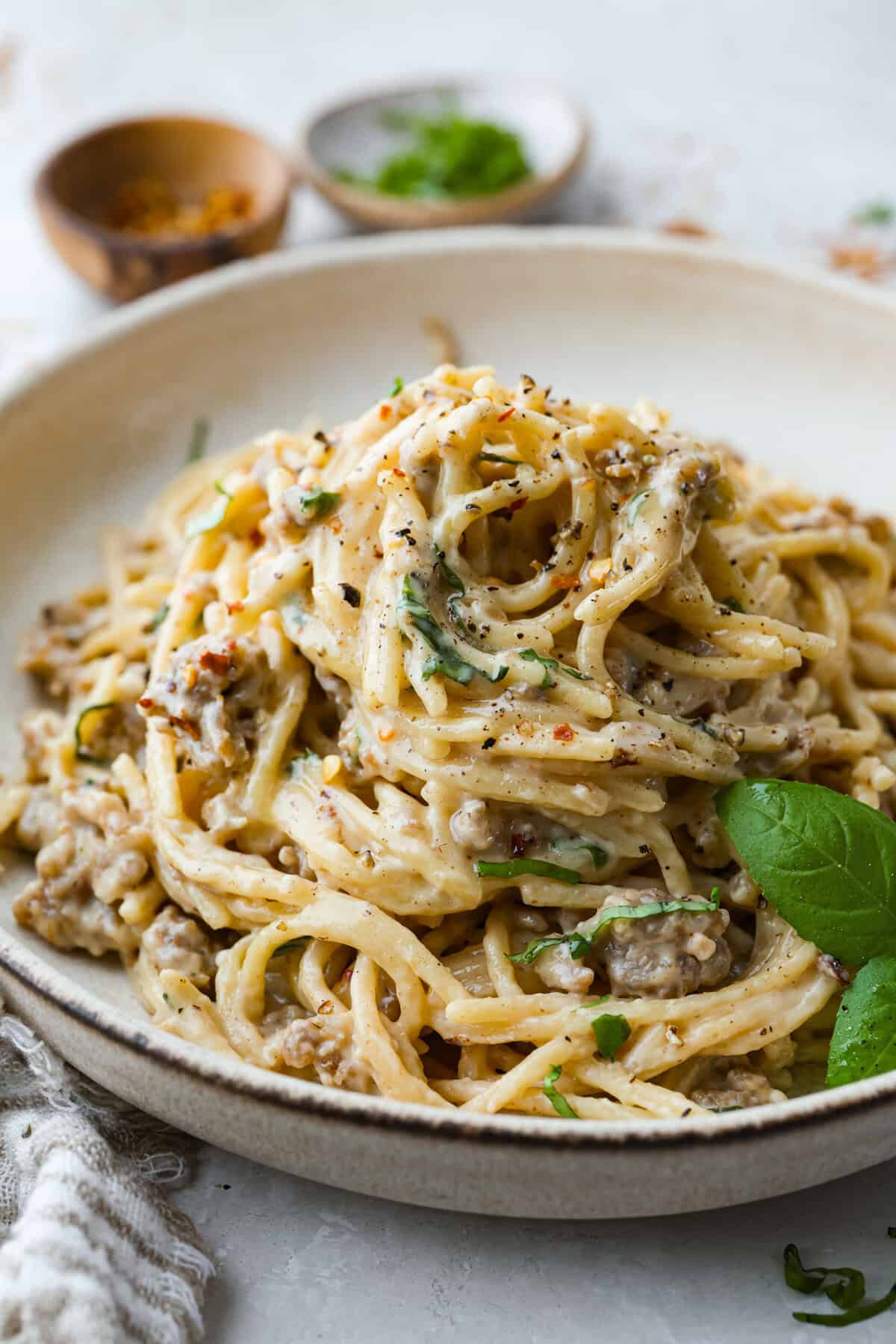
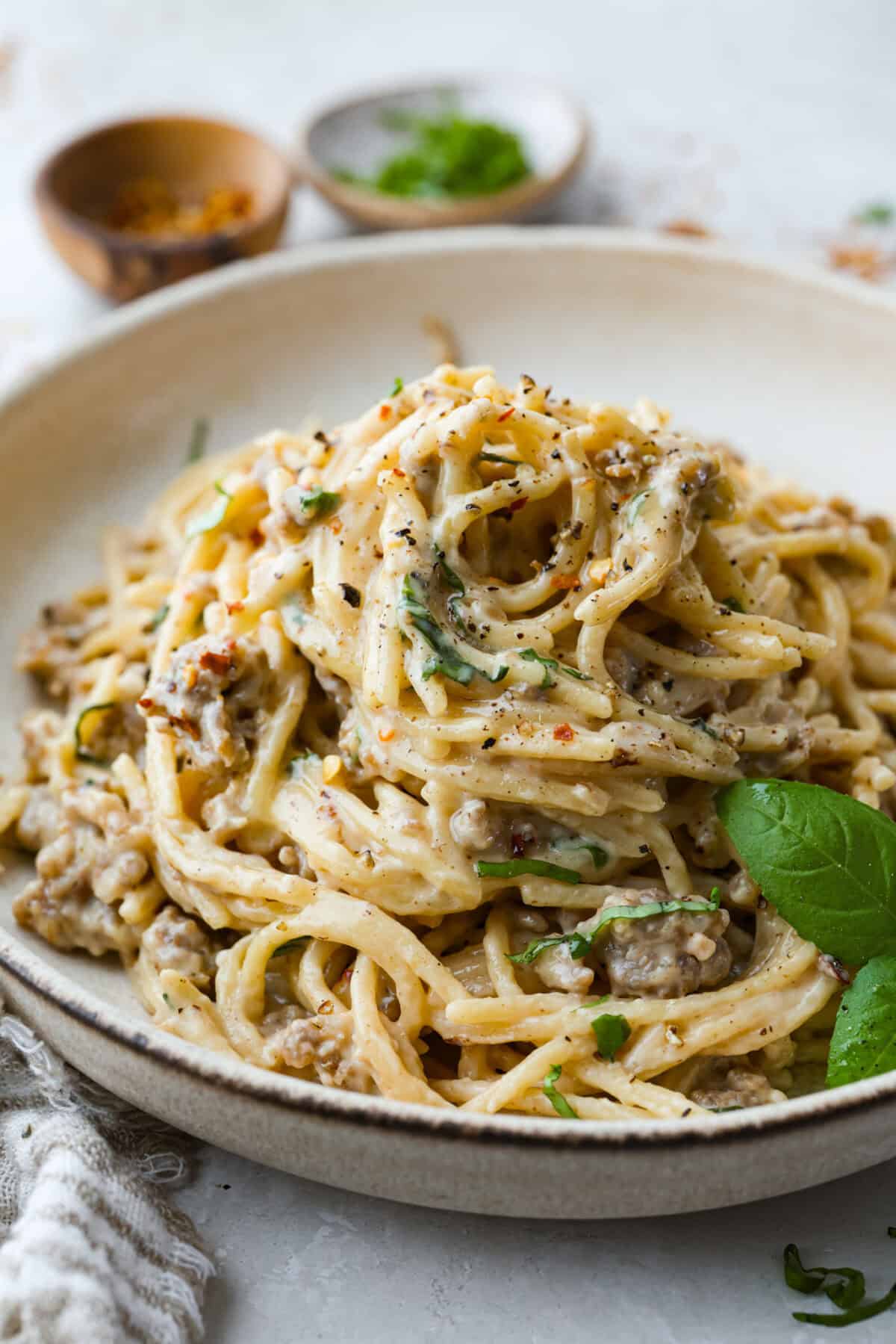
If you love a creamy pasta with big flavor, this creamy sausage spaghetti needs to be on your menu. Smoked Gouda adds depth, the sausage brings a little heat, and fresh basil adds brightness. Simple ingredients, quick to make, and always a hit!
Why This Pasta Recipe is a Stand Out
So Much Flavor: The combination of sausage, Gouda, and fresh herbs creates bold flavor in every bite. It’s balanced, satisfying, and never boring.
One Skillet Dinner: Everything cooks in one pan, which keeps things simple and makes cleanup a breeze.
Family Favorite: Everyone will go back for seconds! The creamy sauce and hearty sausage make it a hit for both kids and adults.
Creamy Sausage Spaghetti Ingredients
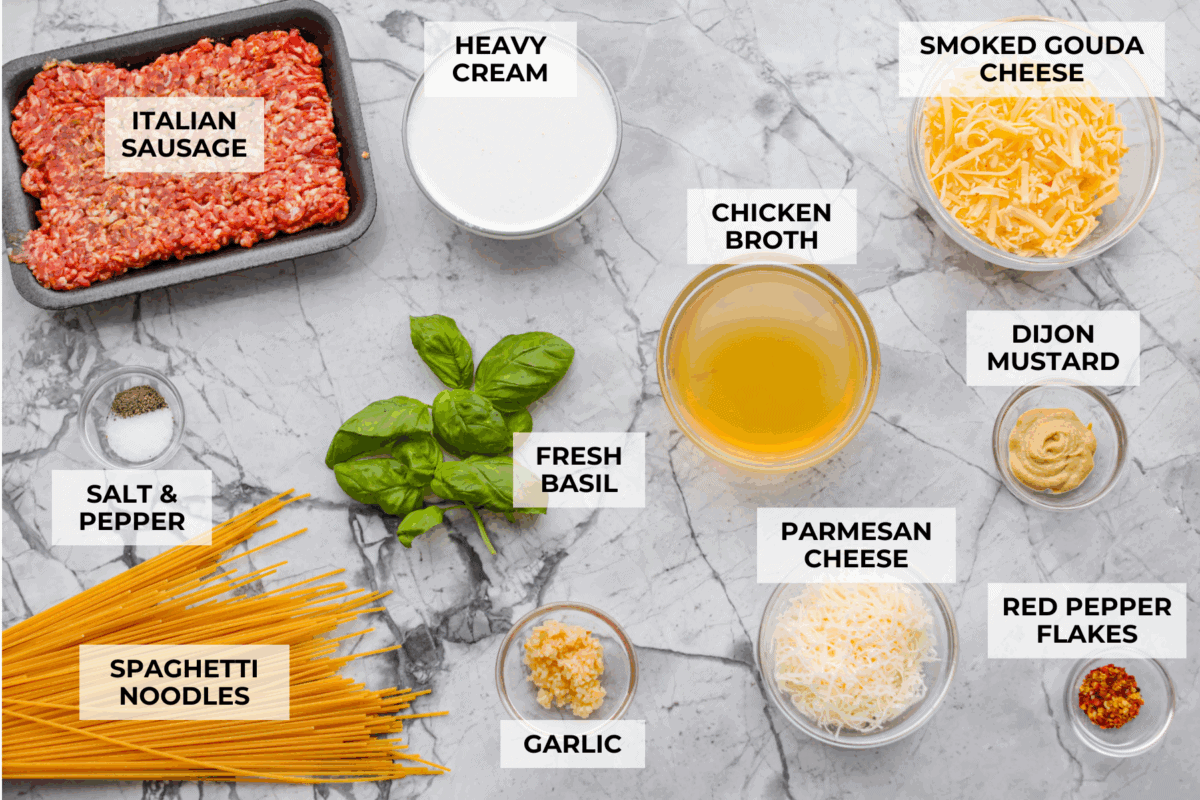
Sausage: Use sweet or spicy Italian sausage, breakfast sausage, or even maple sausage for a subtle sweetness that balances the savory flavors (it sounds different, but it really works!).
Basil: Fresh basil gives the best flavor, but you can substitute 2 teaspoons of dried basil if needed.
Cheese: Freshly shredded mozzarella, provolone, or gruyere can be used instead of smoked Gouda.
Pasta: Spaghetti works great, but you can use a short pasta instead, like penne, rigatoni, farfalle, or fusilli.
How to Make Creamy Sausage Spaghetti
This creamy sausage pasta recipe is an easy weeknight favorite. It’s great served with garlic bread, a fresh salad, and extra parmesan on top for the perfect finish.
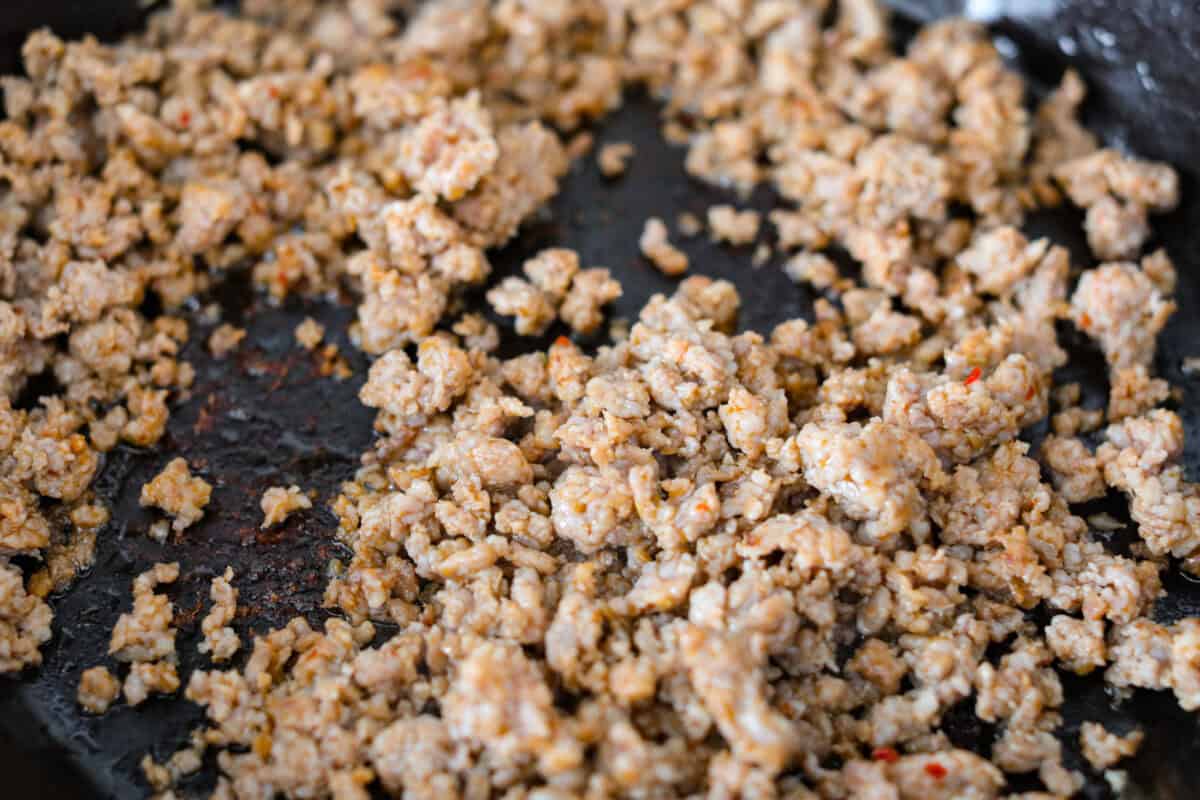
Pasta & Sausage: Bring a large pot of water to a boil, then cook the noodles according to the package directions. Reserve ½-1 cup of the pasta water before draining the noodles. Set aside. Add the Italian sausage to a 14-inch large skillet. Cook and crumble over medium high heat for 6-7 minutes, until no pink remains. Drain off any excess grease.
Add Garlic: Reduce the heat to medium, then add the garlic and cook for 1 minute. Add the chicken broth and scrape up the browned bits on the bottom of the pan.
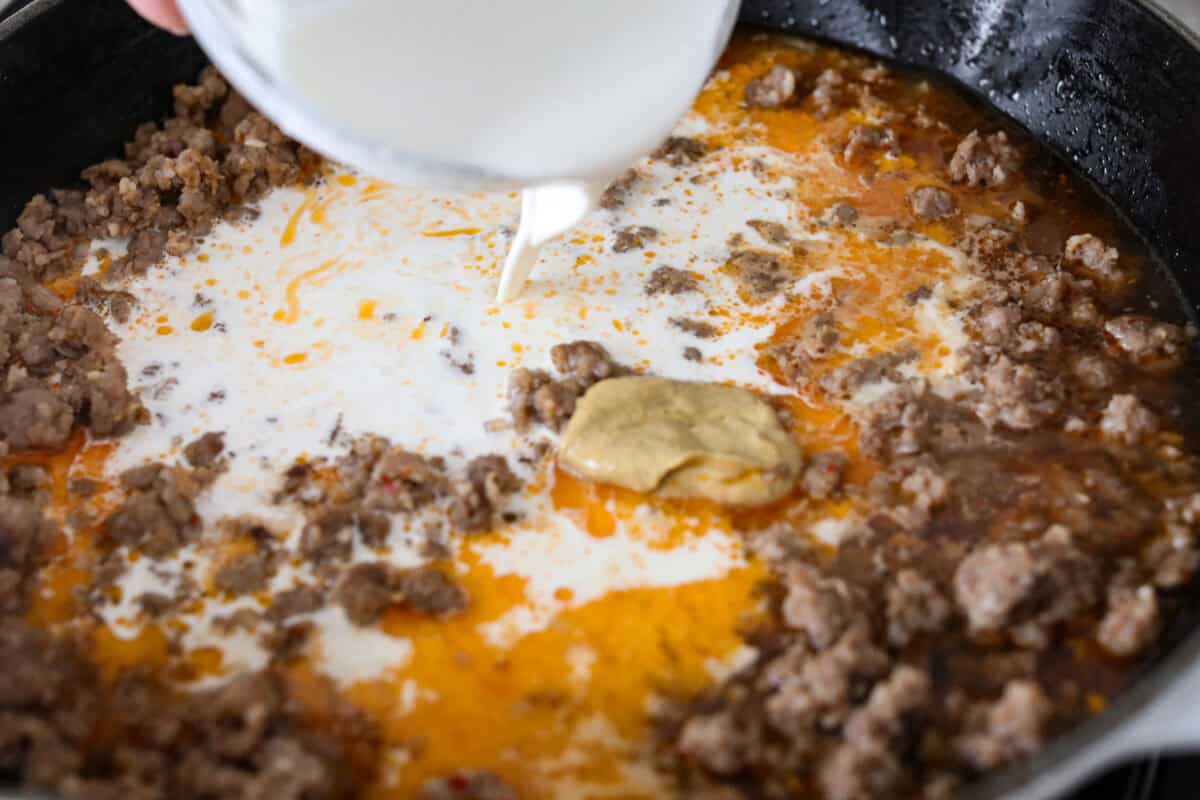
Simmer: Stir in the cream and Dijon mustard. Reduce the heat to medium low and simmer for 10 minutes, stirring often until thickened.
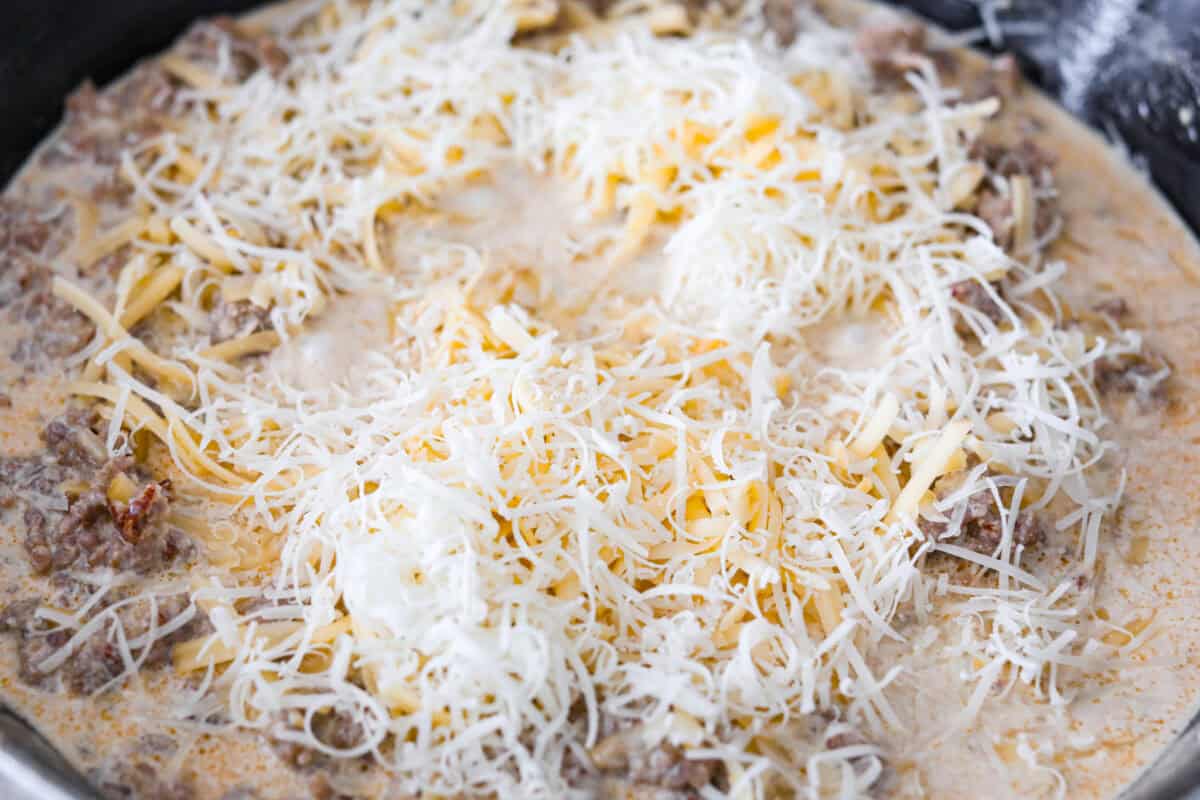
Add Cheese: Once thickened, stir in the smoked Gouda and Parmesan until fully melted.
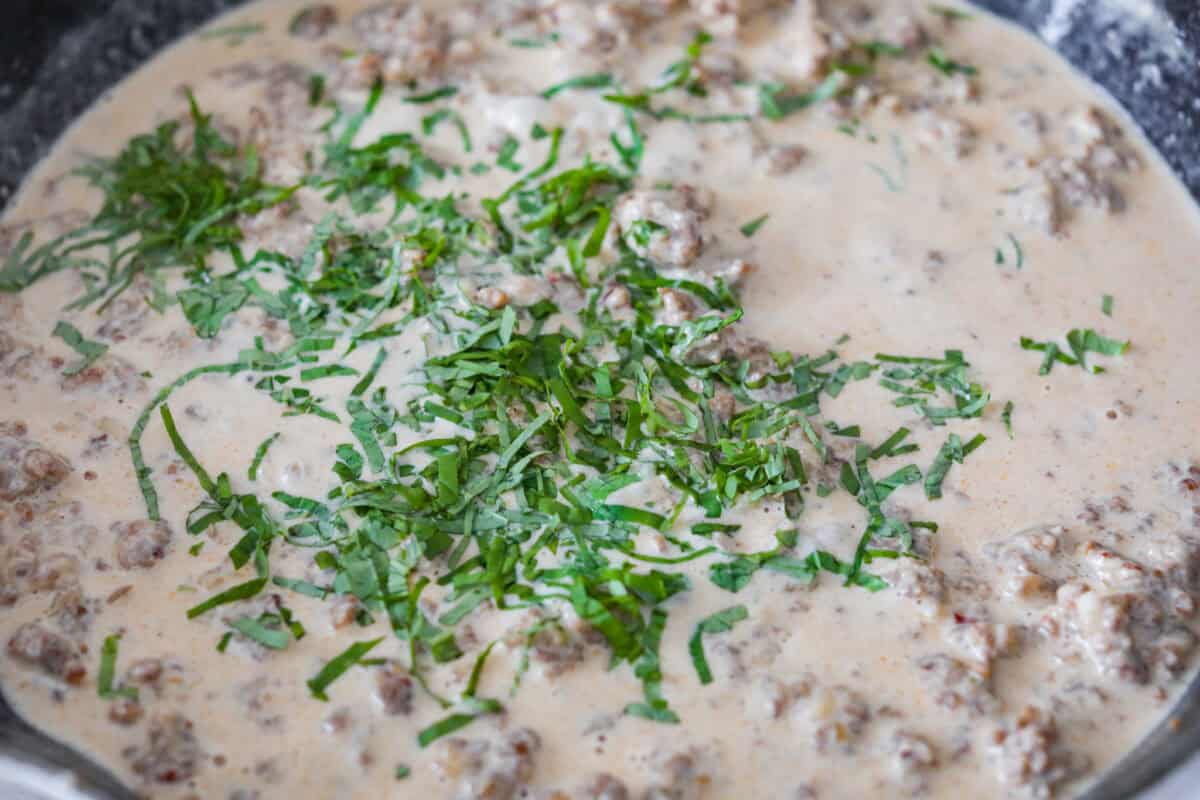
Add Herbs: Add the fresh basil, then taste and season with salt and pepper.
Stir in Pasta: Add the cooked pasta to the sauce and toss to coat. If needed, add a couple of tablespoons of the reserved pasta water to help loosen the sauce. This is especially helpful if the pasta sits for any amount of time before serving. Garnish creamy sausage spaghetti with red pepper flakes and serve immediately.
Alyssa’s Pro Tip
Save a little pasta water. It thins and smooths the cream sauce, and the starch helps it blend without getting watery. Add 1 to 2 tablespoons at a time, stirring until the sauce is just right.
Pin this now to find it later
Pin It
Prevent your screen from going dark
Bring a large pot of water to a rolling boil and cook 12 ounces spaghetti noodles according to the package. Reserve ½-1 cup of the pasta water before draining the noodles. Set aside.
Add 1 pound Italian sausage to a large 14-inch skillet and cook and crumble over medium-high heat for 6-7 minutes, until no pink remains. Drain off any excess grease.
Reduce the heat to medium, then add 1 tablespoon minced garlic and cook for 1 minute. Add 1 cup chicken broth and scrape up the browned bits on the bottom of the pan.
Stir in 1 cup heavy cream and 1 tablespoon Dijon mustard. Reduce the heat to medium-low and simmer for 10 minutes until thickened, stirring intermittently.
Once thickened, stir in 1 ½ cups shredded smoked gouda and ½ cup shredded parmesan until fully melted. Add 2 tablespoons sliced fresh basil, then taste and season with salt and ground black pepper.
Add the noodles to the sauce and toss to coat. If needed, add a couple of tablespoons of the reserved pasta water to help loosen the sauce (this is especially helpful if the pasta sits for any amount of time before serving). Garnish with red pepper flakes and serve immediately.
Storage, Reheating, & Make Ahead Instructions
Fridge: Store leftovers in an airtight container in the refrigerator for up to 7 days. Store reserved pasta water separately.
Reheating: Add about 1 tablespoon of the reserved pasta water or milk per serving, then microwave for 30 to 60 seconds. Stir well to restore the creamy, cheesy texture and help prevent the sauce from splitting.
Freezer Not recommended. The noodles, cream, and cheese do not freeze well.
Make Ahead: Best served right away. If it sits 10 to 15 minutes, stir in a splash of reserved pasta water to loosen the sauce before serving.
Nutrition information is automatically calculated, so should only be used as an approximation.
Make It a Meal
Turn this creamy sausage spaghetti dish into a complete meal with a few easy sides. Vegetables and garlic bread pair perfectly with the creamy pasta and help round out dinner.
This is an edition of Time-Travel Thursdays, a journey through The Atlantic’s archives to contextualize the present. Sign up here.
Of the many problems modern life has promised to solve, dinner remains a stubborn nuisance. Not the eating of it, exactly, but the endless planning for it: the recipe hunting, the shopping, the post-work reckoning of what is or isn’t in the fridge. An entire industry made up of meal-prep companies, delivery-food apps, and grocery-store frozen entrées is devoted to this nightly question.
Dinner has been vexing people for a very long time. Read the writing by women expected to run their household’s kitchen, and you can see how this sphere of domesticity has long doubled as a window into the shifting concerns of daily life. In 1932, Helen Keller published an Atlantic essay, “Put Your Husband in the Kitchen,” and opened with the intricate ritual of making a Christmas fruitcake. The scene is dense with logistics: nuts to crack, oranges and lemons to peel, a stove fire to maintain with “the utmost precision.” Family members are instructed to walk softly, so the batter won’t fall.
As she describes this carefully managed procedure, Keller notes that it is already becoming a “lost art.” New technologies were expediting even the simplest tasks. Electricity, preprepared ingredients, and advancements in home appliances had transformed household labor. A modern housewife could now call the grocer to place an order, because more households were installing telephones. “The machine age has come upon us, transforming the home no less surely than the factory,” Keller wrote.
Keller understood that the changes to domestic work revealed something larger about the economy and people’s broader anxieties outside the home. In 1918, a writer credited as Mrs. A. Burnett-Smith described a British food system strained by wartime scarcity. Milk was so limited that restaurants would not serve it unless a child was present; eggs had become prohibitively expensive. The new ration-card system, she noted, did not increase the food supply but did “insure equal distribution.” The problem for women was how meticulously these supplies had to be tracked when planning meals. “Food is not a very inspiring subject to write about,” Burnett-Smith wrote, “but it is very wonderful how inspiring it can become when there is none of it.”
As the century progressed, the strain in the kitchen took on a different character. By the late 20th century, women were entering the workforce in large numbers. In The Atlantic’s September 1986 issue, George Gilder observed that “drastic shifts in sex roles seem to be sweeping through America.” From 1890 to 1985, the labor-force participation of women ages 25 to 44 rose from 15 to 71 percent—a revolution that upended the calculus of family meals.
By the late 2010s, the technological transformation that Keller described had largely come to pass. The fruitcake didn’t need to be baked—it could be dropped off by an Uber Eats courier. The grocery store was always open. Dinner, in theory, should have been easier than ever. But the pressure around it hadn’t disappeared.
Writing in 2019, Amanda Mull described the familiar sight of meal-kit boxes—Blue Apron, HelloFresh—sitting abandoned and “slightly stinky” in apartment buildings. These services promised to streamline the nightly meal: perfect portions, no menu planning, restaurant-style cooking at home. Instead, they kept colliding with the same constraint: time.
“From February 2018 to February 2019, 45 percent of American meals were eaten alone,” Mull wrote. No matter how many meal kits and fast dinner solutions were being peddled to consumers, the structure of American life had shifted in ways that made a traditional dinner routine harder to sustain. Dual-income households had become common. Commutes had lengthened due to urban sprawl and more traffic congestion. Work had followed people home on their laptop. Fast-casual restaurants swooped in to fill in the gap.
“A quiet monologue runs through my head at all times. It is this: dinner dinner dinner dinner,” Rachel Sugar wrote last January. “The Dinner Problem might be especially acute for working parents like me—children are unrelenting in their demand to eat at regular intervals—but it spares almost no one. Disposable income helps mitigate the issue (disposable income helps mitigate most issues), but short of a paid staff, money does not solve it.”
If logistical innovation alone could have solved dinner, it would have been solved several times over. Even in what Sugar calls the “world-historic peak of dinner solutions,” the meal remains “unrelenting, in the way that breathing is unrelenting.”
Meals can now be reheated in minutes. The groceries may arrive in a box, and the onions may come pre-chopped. But the constant decision making—what to prepare, when to eat it—hasn’t gone anywhere. What happens in the kitchen has never been just about food.
Modiphius Entertainment today announced that it is developing a tabletop roleplaying game for the Wolfenstein license, in collaboration with Bethesda Softworks. It will be the next official Bethesda title released by Modiphius, joining tabletop adaptations of Fallout, Dishonored, The Elder Scrolls, and Doom.
The game will focus be primarily based on the newest games Wolfenstein: The New Order and Wolfenstein: The New Colossus—developed by the award-winning team at MachineGames—that explore an alternate history in which the Nazis defeat the Allies in World War II and use their advanced military technology to conquer much of the world.
Utilising Modiphius Entertainment’s 2d20 system, which is being adapted specifically for this new game, Modiphius plans to crowdfund the Wolfenstein tabletop RPG in Fall 2026. Armed with a variety of advanced weapons and equipment, it’s up to players to wage war as resistance fighters against their oppressors with the blood, fire, and fury exemplified in the iconic video games from MachineGames.
Chris Birch, co-founder of Modiphius, said, “As a result of our continued relationship with Bethesda Softworks, we’re thrilled to announce that we are working on a tabletop roleplaying game for Wolfenstein. We hope that fans will enjoy being able to immerse themselves in the world in a new way. Get psyched!”
To be notified of when the Wolfenstein tabletop RPG launches on crowdfunding, sign up to the Modiphius mailing list.
Images via Modiphius
Have strong thoughts about this piece you need to share? Or maybe there’s something else on your mind you’re wanting to talk about with fellow Fandomentals? Head on over to our Community server to join in the conversation!
Picture yourself hiking mist-shrouded trails, stopping in at a family-run taverna for the day’s freshest fare, and sharing stories in a hilltop village — all on an immersive small-group tour. Europe offers a wealth of destinations that blend culinary discovery with scenic walks and local charm, but finding those authentic spots can be a challenge.
That’s where G Adventures comes in. We’ve spent over 30 years perfecting the art of the active getaway, specialising in tours that prioritise community connection and local flavour. Whether you’re craving a challenging summit or a slow stroll through a medieval hamlet, our trips blend physical adventure with culinary discovery.
Why G Adventures is perfect for food, hiking, and village explorers
We believe the best stories don’t come from waiting in long lines or in a crowded terminal; they come from authentic moments like sharing a meal with local people in a remote homestay. We focus on small groups, usually of no more than 16 travellers, which allows us to stay in unique guesthouses and navigate narrow village lanes that big coaches can’t reach.
With over 200 tours across Europe, our reach spans from the sun-drenched Amalfi Coast to the quiet fjords of the North, and everywhere in between. Each of the tours below include the best walking and hiking experiences with the finest local food and wine around. Whichever trip you pick, a local Chief Experience Officer (CEO) will be on hand to create the best experience possible. These experts don’t just show you the map; they introduce you to the local-business owners and trail shortcuts that only insiders know about.
The best routes for foodies and hikers in Europe
If you’re wondering where to go in Europe for the perfect trifecta of active days, indulgent evenings and local experiences, take a look at our pick of the best places to go in Europe if you love food, hiking and small villages.
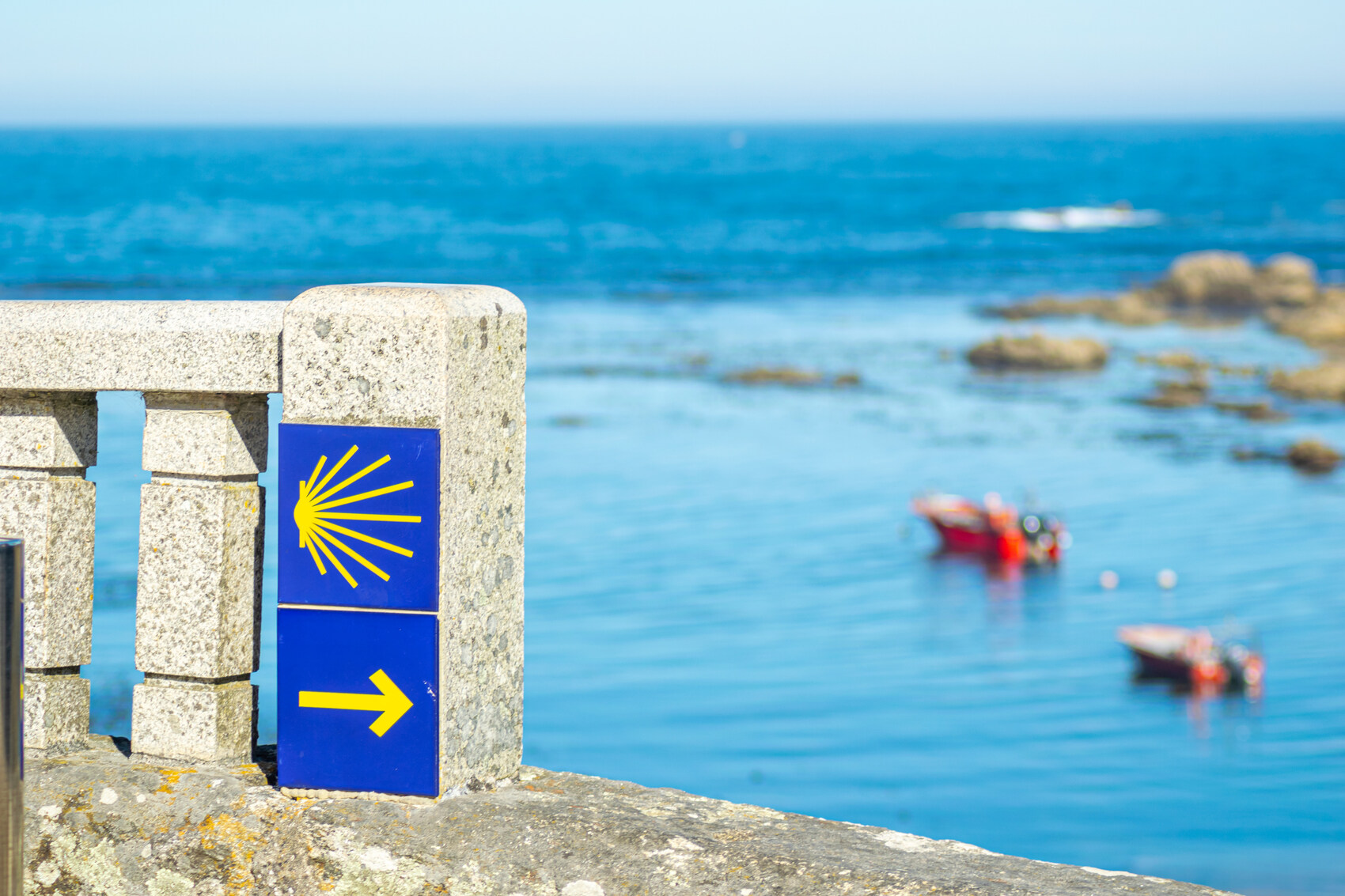
The Camino de Santiago
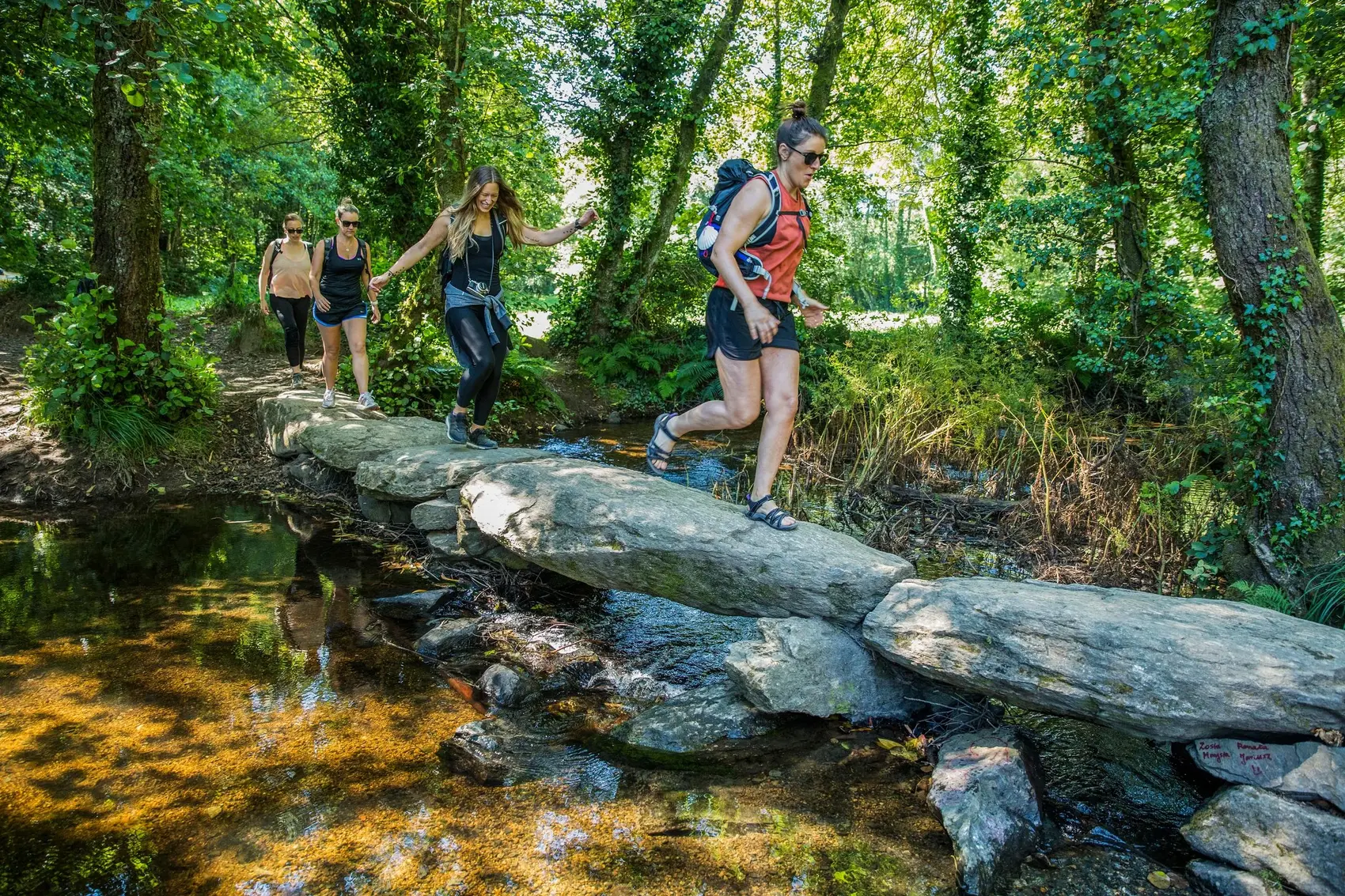
Walk this famous trail in Spain and trace the historic pilgrims’ trails through the rural landscapes of northern Spain. Along the way, fuel your journey with authentic tapas and pintxos, artisanal Manchego cheeses, and crisp Galician white wines.
Many walkers join the classic French Way, passing through eucalyptus forests, rolling farmland, and misty Galician peaks while completing the final 100km (62 miles) of this epic pilgrimage. The villages along the route add to the charm, with traditional guesthouses where you can rest and meet fellow peregrinos in tiny stone hamlets.
See it for yourself: On Camino de Santiago Encompassed
The Amalfi Coast
Experience one of Italy’s most romantic regions while staying in a converted 16th-century monastery high above the sea. Enjoy local flavours like Amalfi lemons, fresh mozzarella, and handmade dishes in family-run trattorias, and take part in a cooking demonstration followed by a traditional dinner using ingredients from the property’s gardens.
Hike the famous Sentiero degli Dei (Path of the Gods) for sweeping coastal views as you follow ancient paths through lemon groves and cliffside vineyards. You’ll also have time to explore the charming streets of Positano and Amalfi, while staying in the quieter hilltop town of Furore to experience a more local side of the coast.
Experience it for yourself: Local Living Italy—Amalfi Coast
Portugal’s Atlantic Coast
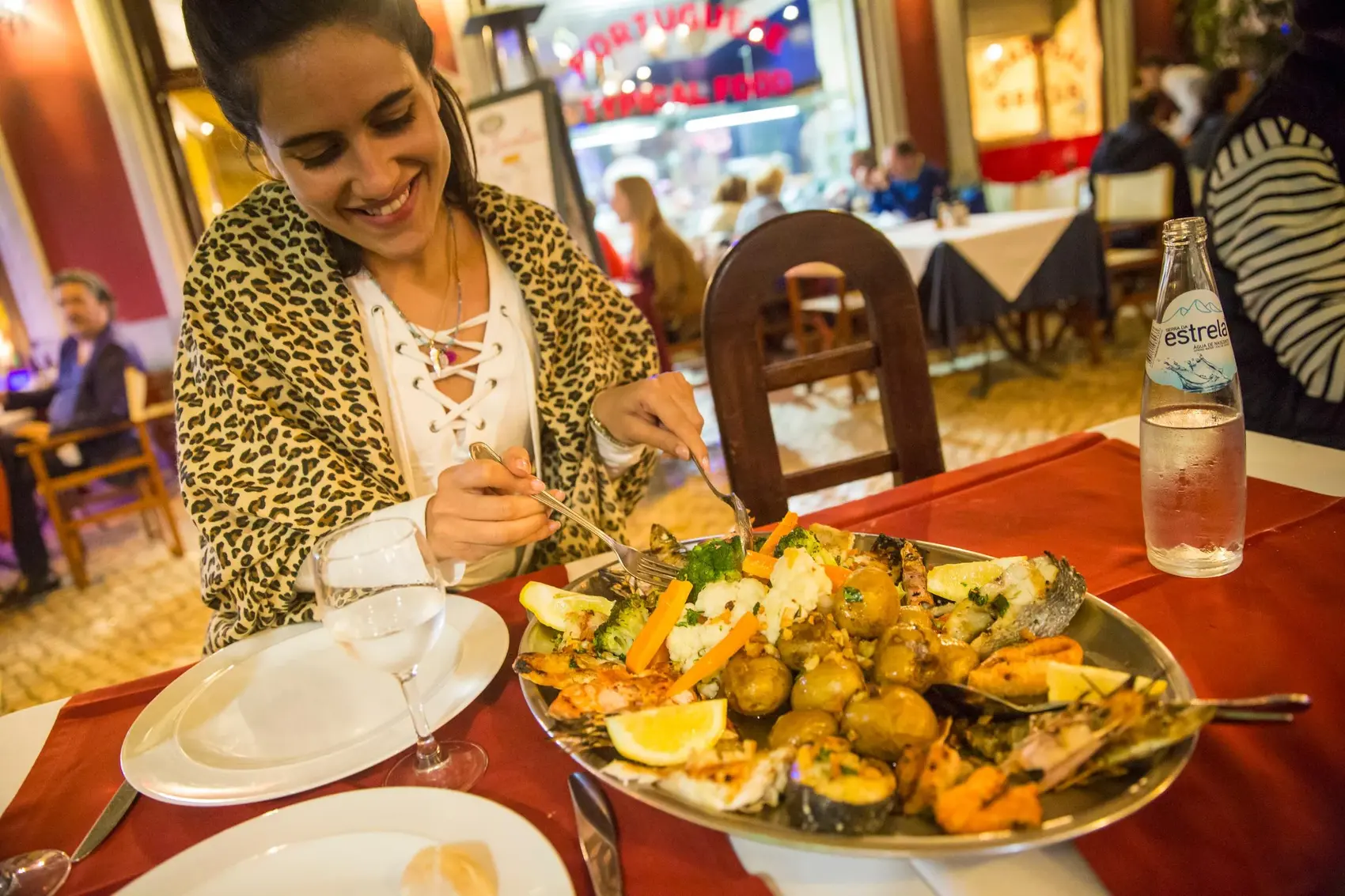
Combine raw coastal beauty with the medieval charm of Portugal on a journey from Lisbon to Porto. Along the way, savour fresh Atlantic seafood and wine-country meals in the Douro Valley, with the option to enjoy a traditional dinner in Lisbon accompanied by a live Fado performance. In Porto, you can also visit historic port cellars and sample the region’s famous export.
Orientation walks reveal the character of Lisbon and Porto’s hilly, tile-lined streets, while free time lets you explore the university city of Coimbra or visit the colourful palaces of Sintra. You’ll also stop in Batalha to see its remarkable 14th-century monastery, a UNESCO World Heritage site, while small-group travel allows time to discover smaller villages along the way.
Discover it for yourself: Highlights of Portugal
Eastern Europe
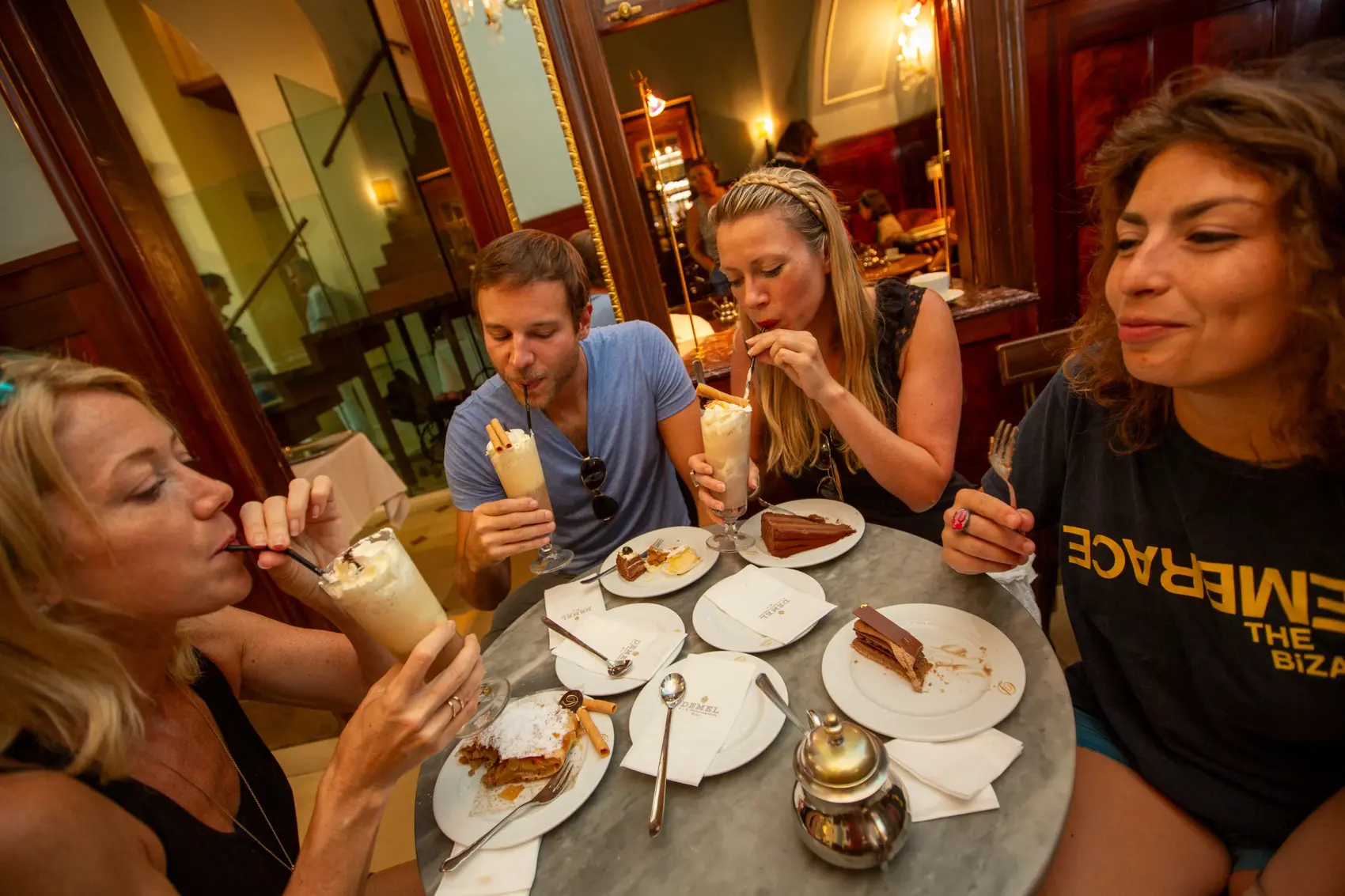
Experience the grit and grandeur of the former Austro-Hungarian Empire on a journey through Germany, Czech Republic, Poland, Hungary, and Austria. Along the way, discover Central Europe through its flavours, from hearty Pierogi in Kraków to the elegant café culture of Vienna. You can also tour a local brewery in Český Krumlov and enjoy a traditional Hungarian meal in Budapest.
Orientation walks reveal the layered histories of cities like Prague and Kraków, including time in Kraków’s Jewish Quarter and a visit to the sobering memorial at Auschwitz-Birkenau. In Český Krumlov, a UNESCO-listed town, medieval streets and colourful buildings create a storybook setting, with centrally-located stays giving you time to explore local squares, bakeries, and artisan shops.
Explore it on: The Best of Eastern Europe
Iceland
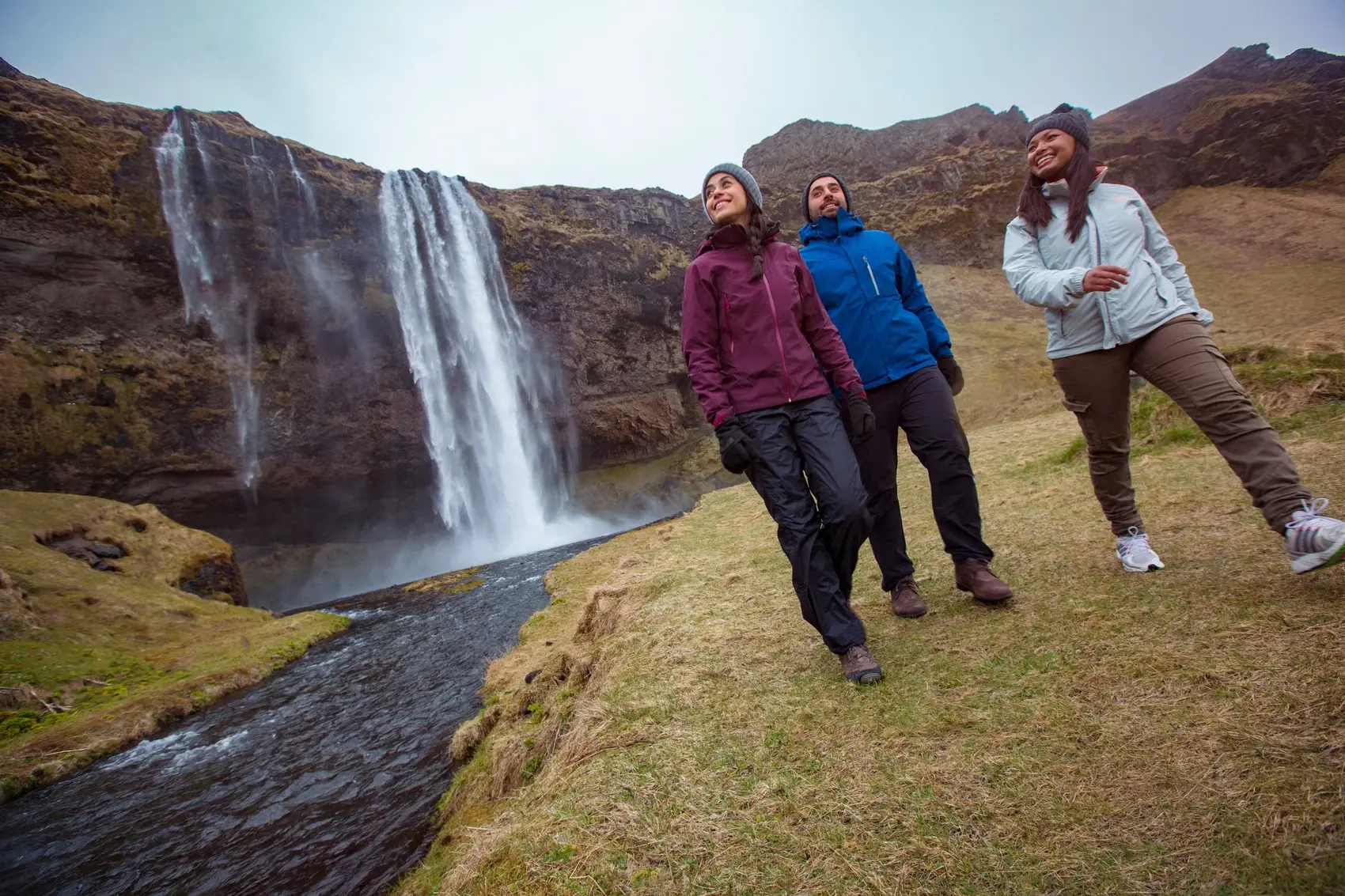
Explore the dramatic landscapes of Iceland, the ‘Land of Ice and Fire’, where roaring geysers, glaciers, and powerful waterfalls shape the terrain. Along the way, enjoy fresh Nordic cuisine during farm-to-table stays and visit a local farm to learn about traditional Icelandic agriculture while sampling regional specialties.
Adventures include the option to hike on a glacier in Skaftafell within Vatnajökull National Park, trek to the mighty Dettifoss waterfall — one of Europe’s most powerful — and explore the volcanic landscapes around Lake Mývatn. You’ll also visit remote hamlets near the eastern fjords and the fishing village of Höfn before seeing the steaming geothermal area of Námaskarð and the striking icebergs of Jökulsárlón Glacier Lagoon, a glacial lake formed by the retreat of a nearby glacier.
Visit Iceland on: Best of Iceland
The Azores
Often named Europe’s leading adventure destination, the Azores are a volcanic archipelago made for hikers. While exploring, savour a traditional Cozido das Furnas—a hearty meat and vegetable stew slow-cooked underground using volcanic heat in the town of Furnas. You’ll also visit Gorreana Tea Plantation, one of Europe’s only tea plantations, to learn about the island’s agricultural history and sample the local brew.
Hikes here include the rim of the Sete Cidades Caldera for views of its twin lakes, and a trek to Lagoa do Fogo, a protected crater lake surrounded by dramatic cliffs and lush greenery. Your stay in the lively capital Ponta Delgada also leaves time to explore the spa village of Furnas, relax in natural thermal pools, and connect with life in these remote island communities.
Hike it for yourself on: Hiking the Azores
Madeira
Discover the ‘Pearl of the Atlantic’ Madeira — a rugged volcanic island just off Portugal where ancient laurel forests meet dramatic coastal cliffs and a mild, year-round climate. In Funchal, visit the lively Mercado dos Lavradores to sample exotic fruits, and stop by a local winery to taste the island’s famous Madeira wine paired with regional snacks. A sensory overload some might say!
Hiking adventures follow the island’s historic Levadas through the Laurisilva Forest and up to Pico do Arieiro for sweeping views across the island’s rugged interior. You’ll also explore the coastal town of Machico and the village of Santana, known for its colourful triangular thatched houses, with evenings free to wander local squares and dine in family-run tavernas.
See it for yourself on: Hiking in Madeira
Albania, Kosovo and Montenegro
Experience the rugged beauty of the mighty Accursed Mountains on a trek through three Balkan countries — Albania, Kosovo, and Montenegro. Along the way, enjoy traditional mountain meals featuring fresh cheeses, honey, and hearty stews, including a home-cooked dinner in the remote Dobërdol Valley where local ingredients and warm hospitality define the whole trip.
The journey follows sections of the Peaks of the Balkans Trail, including the classic hike from Valbona to Theth in Albania and a border crossing on foot over Gjeravica Pass. You’ll also trek through the lush landscapes of Biogradska Gora National Park, staying in remote shepherd villages and simple family-run guesthouses that offer a glimpse into life in these high-altitude communities.
Explore it for yourself on: Hiking in Albania, Kosovo and Montenegro
Helpful planning tips for your European adventure
Planning ahead can transform your European adventure from memorable to unforgettable. From choosing the right trails and regions to matching your itinerary with your fitness level and seasonal preferences, a little preparation goes a long way in making every hike, meal, and village visit feel effortless and rewarding.
Choosing the right region
Your destination should match your cravings, both for the trail and the table. If you’re after Mediterranean flavours and coastal walks, look towards Italy or Spain. For dramatic, volcanic landscapes that feel like another planet, the Azores and Iceland are unbeatable. If you want heartier mountain fare and trails that feel like your own secret discovery, the Balkans offer incredible value and authenticity.
Trip styles and fitness
We encourage you to book based on your specific appetite for adventure and your current fitness level. G Adventures offers a huge range of pacing; you can challenge yourself on high-altitude treks through the Accursed Mountains or opt for a more relaxing and indulgent food-and-wine focused trip where the walking is gentle and the focus is firmly on the vineyard.
Seasonal considerations
While June is a peak month for European travel, consider booking during the shoulder season (typically May, September, or October) or even off-season. Travellers who head out during these months can often enjoy fewer crowds at iconic sites, lower prices, and great weather that is perfectly suited for active days.
Booking smart
Don’t wait for a moment that never comes. We have availability for our European adventures running right up into 2027, so you can secure your spot on a popular route like the Camino de Santiago or the Amalfi Coast well in advance.
Why should I book with G Adventures?
At G Adventures, we’ve been perfecting the art of small group adventure tours for over 30 years. We know that the difference between a good trip and a life-changing adventure comes down to three things: the right group size (small enough to be flexible, big enough to be fun), local guides who are part of the community and who know where the real magic happens, and itineraries that balance must-see highlights with those pinch-me moments you never saw coming in unique destinations.
Is G Adventures good for solo travellers?
Absolutely! Most travellers on G Adventures trips are solo, and our small group adventure tours make it easy to connect fast. You’ll share stories, laughs, and maybe even a tent (although you’ll be able to choose your own room if you prefer). Our Solo-ish tours are specifically designed for solo travel, prioritising safety while giving ample opportunities to meet local people and other travellers. Perfect for adventurous spirits who want the freedom of solo travel with the security of group support.
Are these destinations safe in 2026?
Yep. Every spot on our list is carefully vetted; our local CEOs (Chief Experience Officers) live and breathe these places, so you’re in expert hands from the moment you land. We keep it responsible, safe, and big on local know-how, so you can focus on adventure, safe in the knowledge that you’ll be well taken care of. For hints and tips, check out our advice for safe travel.
Do G Adventures tours include local food experiences?
Yes! We believe you can’t truly know a place until you’ve tasted it. Whether it’s a cooking demonstration for regional fare in an Italian agriturismo, a geothermal stew slow-cooked in the volcanic soil of the Azores, or a farm-to-table feast in rural Iceland, our itineraries are packed with flavour. We prioritise local eateries and family-run taverns over generic hotel buffets, ensuring your travel spend stays in the community while you get an authentic taste of local life.
Which European region is best for a foodie hiker?
That’s a tough call — it really comes down to what you’re hungry for. If you want sun-drenched coastal trails followed by fresh seafood and a crisp glass of wine, then Italy or Portugal are your winners. If you’re after something more rugged and remote, head to the Balkans for hearty mountain stews and local cheeses in shepherd villages. For those who want dramatic, otherworldly landscapes paired with fresh Nordic fare, Iceland it is. Pick the terrain that excites you most and the local food will handle the rest.
How active are G Adventures trips — do I need to be super fit?
Not at all. G Adventures designs trips across a wide range of activity levels, so you can choose what suits your comfort and fitness. Some tours focus on gentle walking, cultural experiences, and relaxed pacing, while others include longer hikes, higher elevations, or multi-day treks.
Each itinerary clearly lists physical ratings, daily distances, and terrain so there are no surprises. Your CEO also adjusts the pace when possible and offers alternatives on more challenging days. In short, you don’t need to be an athlete — you just need a sense of curiosity and a willingness to get out there and explore.
So, ready to trade the tourist trail for village tavernas and mountain dinners? Whether you’re looking to conquer high-altitude peaks in the Balkans or settle into the slow rhythm of an Italian coastal village, we’ve got a spot at the table waiting for you.
Browse our full range of G Adventures Europe tours and start planning your next great adventure
It’s 2026, and the headlines all say the same thing: Phishing has only become more sophisticated and harder to spot.
Email and phishing attacks are still common and act as the front door to most cybersecurity attacks. I see it constantly: phishing getting more convincing, BEC attacks slipping past basic filters, and IT teams stuck explaining why their native protection wasn’t enough.
If you’re responsible for email security, I can understand that the pressure is real, regardless of whether you’re protecting a global enterprise or a fast-moving SMB. I also understand that this turns quite cumbersome when you are expected to secure quietly, perfectly, and without slowing anyone down.
As part of my work analyzing tools and software performance, I’ve come across how costly email-based attacks can be. I know the stakes are high. To cut through vendor noise, I leaned heavily on G2 Data, including Grid Reports, satisfaction scores, and hundreds of verified user reviews to collate the best cloud email security platform. I focused on how real teams describe day-to-day protection, ease of management, deployment experience, and overall value.
The result is a practical, buyer-focused view of what actually works in 2026, based on how teams are using these tools in the real world. Here are my top six picks for the best cloud email security platform tools: Proofpoint Core Email Protection, Mimecast Advanced Email Security, Microsoft Defender for Office 365, Paubox, Acronis Cyber Protect Cloud, and Coro Cybersecurity.
Deadly Sons: Matthew Cote shot and killed his mother, Cheryl Cote and her boyfriend, Daniel Perkins; Sentenced to two life sentences plus 30 years | Bonnie’s Blog of Crime
Shipping is free on orders over $35 (or sign up with Walmart+ to get free shipping on all orders, no minimum!). Also, have you heard of Walmart Hidden Clearance?! It’s like a secret treasure hunt!
Valid for a limited time only, while supplies last.
Published: by AnnaLeave a Comment · This post may contain affiliate links. If you make a purchase through links on our site, we may earn a commission.
This easy Bread and Egg Casserole is the savory version of a bread pudding, with a light and fluffy inside and a golden, crispy top. It is the best way to use leftover bread and any ingredients you would use in an omelette!
Jump to:
Why This Recipe Works!
This recipe is my new favorite way to use leftover dry bread. Seriously! Dry croissants? Leftover baguette? A few slices of brioche? I turn it into this delicious casserole that can be served for weekend breakfast, a special day brunch, even lunch, or as breakfast for dinner. It is so quick and easy to make!
I called it Bread and Egg Casserole because this recipe does not limit you to just one kind of bread, like croissants. Use what you have on hand (check out my tips on that below), and add your favorite breakfast or brunch ingredients. What you like in an omelette, you can use here!
Ingredients:
bread: any kind, I used croissants;
eggs: use one egg per cup of bread;
milk: I use whole milk or a mixture of heavy cream and whole milk;
seasoning: salt and pepper, garlic powder;
additional: ham, cheese, etc.
How to make bread and egg casserole?
This is an overview of the recipe steps. All ingredient measurements and detailed process steps are provided in the recipe box below.
Preheat the oven and butter a 2qt baking dish.
Cube the bread into bite-sized pieces. Arrange in the baking dish. Add ham and cheese, if using.
Whisk eggs and milk really well. Add salt and pepper and mix in.
Pour the egg mixture over the bread.
Bake the casserole until the egg mixture is set.
Anna’s Helpful Tips!
I’ve made this casserole almost every week for the past few months, and I have tips for you:
Use a mix of milk and heavy cream! If you have heavy cream on hand, add it to the egg mixture, or use half-and-half. It makes the casserole even richer in flavor!
Soak the dry bread! The drier the bread, the more time it needs to soak before baking. Croissants, even the driest, don’t need to be soaked, but if you are using sourdough, let it sit in the egg mixture, even overnight, before baking the dish.
Add more flavor! I almost always add ham and cheese to this casserole. Cooked breakfast sausage or bacon, sauteed onions and peppers, even shredded chicken – all can be added to this dish!
Check the center even if the baking time is done! Check the center of the casserole when the baking time is done. Sometimes the egg mixture is still not done, and the dish needs to bake a little longer. Add 5 more minutes and check the dish again.
Bake the dish covered at the beginning! For the first 20 minutes, I bake the casserole covered with aluminum foil or a dish lid. Depending on the bread, the pieces can burn, while the center still needs a little more time to cook. I find croissants tend to brown too fast, so definitely cover the dish if you are using them.
Recipe FAQs:
What bread can I use to make this dish?
Any kind! That is the best part. If you have any stale bread, perfect! Cube it and make this dish. I’ve used baguettes, croissants, a mix of sandwich bread and hot dog buns, etc.
Can I make this dish ahead of time?
Absolutely! You can assemble the dish and refrigerate it overnight OR bake the casserole, cool completely, and store it for the next day. Reheat before baking.
How to store leftovers?
Any leftovers should be stored in the fridge for up to 2 days. Reheat in an air fryer, toaster oven, or microwave before serving.
If you like this recipe and make it, let me know in the comments below! Don’t forget to rate it if you enjoyed it!
Please read the tips and FAQs posted above before making this recipe.
Bread and Egg Casserole
This easy Bread and Egg Casserole is the savory version of a bread pudding, with a light and fluffy inside and a golden, crispy top. It is the best way to use leftover bread and any ingredients you would use in an omelette!
Servings 6servings
Calories 618kcal
Prevent your screen from going dark
Instructions
Preheat the oven to 375℉.
Butter a 2qt baking dish or a 13″ x 9″ casserole dish.
Cube the bread into bite-sized pieces.
5 cups cubed bread
Arrange in the baking dish.
Add ham and cheese, if using. I used ½ cup of each diced ham and shredded cheddar cheese.
Whisk eggs and milk really well. Add salt and pepper, garlic powder and mix in.
5 large eggs, 1 cup whole milk, ½ teaspoon kosher salt, ¼ teaspoon black pepper, ½ teaspoon garlic powder
Pour the egg mixture over the bread. Stir in ith a wooden spoon to ensure every piece of bread is coated with the egg mixture.
Cover the dish with aluminum foil and bake for 20 minutes, then remove the foil and bake for 15 to 20 more minutes.
Once the baking time is done, check the center of the casserole with a spoon. If the egg mixture is still runny, add 5 more minutes of baking.
Remove the casserole from the oven and let it sit for 10 minutes to cool.
Serve garnished with chopped green onions or parsley.
Notes
If you have heavy cream on hand, add it to the egg mixture, or use half-and-half.
If you are using sourdough, let it sit in the egg mixture, even overnight, before baking the dish. This gives the custard mixture time to soak into the bread.
Add cottage cheese, diced ham, and shredded cheese to this casserole.
I’ve used baguettes, croissants, a mix of sandwich bread, and hot dog buns to make this dish. Use what you have on hand!
The nutritional value can vary depending on what products you use. The information below is an estimate.
Embracing connectivity, automation, and innovation across vendors.
February is the month of love and friendship. At Cisco DevNet, we used that spirit as inspiration to celebrate something we care deeply about: building meaningful connections across the networking ecosystem. The Month of Smart Connections campaign explored how automation and programmability can bring different vendors together through open standards, shared tooling, and practical workflows.
Across four videos, each paired with its own code repository, we showcased vendor-agnostic approaches to network automation. From scripting fundamentals to agentic AI workflows, the Month of Smart Connections delivered practical ideas to help you start or strengthen your multi-vendor automation journey.
Episode 1: Loving All Vendors
Good relationships start when everyone agrees on how to talk to each other.
In this episode, we introduced how to use Cisco Crosswork Network Services Orchestrator (NSO) to pull and commit configurations across multi-vendor environments. One RESTCONF API, zero vendor drama. We also demonstrated two lightweight GitHub Copilot agents designed to help you discover the correct configuration URIs based on the Network Element Driver (NED) of your chosen platform.
Automation works best when tools speak a common language. Sometimes the strongest connections come from learning how to collaborate beyond familiar boundaries.
Episode 2: Choose Your Love Language
There are many ways to express your affection for automation.
In this episode, we explored three approaches: Python scripting, Ansible playbooks, and CI/CD pipelines. While each workflow has its own style, they share the same foundation: OpenConfig as a vendor-agnostic data model and gNMI as the protocol that complements it best.
No matter which toolchain you prefer, open standards allow consistency across environments and teams. The message is simple: your workflow can be personal, but your foundation should be universal.
Episode 3: Trust Issues
Automation only works if you trust what it does.
In this episode, we explored the open-source Robot Framework and expanded it into a vendor-agnostic testing framework tailored for networking. By creating custom Python keywords and leveraging the OpenConfig and gNMI combination once again, we demonstrated how automated validation can become a natural part of network operations.
Testing transforms automation from experimentation into reliability. Trust is not assumed in automation. It is continuously verified.
Episode 4: Intentions Matter
The best connections turn conversations into outcomes.
In the final episode, we built an AI agent to enable ChatOps for everyday multi-vendor networking tasks. Using the open-source platform LibreChat and a carefully designed agent persona, we integrated multiple Model Context Protocol (MCP) servers orchestrated through a single Docker Compose deployment: the pyATS community MCP server alongside official integrations for NetBox, GitHub, and Draw.io.
Through a single chat interface, we synchronized inventories using NetBox and the netbox-secrets plugin for credentials, executed device audits, generated reports committed to GitHub, opened issues automatically, validated and deployed configurations with built-in safeguards, and rendered network diagrams on demand.
The Month of Smart Connections was ultimately about showing that modern network automation is not defined by vendors, but by interoperability, openness, and shared practices. By combining open standards, automation frameworks, testing methodologies, and AI-driven workflows, this series demonstrated how teams can build networks that collaborate as effectively as the people who operate them. Strong automation strategies, like strong relationships, are built over time through consistency, trust, and meaningful connections.