Notice: Function _load_textdomain_just_in_time was called incorrectly. Translation loading for the td-cloud-library domain was triggered too early. This is usually an indicator for some code in the plugin or theme running too early. Translations should be loaded at the init action or later. Please see Debugging in WordPress for more information. (This message was added in version 6.7.0.) in /home/releande/public_html/wp-includes/functions.php on line 6170 News Magazine | Get The Most Freshy News Every Day | Page 32
Seattle police detectives are investigating a robbery and shooting of a 23-year-old man over a $20 necklace in Pioneer Square this morning.
At about 12:40 a.m., patrol officers responded to a shooting in the 500 block of 2nd Avenue. There, they found a victim, bleeding, with a gunshot wound to his right thigh. Police and the Seattle Fire Department treated his injury. Medics took him to Harborview Medical Center (HMC) in stable condition.
Police determined that the victim just left a bar, getting into the passenger seat of his friend’s car, when the suspect, wearing a ski mask and armed with a firearm, approached him and demanded his necklace. They struggled over the item, and the suspect shot the victim in the leg. The shooter fled in a vehicle with the necklace before police arrived. The value of the “chain” is about $20.
Detectives in the Robbery Unit responded to the scene and HMC. Anyone with information is asked to call the SPD Violent Crimes Tip line at 206-233-5000. Anonymous tips are accepted.
Eric Dane died less than a year after announcing his diagnosis with amyotrophic lateral sclerosis (ALS). The late Grey’s Anatomy alum’s death left fans, peers and those closest to him heartbroken. And for those unfamiliar with Eric’s health, many are wondering how he died and what ALS is.
The Dane family confirmed Eric’s death in a statement obtained by People.
“With heavy hearts, we share that Eric Dane passed on Thursday afternoon following a courageous battle with ALS,” the statement read. “He spent his final days surrounded by dear friends, his devoted wife, and his two beautiful daughters, Billie and Georgia, who were the center of his world. Throughout his journey with ALS, Eric became a passionate advocate for awareness and research, determined to make a difference for others facing the same fight. He will be deeply missed and lovingly remembered always. Eric adored his fans and is forever grateful for the outpouring of love and support he’s received. The family has asked for privacy as they navigate this impossible time.”
Learn what happened to Eric and his final days below.
How Old Was Eric Dane?
Eric was 53 years old when he died.
Eric Dane’s Cause of Death: How Did the Actor Die?
As previously noted, Eric died following his battle with ALS, which is a progressive neurodegenerative disease. The illness is also known as Lou Gehrig’s disease.
According to his death certificate obtained by People, Eric died of respiratory failure; ALS was an underlying cause of death.
What Is ALS? About the Disease Eric Dane Had
ALS is a disease in the nerve system that affects cells in the brain and spinal cord, causing loss of muscle control over time, according to Mayo Clinic. The disease usually begins with twitching and/or weakness in muscles, trouble swallowing or slurred speech. It is considered a fatal disease.
Eric remained dedicated to raising awareness about his illness during his last year. He revealed his diagnosis in April 2025 in a statement to People.
“I have been diagnosed with ALS,” the actor said at the time. “I am grateful to have my loving family by my side as we navigate this next chapter. I feel fortunate that I am able to continue working and am looking forward to returning to set of Euphoria next week. I kindly ask that you give my family and I privacy during this time.”
All of us have three main options to profit from AI:
1) Invest in the right AI companies.
2) Work for the right AI companies.
3) Invest in real estate that will benefit from the AI boom.
Investing in the right AI companies is easier said than done. The gorillas like Google, Tesla, Nvidia have done well. But timing is also important. For example, you could have bought Nvidia at $197 a share on Feb 25, 2026 before reporting record results, only to lose 10% one week later. While firms like Meta and Tesla lost over 60% of its value in 2022 alone.
Then there are the dominant private AI companies, which usually can only be invested in through venture capital or connections. And all of the top traditional venture capital firms are invite only, hence the novel idea of having an open ended venture fund or a closed end listed venture fund to democratize access. But most people don’t read Financial Samurai or investing sites religiously to know of them.
Working for the right AI companies is extremely hard for most people. You not only have to work for the right AI company, you also have to get in. Even if you are highly talented, the competition is fierce. So this is the hardest option to profit from AI.
The final, and what I think is the easiest way to profit from AI is to buy real estate where the top AI companies are located and where the most funding is happening. If you have the money and are reasonably competent, you and your agent should be able to put together an offer on a property at a reasonable price.
The Real Estate Option Is The Picks And Shovels Strategy
If you buy real estate in an AI boomtown, then you do not really care which AI company grows the most. All you care about is that the entire industry grows and makes thousands of workers rich and liquid.
Inevitably, some of that liquidity will flow through to housing, given buying a home is usually one of the top two things every newly minted millionaire wants to buy.
We spend, on average, 18 hours a day at home, which means it is one of our most utilized assets. To be able to enjoy a nice home once you have “made it” is the American dream. Of course, you can enjoy a nice home by renting as well. But it is better to own a home where you have the potential to profit from it, too.
Couldn’t Join Tech, So Invested Instead
Due to my lack of tech pedigree, it is almost impossible for me to break into the AI space. This is pretty sad since I have lived in San Francisco since 2001. Finance, no problem. But tech is out of my wheelhouse.
Hence, all I could do was invest in the main tech companies we all know today. Since I could not get a job offer at these companies, I bought their stock and made the tech employees work for me and my family.
However, as a real estate fanatic, I have consistently been buying San Francisco real estate since 2003.
In 2005, I became a landlord for the first time and started meeting many prospective tenants who worked in tech. As I got to see their finances in their applications, I realized there was a tremendous amount of money being unleashed in the Bay Area thanks to the IPOs of companies like Facebook and Google, which my firm worked on, along with several others.
If you a relatively young, under 40, I suggest you follow this plan if you want to build more wealth. Because after 40, your time shrinks and your energy fades.
San Francisco Bay Area Real Estate And AI
One of the beauties of San Francisco Bay Area real estate, besides the natural beauty, year-round temperate weather, and massive wealth creation opportunities, is the lack of supply. For some reason or another, local city governments make it excruciatingly difficult to build.
I tried building an ADU in my backyard once, and I was faced with so much red tape after six months that I gave up. As a result, there is one less unit on the market today. I have also remodeled multiple properties over my 23 years. Each one was incredibly painful. As a result, I swear I will never do another gut remodel again.
With perpetual structural undersupply, a booming technology field, and Proposition 13, which limits property tax increases, I decided San Francisco was an obvious area to invest in real estate.
Americans think San Francisco is expensive. However, San Francisco is one of the cheapest international cities in the world if you actually take a look at other areas. Please go and explore the world.
Today, with the impending IPOs of OpenAI, Anthropic, Superhuman, Harvey, Databricks, and so many more, it is clear there will be a new slew of multimillionaires in the Bay Area. And with big tech companies having a great run since 2023 especially, the amount of wealth creation has been stupendous.
Not Overly Stressed Who Wins The AI Race
As a shareholder of both Anthropic and OpenAI through Fundrise Venture (temporarily on pause until the listing of VCX by end of March), a long-time sponsor, the whole debacle with the Department of War is fascinating.
Anthropic standing up to the government over providing it a “kill switch” for surveillance and autonomous weapons sounds like a good thing. Sam Altman, CEO of OpenAI saying he stands with Anthropic’s guardrails, and then swooping in to replace Anthropic once Anthropic got booted sounds duplicitous, yet shrewd. That’s some good Game of Thrones, Little Finger drama right there!
Lots of Anthropic employees took to X to proclaim their pride for Anthropic, while nobody did for OpenAI. Although employees at both firms want to make a lot of money, they cannot publicly celebrate money or business wins, only virtues.
Short-term, OpenAI wins the $200 million government contract. Probably long term too with lots more government gravy in the future, especially if the leadership continues to donate money to the administration. Short term, Anthropic loses the government contract worth only 0.36% of this year’s estimated revenue, but long term, Anthropic probably wins too due to good publicity and greater branding based on principles.
I suspect Anthropic comes to some sort of compromise with the government for growth. Further, the government doesn’t want to lose the global AI race by handcuffing one of its top players.
After getting over the fact that both companies freely took the work of authors and publishers to train their models without attribution, I decided the only ways to deal with AI’s theft were to invest in them and learn how to use the tools. So as a shareholder for the past several years, I want both companies to win.
Both companies are GPU constrained due to extraordinary demand, so really, Anthropic’s lost government contract will easily be replaced by potentially easier and more profitable customers.
In the war of business, there will be plenty of future battles between these two giants. Regardless of who is pulling ahead at the moment, Bay Area homeowners and landlords get wealthier either way. The entire AI LLM pie is growing.
Despite getting “blacklisted” by the government, Claude by Anthropic climbed to #1 on the charts in the Apple App Store, from #6 previously.
Firsthand Experience Of AI Companies Boosting Rents
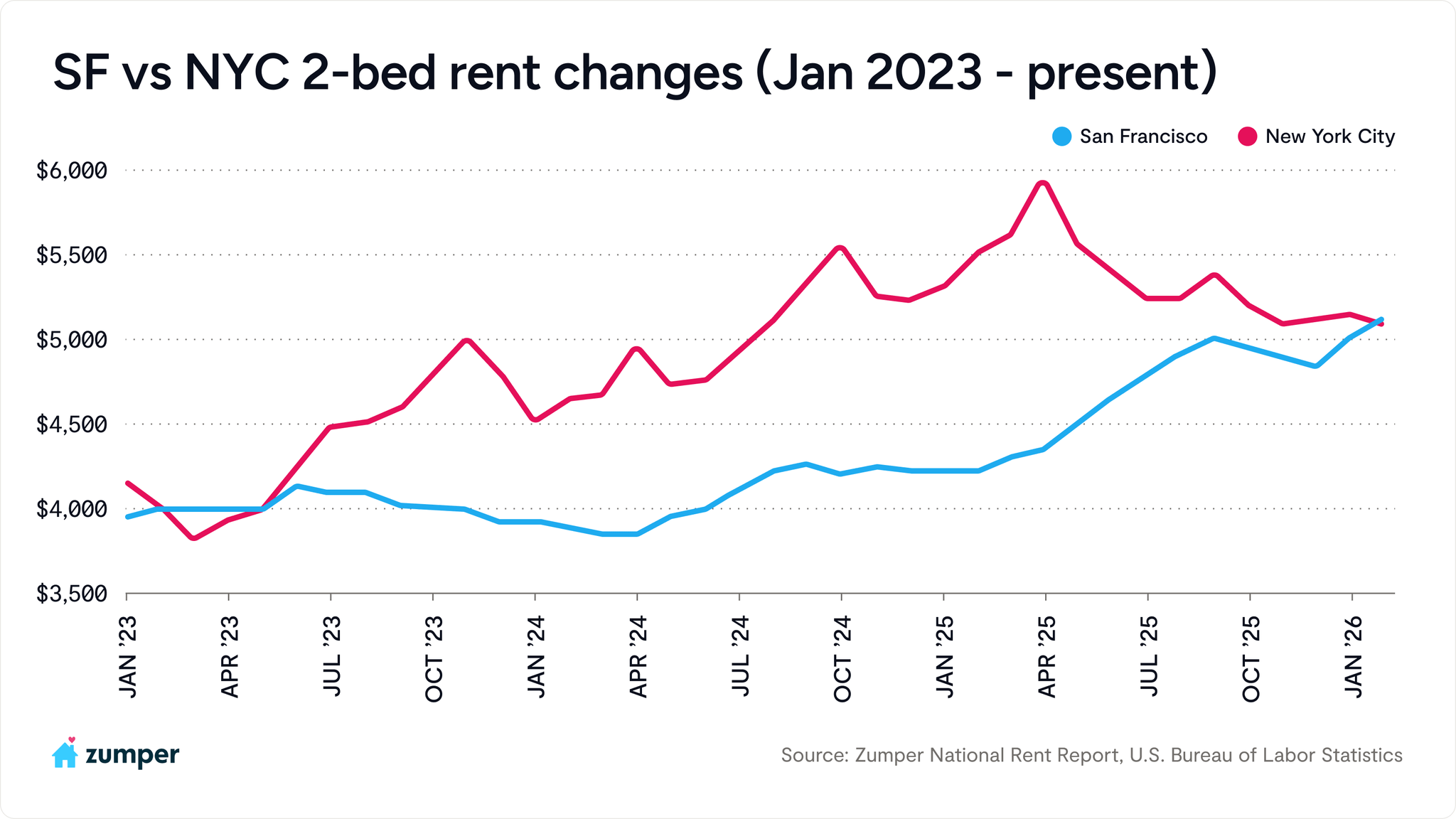
I see the impact of AI growth with my newest tenant working at one of the two AI LLM companies. They are so wealthy that the couple is happy to pay $10,000 a month in rent for a five-bedroom house.
As a frugal person, I initially could not believe this young couple wanted to pay so much. They are nice people and told me they wanted two home offices and a home gym. I looked at their finances, and I decided that if that’s what they wanted, that sounds good to me.
When his AI company goes public, I assume there is a 70% chance that within two years the couple will want to upgrade to something even nicer or buy a place of their own. Their newfound liquid wealth will drive real estate competition higher.
I see it as clear as day, and there is no stopping the trend at the moment.
The AI financial boom is likely going to be a 10-plus-year trend. And as an investor, it is important to invest in trends and hold on for long-term wealth creation. If you properly identify a trend, there is no need to trade in and out of positions. Just keep investing.
The Cities That Should Benefit From AI The Most
If AI is a 10-plus-year wealth creation cycle, then geography matters. Wealth always clusters.
Oil clustered in Houston. Finance clustered in New York. The internet clustered in the Bay Area.
AI will do the same.
If you want to run the picks-and-shovels real estate strategy, these are the cities that should benefit the most.
1) San Francisco / San Jose (The Bay Area)
Let’s start with the obvious.
OpenAI is headquartered in San Francisco and is now valued around $760 billion after its latest funding round. Anthropic is also headquartered in San Francisco and recently raised at roughly a $380 billion valuation. Scale AI, Databricks, Perplexity, and dozens of well-funded AI infrastructure and application-layer startups are based here.
Then you move 50 minutes south to the San Jose area.
NVIDIA, headquartered in Santa Clara, is worth well over $1 trillion. It is the picks-and-shovels provider of the AI gold rush. Without NVIDIA chips, none of this works.
Google and Meta sit in the broader Bay Area ecosystem. Between public market caps and private valuations, you are easily looking at multiple trillions of dollars of AI-related enterprise value concentrated in one region.
When even 5% – 10% of that value becomes liquid through IPOs, secondary sales, or stock compensation, that money has to go somewhere.
A lot of it goes into housing.
The Bay Area has the talent density, the venture capital base, the IPO pipeline, and the structural housing shortage. That combination is incredibly powerful.
This is still the epicenter. If you want to improve your chances of getting rich or meet someone who is rich, move to where the opportunities are greatest.
2) Seattle, WA
Seattle is quieter, but do not underestimate it.
Microsoft is headquartered there and has invested tens of billions into OpenAI. Microsoft’s market cap is north of $3 trillion. Even modest AI-driven earnings growth translates into enormous dollar gains.
Amazon is also headquartered in Seattle and continues to build AI infrastructure through AWS. Cloud computing is the backbone of AI deployment.
When Azure and AWS sell more AI compute, profits rise. When profits rise, stock-based compensation rises. And when stock-based compensation rises, people upgrade homes.
Seattle may not get the flashy startup headlines like San Francisco, but it has the balance sheet power. Large-cap tech wealth compounds more steadily and predictably.
That is great for real estate.
Mega Capex by Amazon and Microsoft, based in Seattle
3) Austin, TX
Austin is the migration play, which I’ve been writing about since 2016 when I published my post on investing in the heartland of America.
Lower taxes. Lower cost of living. Business-friendly policies.
Oracle moved its headquarters there. Tesla has major operations there. Venture capital has increasingly flowed into the region. Several AI startups have opened satellite offices to tap into talent without paying Bay Area housing prices.
Austin does not have trillion-dollar AI headquarters concentration like the Bay Area. Although, SpaceX, worth potentially $1.75 trillion is based in Starbase, Texas, about 300 miles away from Austin.
Austin inbound tech workers. And when high-income tech workers relocate, they buy houses.
Austin already experienced a massive pandemic boom. Now real estate prices are falling given the glut of supply built when interest rats were low. However, by the end of 2026, the supply should be mopped up as the city experiences rent and property price pressure again.
If AI compensation accelerates, it provides another layer of support. You do not need headquarters dominance if you have talent migration dominance.
Personally, I’m dollar-cost averaging in Fundrise’s real estate product, as it has properties in Austin and other cities in the Sunbelt, where valuations are lower and yields are higher. I expect pricing pressure to pick up at the end of the year and go through a multi-year rebound.
4) New York, NY
New York will benefit differently. It will not necessarily dominate foundational AI models. But it will dominate AI monetization in finance, media, and enterprise services.
As more of these AI companies go public, more fees will go to NYC-based investment banks that take them public. Year-end bonuses therefore get bigger. Ah, the good old days of banking!
Wall Street firms are aggressively adopting AI to increase productivity and reduce headcount. If banks can cut 10% of staff while maintaining revenue, bonus pools do not disappear.
They concentrate. Concentrated bonus pools drive Manhattan and Brooklyn real estate.
In addition, there is a growing fintech and AI startup ecosystem in NYC, especially in legal tech, financial modeling, and enterprise automation.
When finance adopts a new tool, it adopts it at scale. And scale creates wealth.
Please At Least Get Neutral Real Estate
If you live in one of these cities, I highly suggest you get neutral real estate by owning your primary residence. The demand for real estate is about to heat up again.
I recently visited a dozen open houses and spoke to several real estate agents on the west side of San Francisco. They all agree that supply is unusually low. Further, a couple of agents mentioned they have never seen this much demand before.
They attributed the demand specifically to the AI boom. They said buyers are getting off the sidelines to buy homes before the big AI firms go public. Further, they talked about their clients who work at these private AI companies getting some liquidity through employee share sales in secondary offerings.
If you plan to live in the city for at least 5–10 years, do your best to find something you enjoy. Be careful about getting into a bidding war, as you could let emotion make you pay more than you comfortably should. Try to look for homes with an ocean view or a big lot, or both. Location is always paramount.
With real estate, you do not need to decide whether OpenAI outmaneuvers Anthropic or whether NVIDIA maintains dominance. You just need the overall pie to grow.
When trillions of dollars in enterprise value are concentrated in a handful of cities, housing demand follows. Liquidity follows. Private school and private club waitlists follow. Luxury remodels follow.
That is why buying real estate in AI boomtowns is the ultimate picks-and-shovels strategy.
Let the engineers fight it out.
You own the land they ultimately want to buy.
Readers, do you live in a city with a growing number of AI companies? How are you planning to profit from AI to escape the permanent underclass? How is the real estate market shaping up in your city?If you live in an AI boomtown, how are rents going?
If you want to achieve financial freedom, you can join 60,000 others and sign up for my free weekly newsletter. Everything I write is based on firsthand experience and knowledge. Fundrise is a long-time sponsor of Financial Samurai as our investment philosophies are aligned.
This Instant Pot Corned Beef makes a cozy, complete dinner with tender, sliceable beef and perfectly cooked veggies in under 2 hours. It’s a one-pot, classic comfort meal with an easy, hands-off method that turns out juicy every time.
Flavor: Savory corned beef with that signature pickling-spice flavor, gently mellowed with beer and broth, served alongside potatoes, carrots, and buttery cabbage.
Recommended Tools: A 6-quart Instant Pot, a trivet, and a pair of tongs or a slotted spoon make this recipe effortless.
Serving Suggestions: This is great with mustard or horseradish sauce.
Leftovers: This is one of those go-to winter comfort dinners, and the leftovers make easy, satisfying lunches all week long. They are great for Reuben sandwiches, corned beef hash, and baked Reuben-style casseroles.
Ingredients That Make it Work
Beer: Choose a mild lager. A darker beer can taste slightly bitter after pressure cooking. No beer? No problem. Replace it with additional broth or a mix of broth and water.
Broth: For a deeper flavor, use beef broth. For a lower sodium content, use water or a low-sodium beef broth.
Beef: Use either a point cut (fattier and more tender) or a flat cut (easy to slice) brisket. If very salty, give it a quick rinse and pat dry. If it comes with the spice packet, add it on top so it seasons the beef as it cooks.
Spice Packet Substitute: If your corned beef doesn’t have a packet, replace it with about 1 tablespoon of pickling spice.
Vegetables: Waxy potatoes hold their shape and don’t need peeling (russets can get a bit crumbly), while chunky-cut carrots keep their texture instead of turning soft. Add the green cabbage after the beef cooks and cut it into wedges or large pieces so it stays tender-crisp.
Variations: Add parsnips, turnips, or rutabaga along with the potatoes and carrots for extra heartiness.
The One Pot Game Plan
Combine beer, beef broth, onion, and garlic in the Instant Pot (full recipe below).
Add the corned beef to the Instant Pot on the trivet. Sprinkle with seasoning. Cook.
Remove the corned beef. Add veggies and cook.
Slice the meat across the grain and serve with the veggies.
Let the brisket rest 10 to 15 minutes before slicing so the juices stay in the meat.
For extra tender slices, let pressure release naturally for 10 minutes, then quick release.
Slice across the grain (look for the long lines in the meat) to keep it tender.
If the potatoes are small, add them whole. If they are larger, halve them so everything finishes at the same time.
Save the cooking liquid and spoon a little over the sliced beef when serving and again when reheating leftovers.
Storing and Reheating Leftovers
Store leftover corned beef (and a little cooking liquid) and vegetables separately in airtight containers in the refrigerator for 4 days.
Freeze the corned beef with a little cooking liquid in a freezer bag or container for up to 3 months.
Reheat with a splash of broth or cooking liquid in a covered skillet or microwave at reduced power to prevent drying.
Cozy St. Patrick’s Day Spread
Did you love this Instant Pot Corned Beef? Leave us a rating & comment below!
Prep Time 20 minutesminutes
Cook Time 1 hourhour30 minutesminutes
Total Time 1 hourhour50 minutesminutes
In a 6-quart Instant Pot, combine water, beer, broth, onion, and garlic.
Add the trivet to the bottom of the pot and place the corned beef brisket with the *spice mixture, fat side up (if your corned beef doesn’t have a spice mixture, see the notes).
Close the lid and ensure the pressure release valve is in the sealed position. Cook on high pressure for 90 minutes.
Once the cooking time is done, release the pressure. Open the lid, remove the brisket, and place it on a plate to rest. Lightly tent with foil.
Leave about 1 cup of liquid in the Instant Pot. Add cabbage, potatoes, and carrots. Close the lid and set to high pressure for 5 minutes.
Quick-release pressure and remove the lids. Use tongs or a slotted spoon to transfer the vegetables to a serving plate. Top with butter or juices from the Instant Pot.
Slice corned beef across the grain and serve with vegetables.
No Spice Packet? No Problem! Corned beef often comes with a seasoning packet to be added during cooking. If you don’t see a spice packet, sometimes the spices are already in the beef, and the packet is not separate. A corned beef spice packet can be substituted with about 1 tablespoon or so of pickling spices. You can use all broth or all beer with the water. Darker beers can produce a slightly bitter flavor depending on the type/brand. I prefer baby potatoes because they hold their shape and don’t require peeling/chopping, but you can use any potatoes. Russet potatoes will need to be peeled. Baby carrots will work in this recipe. Keep leftover beef and vegetables separately in airtight containers in the refrigerator for 4 days and in the freezer for 3 months.
If you’re like me, then professional sports have always helped define the decades. The accomplishments of athletes like Mickey Mantle, Wayne Gretzky, Tom Brady, LeBron James, and Simone Biles provide a sort of soundtrack that flavors their respective time periods. For example, it’s difficult to think about the 1990s without remembering the feats of Michael Jordan. I can still recall laying sick on the sofa and watching Jordan dominate the Utah Jazz while also covered in sweat from the flu. Although we don’t know athletes like Jordan personally, they are important to us, serving as markers for many of our lives’ events.
For those who watched NFL football in the late ‘90s, John Elway’s back-to-back Super Bowl championships are certainly an iconic marker of that time. I never knew much about the football star, but a new documentary titled simply Elway pulls back the curtain on this complicated figure. It’s rare that a sports documentary can grapple with something profound. Too often, they only flatten individuals into an identity based on their achievements. There has been a shift, though, in the type of sports films produced in recent years. The Last Dance about Michael Jordan and the Chicago Bulls, for example, provided a well-nuanced view of the biggest sports star of the ‘90s. Elway follows the same path, providing a complicated picture of the famous quarterback.
Winning at Any Cost
We need to see more sports stories like Elway’s, stories that reveal how the ways of glory and sin are not always what they seem.
The Netflix documentary details the former Denver Bronco’s two-decade-long search for a Super Bowl title. While this campaign culminated in back-to-back wins in 1997 and 1998, he faced fierce criticism and devastating losses along the way. And because the movie is so well done in telling his story, the saddest part occurs when he finally does win.
As Elway stands on the podium in 1997 and looks out over the crowd, the scene cuts to his now-grown son remarking on the moment: “That was the happiest he had ever been in his life.” Elway’s son, however, looks more like someone reminiscing about trauma than his father’s incredible achievement. This moment comes after the film details how difficult it was for Elway’s children to connect with him. The same things that made John Elway such a great football player—stoicism, ambition, talent—made him a below-average father and led to his downfall at home.
Elway’s son puts his finger on something that humans have wrestled with since the beginning: our greatest gifts often destroy the most important things in our lives. The Bible is full of such stories. Without self-control, Samson’s strength causes pain rather than Israel’s deliverance. King David, Jacob, and many others in the Scriptures were gifted men whose talents caused as much pain as glory. The lesson is clear: gifts amplify a person’s impact, but this impact is not always what we hope for.
Sin and Glory
While most modern people accept this as the cost of success, Christians have been wrestling with this for centuries. Augustine famously wrote about this inward battle in his Confessions in the late 4th century. As he chronicles his journey of tasting all that the world has to offer, Augustine comes to a truth that still helps us make sense of ourselves today. His conclusion about humanity is offered in prayer form to the Lord: “You have made us for yourself, and our heart is restless until it rests in you.” Our restlessness often leaves a trail of disaster. Our glory needs strong guardrails.
The most frustrating part of human existence isn’t that our glory evaporates, but rather, that it becomes misdirected and warped by our fallen nature. As Martin Luther wrote: “Our nature, by the corruption of the first sin, is so deeply curved in on itself that it not only bends the best gifts of God toward itself but also uses God himself for its own sake.” In other words, sin causes our glory in bearing God’s image to bend like a bow curved back on ourselves. For those with tremendous gifts, there is always the possibility of a lethal arrow pointing back at them. Perhaps this is why the Scriptures so often beg us to gain wisdom above all else.
The world of sports is an interesting microcosm of this struggle. The main currency of this world is glory and we search for ways to partake in that glory. There are no forty-year-old men walking around wearing the jersey of their favorite accountant, but you can find thousands of these men wearing their favorite player’s jersey every Sunday in the fall.
Elway was, of course, a glorious figure. A two-sport star in high school and college, he was good enough at baseball to be drafted by the New York Yankees. His college career at Stanford was impressive enough that he was drafted first overall in the 1983 NFL draft. Elway had speed, a cannon for an arm, and a toughness that was reminiscent of old-school NFL. As we see throughout the documentary, Elway took hits that caused him to flop over defenders like a pancake, only to get back up and throw another long ball to a receiver. He also had charisma; he was a big, strong, blond guy from California who people liked to rally around.
For all of Elway’s gifts, though, he comes off in the documentary as a bit of a prima donna. When the Broncos’ longtime coach wasn’t calling the plays he wanted, Elway pushed him out. When he was drafted in 1983 by the lackluster Baltimore Colts, Elway threatened to go play pro baseball instead, forcing a trade to the Denver Broncos. And even though he takes heat for losing multiple times in the Super Bowl throughout the ‘80s, he wasn’t afraid to publicly criticize Broncos leadership.
At home, the picture of Elway is distant. His daughter recollects just how big of an impact winning and losing had on their home. When Elway didn’t win, everyone suffered. Throughout his career, his marriage withered away; his wife describes the weight of his career “crushing” their relationship. In a theme that is all too common, Elway’s drive for success was largely aimed towards his own glory.
Despite struggles with his family through his career and in the years after, the end of the film shows Elway with restored relationships all around. His kids now love spending time with him and even his ex-wife seems genuinely happy that he has a new lease on family life. Many of the film’s final moments show Elway and his grandkids enjoying the large Idaho lake estate where he now lives. It’s a redemptive story, though not in the way sports films usually depict.
The high point of Michael Jordan’s story is his time in the NBA. The ultimate glory of Babe Ruth’s life was found in his home run dominance, while his latter years saw him struggle to create a post-baseball identity. Baseball legend Barry Bonds now spends much of his time isolated from the world that rejected him for his steroid use. By contrast, the high point in Elway’s story is his redeemed relationships, while his on-field success comes during his life’s darker periods.
We need to see more sports stories like Elway’s, stories that reveal how the ways of glory and sin are not always what they seem. Elway doesn’t appear to be a Christian, but those of us who are believers can still find much to appreciate. Certainly, there is a hint of the Gospel in the return of a wayward father. Ultimately, stories like Elway’s provide opportunities to point to Christ and his gospel in every area of our lives. It takes work, but this does two important things: it helps us evangelize by showing how God’s narrative really is the best story and it shows unbelievers the ways in which God’s kindness touches them through his general revelation.
Van Tillian Apologetics
While I love many things about Timothy Keller’s New York ministry, perhaps my favorite was the way he used apologetics. Keller was a Van Tillian apologist, a type of faith-defending work named after the famous theologian Cornelius Van Till of Westminster Seminary. One of the main tenets of what Van Till called “presuppositional apologetics” was that there are only two ways to see the world: we can acknowledge the truth of God or suppress it. But even for those who suppress God’s truth, the glory of that truth still leaks into the culture. Whenever a story has someone dying for others, biblical truth has made its way into the imagination. When our society wants to see justice for an oppressed group, that further reflects God’s ultimate values.
The John Elway documentary is powerful because it is God’s truth highlighted by those who don’t even realize what they’re doing. Why does the film celebrate Elway’s family over his accomplishments in football? We know that isn’t how the world works. If anything, the world celebrates success in our careers. Not so with Elway, and as a result, morality and redemption are highlighted because a greater story is being told.
For those with eyes to see and ears to hear, Elway reminds us that God actually does use the “foolish” of the world to “shame the wise” (1 Corinthians 1:27-29). John Elway’s ultimate happiness was not found in the things the world told him to seek. Football gave him joy even as it destroyed his family. He gave his body and talent to entertain the city of Denver, which cared little about what that all cost him. In the end, it’s God’s beautiful creation at that Idaho lake and the blessings of his family that make John Elway smile the longest. And perhaps someday, we’ll hear about him calling on the name of Jesus and entering everlasting joy.
Santorini’s photos usually tell just one story: white houses stacked on the caldera and crowds waiting for sunset. If you step into the island’s medieval and traditional villages, you discover a quieter chapter—one of narrow alleys, fortress-like hilltops, and everyday island life.
Pyrgos, Megalochori, and Emporio are the best places to feel this side of Santorini’s character, with Finikia and Vothonas offering even more depth if you have time. These are villages to wander slowly, follow your curiosity, and let the island reveal itself corner by corner.
Here’s an overview of visiting the best medieval Santorini villages:
Why These Medieval Santorini Villages Feel So Different
The medieval and older villages of Santorini weren’t designed for sunset photos; they were built to survive pirate raids, strong winds, and blazing summers. Homes are pressed against one another, alleys twist into each other, and churches appear in places that feel almost hidden on purpose.
You see this especially in the fortified “kastelia” cores of Pyrgos and Emporio, where the settlement itself becomes the defensive wall. Thick whitewashed walls keep interiors cool, narrow passages funnel the breeze, and tiny squares hold centuries of stories in just a few meters. Instead of the hum of restaurants and traffic, you’re more likely to hear footsteps on stone, church bells, and low voices drifting out of a courtyard.
Explore Santorini’s Medieval Villages With a Local Driver
Want to see Pyrgos, Megalochori, and Emporio without worrying about driving or parking?
Look for a flexible private tour or transfer service that links these traditional villages of Santorini with a stop at Prophet Elias Monastery, the island’s highest viewpoint.
A common option is a 4–6 hour island tour that includes time to walk the alleys of Pyrgos village, Megalochori village, and the medieval Castelli of Emporio, with the route adapted to your pace and interests.
If you prefer to go deeper, you can also look for itineraries that add quieter neighborhoods like Finikia village and Vothonas village, or combine the villages with a traditional wineries stop for tastings.
Pyrgos is built amphitheatrically on a hill and once served as Santorini’s capital, which explains its layered, almost castle-like layout. As you climb, the alleys curve and double back, with houses packed tightly together so the village feels like a protective maze.
Walk slowly here. Pyrgos rewards you if you pause in the shade and look around instead of racing to the top.
You’re likely to notice:
Sun-faded blue doors and weathered shutters that show the island’s harsh light and wind.
Tiny chapels wedged between houses, sometimes with just a couple of steps and an icon.
Courtyards overflowing with bougainvillea and pots of basil or geraniums, often only a few steps away from the main path.
Near the remains of the Venetian castle at the summit, the payoff is a wide sweep of Santorini: vineyards, inland villages, and the caldera edge in the distance on clear days.
Practical Tips for Pyrgos
Timing: Aim for early morning or late afternoon, especially in summer, to avoid the steepest heat on the stone paths.
Footwear: Wear comfortable shoes with good grip; some cobblestones are shiny and slippery from years of use.
Pace: This is not the place to treat as a checklist. Give yourself at least an hour to wander up and down, with extra time if you enjoy photography or café stops.
Related read: Reasons to Visit Santorini in the Shoulder Season
Pyrgos, Greece
Prophet Elias: Santorini From Its Highest Point
Not far from Pyrgos stands Prophet Elias, the highest point on the island and a panoramic counterbalance to the narrow lanes below. From here, Santorini stretches in every direction… vineyards, volcanic ridges, villages, and a long line of sea and sky.
Many travelers find this viewpoint a calmer alternative to gathered sunset spots along the caldera, especially outside peak hours. There is space to breathe, watch the light move across the island, and understand how the different villages fit together on the map.
Monastery Etiquette
The Prophet Elias Monastery dates back to the 17th century and remains an active religious site.
If you step inside:
Dress respectfully (cover shoulders and knees as a baseline).
Keep voices low and avoid intrusive photography, particularly if services or private moments are happening.
Treat the space as a living place of worship, not just a viewpoint.
Megalochori: Shaded Squares and Soft Rhythm
A Village Made for Wandering
Megalochori has a softer, more intimate feel than Pyrgos. Instead of a compact hilltop fortress, you get a village of graceful mansions, traditional cave houses, and elegant bell towers, all arranged around a central square.
The best way to experience Megalochori is to start or end in the main square.
From there:
Follow whichever alley looks most inviting; many lead to arched passages, small chapels, or quiet dead-ends with views over vineyards.
Look up to notice bell towers that frame narrow streets or rise suddenly above rooftops.
Pay attention to everyday details: locals chatting outside cafés, children playing, and cats stretched out in any patch of shade they can find.
It’s a village that encourages you to slow your pace without even thinking about it.
Practical Tips for Megalochori
Respect privacy: Many homes and courtyards here are still lived in. Take photos from a distance and avoid stepping into any space that isn’t clearly public.
Time needed: Plan at least an hour to wander, plus extra time if you want to sit in the square with a drink and let the village atmosphere sink in.
Light: Late afternoon or early evening brings softer light and longer shadows that make the architecture even more photogenic.
Emporio: A Fortified Village Off the Main Route
Why Emporio Belongs on Your List
Emporio lies in the southern part of Santorini and is often described as one of the island’s most historically important and largest villages. Its heart is the medieval Castelli, a compact fortress where houses and alleys knit together into an intricate defensive structure.
Within the Castelli:
Alleyways feel like tunnels, with overhead arches and sudden turns that make the village feel like a stone maze.
Houses share walls and sometimes roofs, reinforcing the sense that you’re walking inside a single, organic structure rather than separate buildings.
Tiny churches appear unexpectedly, squeezed into angles between homes or perched on small terraces.
At the edge of the Castelli stands a square tower (often called the Goulas), which historically served as a lookout and refuge during raids. Nearby, old windmills dot the surrounding hills, adding to the sense that Emporio sits at a crossroads between defense, trade, and everyday rural life.
Practical Tips for Emporio
Navigation: Offline maps can help, but part of the charm is accepting a bit of confusion; the Castelli is meant to feel like a maze.
Footwear: Narrow, uneven steps and polished stone call for sturdy, closed shoes.
Respect: This is still a living neighborhood. Keep voices low, move aside for residents, and be especially mindful of doors and windows when taking photos.
Related read: A Guide to Ecotourism in Santorini
Going Deeper: Finikia and Vothonas
If you’ve fallen for Santorini’s quieter side and have time to explore further, two other traditional villages are worth considering.
Finikia: Close to Oia, often described as a tranquil settlement with colorful houses, old winery buildings, and narrow lanes that feel far removed from the crowds just up the road.
Vothonas: A village known for its cave houses carved into the rock and winding paths, highlighting a different side of the island’s traditional architecture.
Neither is primarily promoted as a medieval fortress in the same way as Pyrgos or Emporio, but both can add texture to your understanding of how people adapted to the landscape over time.
How to Combine These Villages in a Day
Classic Half-Day: Pyrgos and Prophet Elias
If you’re tight on time but want a strong taste of medieval Santorini:
Morning in Pyrgos: Wander the alleys up to the castle ruins, with a coffee stop in the village. Allow 1.5–2 hours to avoid rushing.
Midday or late afternoon at Prophet Elias: Drive or ride up to the monastery and viewpoint for a wide-angle look at the island.
This combo works well if you’re staying anywhere on the island, since Pyrgos sits fairly central.
Slow Village Afternoon: Megalochori
Dedicate a relaxed afternoon to Megalochori:
Start in the square for a drink or light snack.
Drift through the alleys with no fixed route, using the bell towers as reference points.
Loop back toward the square as the light softens, when the village feels especially atmospheric.
Full-Day Village Focus: Pyrgos, Emporio, and Megalochori
If your goal is to see Santorini’s fortified and traditional side:
Begin in Pyrgos to beat the heat on the hill and enjoy quieter morning alleys.
Head south to Emporio to explore the Castelli and windmills, taking time to notice the defensive layout.
Finish in Megalochori for a more leisurely, evening-style wander and a rest in the square.
Travelers who don’t want to drive themselves often look for small-group or private village tours that combine these stops with a viewpoint or a winery visit, but it’s worth checking how much time is actually spent on foot in each village versus on the road, and how large the group is.
When to Visit the Medieval Santorini Villages
Spring (roughly April–June) and autumn (September–October) are generally the most comfortable seasons for exploring these alleys. Temperatures are milder, the light is softer for photography, and paths are less crowded than during high summer.
In July and August:
Plan village visits for early morning or close to sunset.
Bring water, a hat, and sunscreen; even in inland villages, the midday sun can be intense.
Expect more visitors than in shoulder seasons, but usually fewer than in the caldera hotspots.
Winter brings a different mood. Some businesses close, but the villages feel more local and atmospheric, with a focus on daily life rather than tourism. If you’re curious about broader Cycladic architecture and history, you can explore resources from the official Greek tourism board at www.visitgreece.gr for background before or after your trip.
Related read: Reasons to Visit Santorini in the Shoulder Season
Why These Alleys Stay With You
Pyrgos, Megalochori, Emporio, and the quieter corners of Finikia and Vothonas preserve layers of Santorini that don’t fit into a typical sunset photo. Their fortresses, cave houses, bell towers, and tiny chapels reflect centuries of adapting to raids, eruptions, trade, and tourism.
For many travelers, the lasting memories are not the most photographed spots, but the quieter ones: a side alley where you hear only the wind on a whitewashed wall, the echo of a single bell, or the low murmur of conversation in a shaded square.
Give these Santorini villages a few unhurried hours, and you may leave feeling like you finally met the island behind the postcards.
Lately, I’ve been more driven than ever to tell stories with AI. Here’s what I’ve observed from my own journey: Every single one of us has stories worth sharing. Some people are natural storytellers, others aren’t quite there yet. And for many of us, the real barriers are time, money, tech know-how, or just the resources to make it happen.
After decades of storytelling—through writing, short comedic clips, music, music videos, and more—I’ve decided to level up. AI lets me present these ideas in the most robust, cinematic ways possible. From quick social-media laughs that capture a vibe, to tracks that amplify the emotion, all the way to the long-form projects I’ve been drafting in my books for years… it’s all coming together.
Honestly, I’ve never been happier. Bringing my ideas to life like this feels electric.
Here’s the bottom line family: I’ve been pushing my stories for decades, to the point that I hit big time with ABC World News, The New York Times & The Daily News. I’ve landed on NPR and in Ebony & TIME magazines… grew the biggest hollywood relationships imaginable, and I’m tired. I’m tired of the strikes interrupting, the bookstores closing, the investors not seeing my dream… I’m tired of all the half-baked people who have come in and out of my life to interrupt the focus… and I’m tired. So tired that its fueled me to execute a FIRM GO. No more working for clients who are unappreciative. No more making proposals to folks that don’t see the vision and wanna pussyfoot into what I already know and have proven as the model… no more waiting. People much younger and much older are dying around me without telling theur stories. Nothing left behind to remind the world of their legacy and why they were put here. NOT ME! NOT ON MY WATCH!
I’m an OWNER. I am CAPABLE & WORTHY. It’s STORYTIME!
So…
If you’re part of my tribe of 10,000 here on Facebook and you’re paying attention, I’d love for you to click the link in the comments. Head over to my YouTube, check out the short, and—if it resonates—maybe hit subscribe. Even half of you jumping in would mean the world and help me keep pushing forward.
These images are behind-the-scenes outtakes from my latest “Shorty.” I’ll keep sharing how I do this so you can learn to tell your own stories the same way. Who’s ready to create with AI?
For our second annual Illustration Awards, supported by Format, we selected 5 winners from each of the following categories: Editorial, Personal, Advertising & Promotional, Product & Packaging, Student. It is our pleasure to introduce the winner of the Student category: Bella Han.
Bella Han is a freelance illustrator from China and a first year student in the MFA Illustration as Visual Essay program at the School of Visual Arts (Class of 2027). This work is part of a series illustrating one of the most famous Qing Dynasty stories in China, which depicts the opulent yet tragic life of Zhenhuan, a concubine of Emperor Yongzheng, who later became Empress Dowager after his death.
This year’s awards were sponsored once again by Format, an online portfolio builder specializing in the needs of photographers, artists, and designers. With nearly 100 professionally designed website templates and thousands of design variables, you can showcase your work your way, with no coding required. To learn more about Format, check out their website here or start a 14-day free trial.
We caught up with Bella to ask her to share a bit about herself and her artistic process—check out our full interview below!
The children of a disgraced Louisiana mayor told cops that they both caught their mom fooling around with a 16-year-old boy at a boozy pool party, according to video played at her rape trial.
Misty Roberts, the 43-year-old former head of DeRidder, Louisiana — population 9,8000 — faces a charge of third-degree rape over the 2024 incident.
Roberts’ son told investigators in an interview played for jurors that he saw his mom having sex with his pal through a crack in a window.
Misty Roberts is accused of having sex with a 16-year-old boy in 2024.
But, when asked about his recollection, he demurred — telling the court he wasn’t exactly sure what he saw that night, according to KPLC.
The jury also reviewed pictures from the party, which showed kids holding drinks as well as a photograph of Roberts and the victim that prosecutors described as “lewd.”
That picture showed Roberts at the party in her bikini, with the teen victim looking up at her smiling.
Roberts’ son texted his mom that night, incredulous about what was happening, and told her that his sister was crying, according to messages presented by prosecutors.
“He is seventeen,” the son texted Roberts.
The boy was later confirmed to be 16 years old, according to KPLC.
Roberts’ daughter also took the stand while prosecutors played her interview with detectives, in which she said she saw her mom and the boy “on top of each other” that night.
The former mayor’s nephew also admitted he tried to sneak a peek — using his phone to try and get a peek at what was going on in the room. He testified that he wasn’t sure if he hit “record” — but if he did said he never sent it to anybody.
Roberts was in her second term as mayor when she resigned. 7 KPLC
None of the three witnesses who testified said they saw the “private parts” of Roberts and the victim. The teen boy, they noted though, was shirtless.
After the alleged tryst, the victim’s mother texted Roberts to ensure that she was not pregnant, to which she replied she was on birth control. Roberts shared a screenshot of that message to a group chat with her friends, who urged her to take Plan B.
A DoorDash driver testified that he delivered an emergency contraceptive to Roberts’ house, which he recognized from trick-or-treating with his children there.
In other texts shown in court, Roberts asked her son what kind of alcohol her son and other kids wanted for the party.
Days after police launched their investigation into the alleged crime, Roberts resigned as mayor of DeRidder, a city of just under 10,000 people about 20 miles east of the Texas border.
Roberts was charged with third-degree rape and contributing to the delinquency of juveniles.
Paula Deen Man Who Robbed Her at Gunpoint Found Dead in NYC
Published
Eugene Thomas King Jr. — the convicted bank robber who held a gun to Paula Deen‘s temple in 1987 — has been found dead in New York City … TMZ has learned.
Family sources tell TMZ … King was found dead Thursday inside his Brooklyn apartment. It’s currently unclear what caused his death.
We’ve reached out to the NYPD, FDNY and the NYC Office of Chief Medical Examiner for more.
We didn’t hear much about King years after his armed robbery of Deen — who worked as a bank teller at the time. According to Deen, King pressed a gun to her temple during the terrifying encounter. He was later convicted of the crime.
Years later, during the fallout over Deen’s admission that she used racial language while recounting the traumatic incident, King unexpectedly entered the public conversation. In a 2013 interview withInside Edition, King apologized to Deen for the fear he caused her and expressed regret for his actions.
At the time, he acknowledged the robbery and said he was sorry for putting her through such a frightening ordeal. King had largely remained out of the spotlight in recent years.