Notice: Function _load_textdomain_just_in_time was called incorrectly. Translation loading for the td-cloud-library domain was triggered too early. This is usually an indicator for some code in the plugin or theme running too early. Translations should be loaded at the init action or later. Please see Debugging in WordPress for more information. (This message was added in version 6.7.0.) in /home/releande/public_html/wp-includes/functions.php on line 6170
News Magazine | Get The Most Freshy News Every Day | Page 466
Saturday, June 13, 2026
Home Blog Page 466

September 11: A Reflection on Unity, Purpose, and Turning Tragedy into Triumph

Every year, September 11 looms as a day etched into the memories of millions—a day when the world stood still, watching in disbelief as the Twin Towers fell, and life as we knew it changed forever. The heartbreak, loss, and trauma caused by those tragic events continue to resonate deeply for many, stirring old wounds and triggering the emotions tied to that fateful morning. The stories of loss are innumerable, yet in the shadows of that unimaginable tragedy, another story unfolded—a story of heroism, unity, and an unbreakable human spirit.

We honor the heroes of 9/11—the first responders who ran toward the towers as others fled, the firefighters, paramedics, and police officers who sacrificed their lives, and the countless civilians who, in their final moments, acted with courage and selflessness to save others. In remembering them, we see not only the devastation but the resilience of the human heart. And while we mourn the loss, we must ask ourselves: How do we transform this collective pain into a powerful legacy? How do we turn these lemons into lemonade?

The answer lies in unity. As the smoke cleared and the debris was sifted through, something else emerged from the rubble—a deep sense of togetherness. Strangers embraced on the streets, neighbors checked on one another, and the world, however briefly, found common ground in shared grief. It is this unity that we must cling to, cultivate, and expand upon.

A Call to Love and Brotherhood

The heroes of 9/11 showed us that, in moments of crisis, we are not divided by race, nationality, or creed. Their actions reflect the highest form of love—sacrificing for others without hesitation. This is the type of love we must extend beyond moments of tragedy. To truly turn the events of 9/11 right side up, we must embody this spirit of unconditional love in our everyday lives, not just toward our immediate circles, but toward our brothers and sisters from other nations, cultures, and walks of life.

It is easy to focus on the divisions in the world—politics, religion, national borders—but at the core, we are all human, bound by our shared experiences of joy, pain, love, and loss. We must choose unity, even when division seems more comfortable. We must actively seek out and foster stronger ties with one another, regardless of where we come from or what we look like.

Stronger Circles, Stronger Communities

It starts at home. Strengthening our circles, building bonds of trust, love, and understanding within our families and communities creates a ripple effect that spreads far beyond our immediate reach. These are the connections that fortify us in times of difficulty and remind us of our shared humanity.

Imagine a world where every individual is intentional about loving those within their community and extending that love outward. What would that look like? It would look like people coming together to uplift one another in times of need, rather than tearing each other down in times of fear. It would look like bridges being built between communities that once felt isolated from each other. This is the world that can rise from the ashes of 9/11—a world that refuses to allow fear and division to win.

Soul-Searching for Common Ground

Turning this tragedy upside down requires us to engage in deep soul-searching. We must look inward to discover the commonalities that bind us together. What drives us? What are our shared goals? What can we do, as individuals and as a collective, to leave this world better than we found it?

The heroes of 9/11 remind us that we are most powerful when we act with purpose. Each of us has a role to play in shaping the future—a future where we honor the past by building a present and future rooted in love, unity, and intentionality.

We must be purposeful in our actions, aligning our lives with the values that those heroes represented: bravery, sacrifice, love, and hope. By doing so, we ensure that the events of 9/11 are not defined solely by loss, but by the spirit of resilience and unity that rose from the ashes.

Turning Tragedy into Triumph

It is not enough to remember 9/11 as a day of tragedy. We must honor the heroes by continuing their legacy in our own lives. This means actively choosing love over hate, unity over division, and purpose over apathy. The world can be made right side up if we choose to move forward with the same courage and selflessness that defined the heroes of that day.

In the quest to turn this tragedy into triumph, we find the answer not only in our collective mourning but in our collective action. We can rise, just as those heroes did, by standing for something bigger than ourselves. Together, in love and unity, we can turn the darkest day into the brightest beacon of hope for the generations to come.

Let us remember, honor, and act.

Three Kings: Sergio Mendes, James Earl Jones, and Frankie Beverly – Icons Who Left a Legacy to Cherish and Immortalize

In the tapestry of art and culture, few figures stand as towering monuments of creativity, power, and soulful resonance as Sergio Mendes, James Earl Jones, and Frankie Beverly. These three kings, hailing from different worlds of music, film, and soul, have each left indelible marks on humanity—gifts that continue to shape how we understand beauty, voice, and rhythm in our lives. Through their unique talents and relentless dedication to their crafts, Mendes, Jones, and Beverly have transcended generations, inspiring countless people and leaving a legacy that will be cherished and immortalized for centuries to come.

Sergio Mendes: The Maestro of Brazilian Music

Sergio Mendes, the legendary Brazilian musician, has gifted the world an extraordinary sound that blends bossa nova, jazz, and samba with popular music. Born in Niterói, Brazil, Mendes rose to fame with his band Brasil ’66, which introduced Brazilian rhythms to global audiences in the 1960s. His soft, melodic bossa nova beats, accompanied by the enchanting voices of his band members, brought a sense of joy, calm, and celebration to music lovers around the world.

Mendes’ music transcended language barriers, blending Brazilian tradition with American pop culture, and became a universal language in its own right. Songs like “Mas Que Nada” and “The Look of Love” became timeless anthems, making him a cultural ambassador who brought Brazil’s rich musical heritage to the world stage. His influence on the music industry cannot be overstated—he not only revolutionized bossa nova but also inspired a fusion of jazz, Latin music, and soul that would become a cornerstone for future generations of musicians.

Through his collaborations with artists like Stevie Wonder, The Black Eyed Peas, and John Legend, Mendes continued to expand his sound and reach new audiences. His music brought joy and solace to millions, reminding us that rhythm, melody, and harmony can unite the human spirit, no matter where we come from.

James Earl Jones: The Voice That Shook the World

James Earl Jones, a titan of stage and screen, is perhaps best known for his distinctive, powerful voice—a voice that has moved and inspired audiences for more than six decades. Born in Mississippi, Jones overcame a debilitating childhood stutter to become one of the most iconic voices in history. His story alone stands as a testament to human perseverance and the transformative power of art.

Jones’ voice is synonymous with authority, gravitas, and depth. As the voice of Darth Vader in the Star Wars franchise, Jones gave life to one of cinema’s most memorable villains. Yet, his range goes far beyond villains and sci-fi. He portrayed the wise and noble Mufasa in Disney’s The Lion King, bringing wisdom and love to the hearts of children and adults alike. Whether on Broadway stages or in major films, Jones’ presence commanded respect and attention, always leaving a lasting impression.

Beyond his work as an actor, Jones contributed to breaking down racial barriers in Hollywood and on stage. In a time when opportunities for African American actors were limited, Jones carved a path of excellence and courage. He redefined what it meant to be a Black actor in Hollywood, showing that talent, passion, and dignity transcend skin color. Through his performances in “The Great White Hope,” “Fences,” and many more, Jones gave voice not only to characters but to the dreams and aspirations of millions who saw themselves reflected in his powerful portrayals.

Jones’ legacy is not just in the characters he played, but in the way he championed the arts, using his platform to encourage young actors, especially Black actors, to follow their dreams. His impact continues to inspire generations of artists who seek to make their voices heard in a world where obstacles often stand in the way.

Frankie Beverly: The Soulful Architect of Joy

No discussion of soulful music would be complete without honoring Frankie Beverly, the heart and soul behind the band Maze. Born in Philadelphia, Beverly’s music provided the soundtrack to countless lives, especially within the African American community. His smooth, velvet voice and timeless songs about love, resilience, and celebration brought light and healing to those who heard him.

Frankie Beverly’s music, from hits like “Before I Let Go” to “Joy and Pain,” is steeped in messages of togetherness, triumph over adversity, and the bittersweet nature of life. His lyrics speak to the deepest corners of the human experience, expressing joy in the face of hardship and love in the face of heartbreak. Maze became synonymous with live performance, bringing people together in celebration and reflection.

Beverly’s contributions to humanity go far beyond the stage. For decades, his music has been a central part of family gatherings, weddings, barbecues, and celebrations of life within Black communities. His songs evoke a sense of unity and shared experience that few artists have managed to achieve. Beverly provided not just a soundtrack but a shared cultural experience that continues to be passed down through generations.

He showed us that music has the power to heal, to unite, and to uplift. In a world filled with turmoil and division, Frankie Beverly’s music is a reminder that we are all connected by the same joys and pains, and that through music, we can find solace and strength.

Three Kings, One Legacy

Sergio Mendes, James Earl Jones, and Frankie Beverly—three kings from different realms, yet each has left an unmistakable mark on humanity. Mendes gave us the rhythms of Brazil, bringing the world closer together through the beauty of music. Jones gave us a voice that transcends time, instilling wisdom and gravitas into every character he portrayed. And Beverly gave us the soundtrack of our lives, reminding us that joy and pain are inseparable parts of the human experience.

Together, their contributions remind us of the power of art to connect, to heal, and to inspire. Their gifts will be cherished for generations, their legacies immortalized in the hearts and minds of all who have had the privilege of experiencing their work. In paying homage to these three kings, we are reminded that greatness is not defined by fame or fortune but by the lasting impact we leave on the world—an impact that will be felt for eternity.

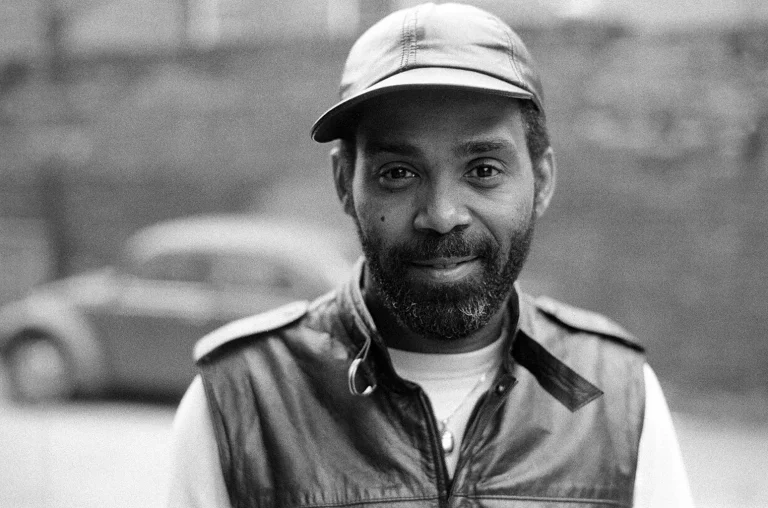
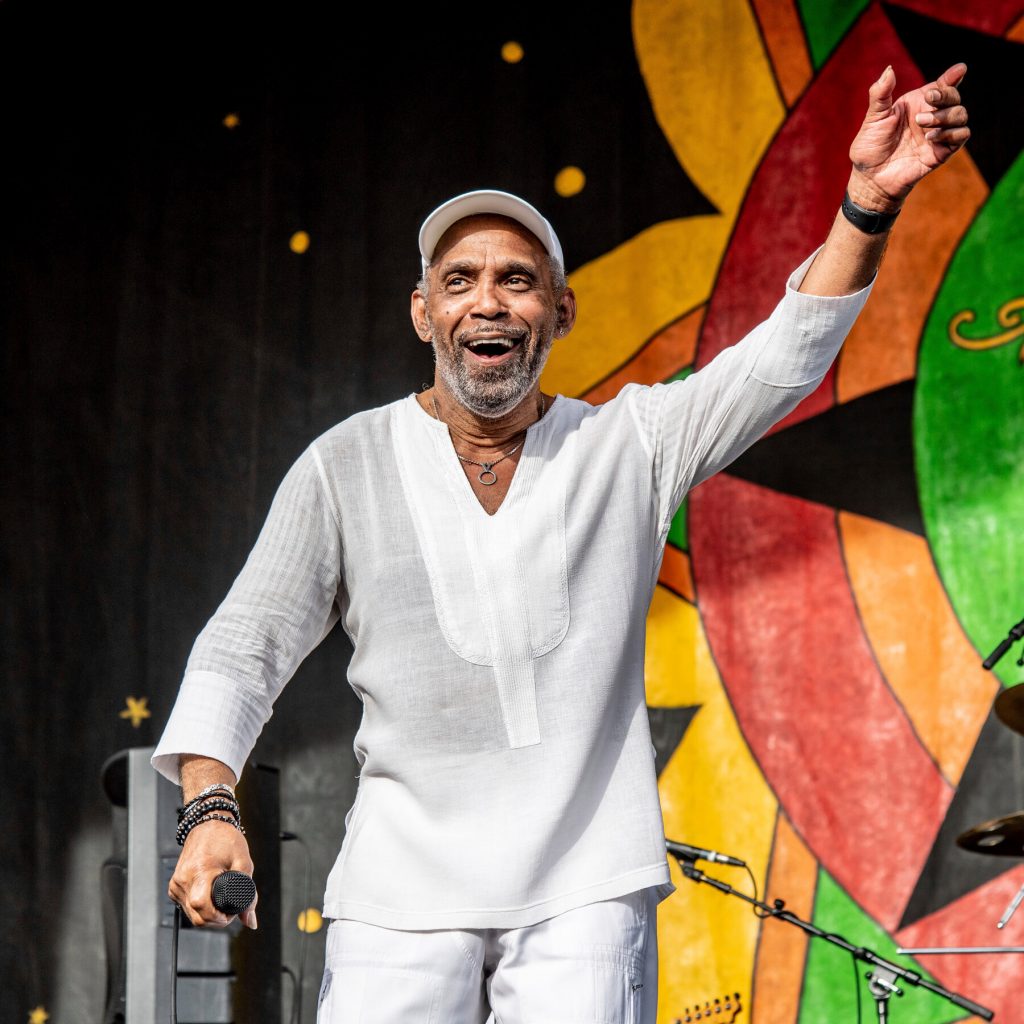
His Golden Day Has Come-Farewell Frankie Beverly

As we gather to reflect on the life and legacy of Frankie Beverly, my heart is filled with gratitude for the timeless music he gifted us, songs that have been the soundtrack to so many special moments. His voice carried the power of unity, love, and togetherness, and I know we all felt that deeply through songs like We Are One, Golden Time of Day, and Before I Let Go.

Through his music, Frankie brought us closer, reminding us of the beauty in our shared experiences and the warmth we find in each other’s company. In We Are One, he called us to live with compassion and unity, transcending the barriers that separate us. Golden Time of Day reminded us to cherish the quiet moments, those sacred spaces of reflection where we can find peace. And Before I Let Go—well, that was always a celebration of life, love, and joy, a reminder to hold tight to the things and people that matter most.

As we mourn his passing, let us honor his legacy by living out the lessons he taught us through his music. Let us find ways to come closer together, to live in unity and harmony as he guided us to do. Frankie Beverly’s music will continue to echo in our hearts, and in that music, we will always find kinship, a connection that transcends time and space.

May we carry his message forward—one of love, one of unity, and one of celebration—and let his spirit live on in every note we sing, every dance we share, and every moment we gather in his name.

Rest in peace, Frankie. You’ve left us with the melodies of a lifetime.

Will Shark Tank Do the job?

0

[ad_1]

The job of Shark Tank is to deliver customers, audiences and excitement to budding entrepreneurs, and of course the Sharks invest their time, energy and money in helping them be ready for their ‘moment in the sun’. However with only 237,000 viewers for the first episode of this current series I am disappointed for all concerned. Smart Company asked me to write a piece of advice and reflection as the show moves to a different phase. I have re posted here.

On the cusp of a new season of Shark Tank it has given me a moment to reflect on Angel Investing in Australia. What works and what doesn’t work…. And it all starts with the ‘pitch’… but once that is over then the critical piece for any business is its ability to find customers (or audiences) cost effectively.

PITCH PREPARATION

It is said ‘never forget that you only have one opportunity to make a first impression – with investors, with customers, with PR and with marketing.’

I am in the fortunate position of having seen hundreds of ideas pitched, both as a Shark Tank investor and as an angel investor in a variety of industries. The one question that always sits in the back of my mind is ‘how big is the customer base for this idea?’ And can you find them cost effectively.

The level of investment being sought may well determine the overall approach. It does not matter who is being pitched to – remember that heart is just as important as the head. It is often the passion of the founder that encourages those listening (or reading) to be engaged and interested to begin the journey of investment.

If you are pitching, then research who you’re pitching to. Every potential investor has a different reason for investing. What do they believe in? What is their background and experience? What is their area of expertise? Do the work and find out as much as you can about the people behind the ‘investor’ label.

People do business with people, and investors invest in people.

FINDING CUSTOMERS

Shark Tank has a special place in many people’s hearts. We love the concept that someone with an idea can make it big. We love to watch people put their hearts on their sleeves, risk it all to show Australian audiences what is possible. I read a statistic once that 9 out of every 10 adults in Australia has a business idea – but does not know what to do with it.

When I think about the role of angel investors, it is not just the experience, contacts and business know how that the right investor provides it is also audience. I think of the wonderful Remarkable Accelerator program and the reason that it works is that inventors, founders and scientists have access to the greater community through the Cerebral Palsy Alliance – a ready-made customer base. If you are bringing a disability invention to market then you can test, fine tune, and ultimately sell your product to a very accessible audience.

People pitching on Shark Tank come with a similar expectation. That on the night that their episode appears people will be watching. This is why the show works in the US, they have massive audiences, and if the product is ready, they will sell millions on the night. It is the job of the network to deliver audience and customers to the investors and the inventors – it is an essential part to make the concept work.

I will be watching with my fingers crossed hoping that the network does its job in what is the Aussie dream of invention.

Let the great game of business begin, and let’s hope they find the audiences and customers needed to make Shark Tank Australia viable.


Also published on Medium.

[ad_2]

Source link

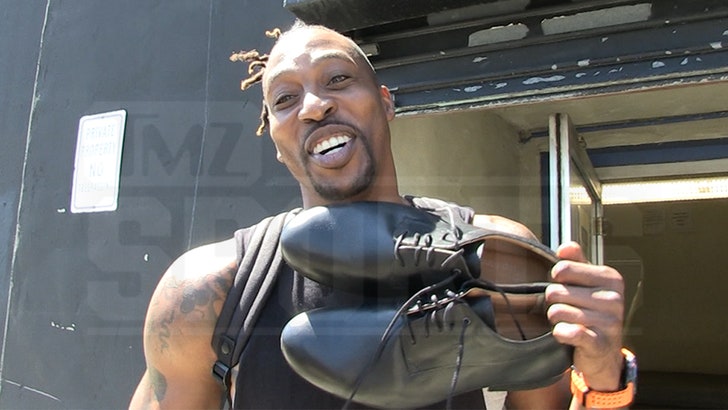
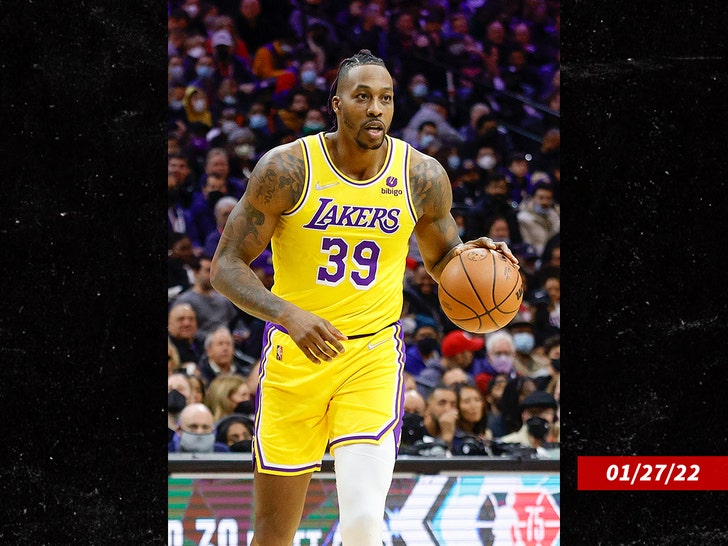
Dwight Howard Says Ric Flair Talked Him Out Of Wrestling Car…

0

[ad_1]


[ad_2]

Source link

Maximizing Real Estate Returns In A Rate Cut Environment

0

[ad_1]

At long last, the time has finally come for the Fed to begin cutting rates in September. As a result, real estate investors will likely benefit from a tailwind over the next couple of years, after a rough prior two years.

Mortgage rates peaked in October 2023 but rose again from December 2023 through April 2024. Now, we can assume with greater confidence rates should continue trending lower as the Fed starts cutting the short end of the curve. As the economy softens, interest rates will likely stay muted.

In the spring of 2024, we saw some wild bidding wars, but activity has slowed for two main reasons. First, a significant number of buyers are waiting for confirmation of rate cuts before entering the market. Second, with the November 5, 2024, presidential election looming, many buyers are opting to wait and see who takes office before making one of the biggest purchases of their lives.

Given the drop in mortgage rates and the current hesitancy among buyers—especially during the traditionally slower second half of the year—there’s a window of opportunity to purchase residential real estate right now at better prices. Fall and Winter are my favorite seasons to buy due to less competition.

Market expectations for Fed Funds rate from September 2024 until September 2026, two years. Maximizing real estate investment returns in a multi-year rate cut cycle

Demand For Real Estate Could Surge Higher

In my podcast with Ben Miller, CEO of Fundrise, we discuss how a negative real estate spread is holding back investment committees from approving commercial real estate deals. A negative spread occurs when borrowing costs exceed property yields, which has caused transaction volumes to drop significantly.

However, once we see a neutral or positive real estate spread—largely driven by falling interest rates—we’ll likely experience a surge in purchase activity, pushing prices higher.

That said, the future remains uncertain. Mortgage rates could remain flat or even rise again, dampening demand. But if the Fed starts cutting the Fed Funds rate while longer-term rates rise, we’ll see a steepening yield curve, which is usually a bullish signal for the economy. As long as the Fed continues cutting rates, real estate investors should benefit from positive momentum.

We’re already seeing real estate ETFs like XLRE and VNQ hit 12-month highs, along with public REITs such as O, SPG, DLR, and PSA. This surge is in anticipation of rate cuts and increased operating income. As a result, there may be an arbitrage opportunity to invest in private real estate funds that haven’t yet revalued their Net Asset Values (NAVs).

Investing In Real Estate During A Multi-Year Rate Cut Cycle

Click the play button in the embedded player to listen to our conversation, or go to Apple and Spotify directly to listen.

Here are my show notes for my conversation with Ben Miller, CEO of Fundrise about what’s next in real estate.

Main Theme:

Interest rates are the most significant driver of real estate prices, surpassing operational improvements. Apartments are likely to benefit the most by the end of 2025.

Investing in real estate at the beginning of a Fed interest rate cut cycle

Real Estate Market Insights:

Apartments: Best-performing asset class. The less people can afford homes, the more they rent—benefiting apartment owners.

Office Sector: Facing permanent demand decline of 30-50%, compounded by a cyclical downturn. Still is unwilling to buy the space.

Industrial Sector: Moderately pro-cyclical, driven by economic flow of goods. Best asset class after Apartments.

Economic Outlook:

Recession Prediction: A mild recession is likely, which may be bad for stocks, but good for residential real estate.

Boom-Bust Cycles: Largely due to oversupply and undersupply. The industry is digesting overbuilding from 2020-2021, and there will likely be an undersupply again in 2025+ given underbidding from 2022-2024.

Class A properties are yielding 5.5%-6%, which means the market could “clear overnight” once borrowing costs decline to these levels or below, sparking a real estate boom.

Investment Insights:

Decision-Making in Funds: Institutional investors held back on buying commercial real estate in 2023-2024 due to negative real estate arbitrage (when interest rates exceed purchase price yields). This prevents deals from passing investment committees. However, To outperform, funds must invest counter to consensus.

Population Growth Is The Biggest Driver Of Real Estate Prices: Strong growth in Texas, Florida, North Carolina, South Carolina, and Georgia is driving real estate demand. The apartment sector could be the biggest winner by the second half of 2025 due to low supply, high migration, and lower interest rates.

Secular Trends & Government Policies:

Urban Decline: Collapse of downtowns due to declining demand for office space. Knock-on effect for government revenue and attracting more businesses. Not bullish on blue cities downtown, however, understands there are geoarbitrage opportunities within cities.

Government Policy: Potential $25,000 credit for first-time homebuyers and incentives for developers could impact the housing market. So could increasing tariffs on imported goods that may go towards housing subsidies and credits.

Investment Outlook:

Equity markets aren’t pricing in a recession, but credit markets are—a better predictor. Therefore, Ben is not buying public equities, and buying bonds, real estate, and venture capital instead.

Reader Questions

Share your thoughts on investing in real estate at the start of a multi-year interest rate cut cycle. Are you bullish, neutral, or bearish on residential and commercial real estate, and why? Do you think supply might outpace demand despite the significant housing shortage, particularly from 2022-2024 when borrowing rates surged?

If you’re considering investing in private real estate, take a look at Fundrise. They manage private real estate funds focused on the Sunbelt region, where valuations are lower, and yields are higher. Fundrise specializes in residential and industrial real estate, offering investors diversification and passive income potential.

Currently, Fundrise manages over $3.5 billion for more than 500,000 investors. I’ve personally invested over $270,000 with Fundrise, and they’ve been a proud sponsor of Financial Samurai for years.

Crock Pot Ham – Spend With Pennies

0

[ad_1]

Crock Pot Ham is the easiest holiday ham you’ll ever make!

This recipe requires just minutes of prep. With a super simple glaze, crockpot ham is a set-it-and-forget-it kind of way to make a tender juicy ham.

close up of Crock Pot Ham in the crockpot
  • It needs just minutes of prep time.
  • The slow cooker is hands-off, making it a set-it-and-forget-it kind of meal.
  • Since crockpot ham cooks low and slow, it’s tender, juicy ham every time.
  • Making ham in a slow cooker saves oven space for other dishes.

This crockpot ham recipe is perfect for a holiday dinner.

How to Make Crock Pot Ham

Cooking ham has never been easier. I prefer spiral ham as it’s easy to serve, but boneless ham works well in this recipe, too. If using a ham that is not spiral cut, be sure to score the outside.

  1. Sprinkle a bit of brown sugar in the slow cooker. Add the ham according to the recipe below.
  2. Prepare the glaze & pour it over the ham.
  3. Cover and cook until heated through. Easy Peasy!

Glaze for Crock Pot Ham is easy to make. I add jelly and brown sugar for sweetness and a bit of Dijon mustard for flavor. It’s versatile…

Holly’s Tips

  • A smoked ham should be cooked to a temperature of 140°F on a meat thermometer. This will take 4-5 hours on low for an 8-10lb ham.
  • Purchase a fully-cooked spiral ham for this recipe. If using a ham that isn’t spiral cut, be sure to score the outside to allow the glaze to seep in.
  • For the best flavor, discard the glaze packet that comes with the ham and use the recipe below.
  • Add up to ½ cup of pineapple juice if desired. Liquid does not be added to the slow cooker, and the ham will release juices.
Crock Pot Ham with apple slicesCrock Pot Ham with apple slices

What to Serve With Ham

This easy crock pot ham recipe is perfect for Christmas or Easter dinner. Slice the ham, place it on a platter, and garnish with herbs or additional rosemary. Here some of our favorite side dish recipes.

Leftovers

Store leftovers in an airtight container the refrigerator for up to 4 days or in the freezer for up to 4 months. Find my favorite leftover ham recipes here.

Did your family love this Crock Pot Ham? Leave us a rating and a comment below!

image of Everyday Comfort cookbook by Holly Nilsson of Spend With Pennies plus textimage of Everyday Comfort cookbook by Holly Nilsson of Spend With Pennies plus text
close up of Crock Pot Ham in the crockpotclose up of Crock Pot Ham in the crockpot

5 from 286 votes↑ Click stars to rate now!
Or to leave a comment, click here!

Crock Pot Ham

Crock Pot Ham is the perfect holiday ham recipe. It takes just 5 minutes of prep and the slow cooker does all of the work!

Prep Time 15 minutes

Cook Time 4 hours

Total Time 4 hours 15 minutes

buy hollys bookbuy hollys book

Prevent your screen from going dark

  • For the glaze, in a small saucepan over medium heat, melt the apple jelly. Whisk in the remaining glaze ingredients. Bring to a boil and let boil for 1 minute while stirring.

  • In the bottom of a 6 to 7-quart slow cooker, sprinkle ¼ cup of brown sugar.

  • If the ham has a plastic disk in the center, remove the disk and discard it. Use a knife to score the top of the ham in a criss-cross pattern.

  • Before putting the ham in the slow cooker, separate the layers of ham and brush them with glaze. Place the ham into the slow cooker and pour remaining glaze over the top.

  • Add rosemary sprigs, cover slow cooker (see note), and cook on low for 4-5 hours or until the ham reaches 140℉.

Ham: Be sure to check your package to ensure that the ham is smoked/ fully cooked. The package will tell what temperature the ham needs to reach. If using a ham that is not a spiral ham, I recommend scoring the ham.
Substitution: Apple jelly can be substituted with apricot jam/jelly, apple butter, or even orange marmalade.
Ham Size: If the ham is too large for the lid to close completely, cover the slow cooker with foil and place the lid on top of the foil to seal in the heat.
Temp Check: Check the ham early using an instant-read thermometer to ensure it doesn’t overcook.
 

Calories: 997 | Carbohydrates: 28g | Protein: 78g | Fat: 61g | Saturated Fat: 21g | Cholesterol: 224mg | Sodium: 4388mg | Potassium: 1081mg | Sugar: 24g | Vitamin A: 5IU | Vitamin C: 1.6mg | Calcium: 46mg | Iron: 3.5mg

Nutrition information provided is an estimate and will vary based on cooking methods and brands of ingredients used.

Course Ham, Main Course, Slow Cooker
Cuisine American
plated Easy Crock Pot Ham with a titleplated Easy Crock Pot Ham with a title
Easy Crock Pot Ham in the pot with writingEasy Crock Pot Ham in the pot with writing
sliced Easy Crock Pot Ham with a titlesliced Easy Crock Pot Ham with a title
Easy Crock Pot Ham in the pot and plated with a titleEasy Crock Pot Ham in the pot and plated with a title

More Crock Pot Recipes You Will Love

[ad_2]

Source link

Gun safety strategy puts armed police in schools : NPR

0

[ad_1]

Police maintain a presence following a school lockdown after 911 calls falsely reported a gunman in Oakland Catholic and Pittsburgh Central Catholic schools on March 29, 2023.

Police maintain a presence following a school lockdown after 911 calls falsely reported a gunman in Oakland Catholic and Pittsburgh Central Catholic schools on March 29, 2023.

Jeff Swensen/Getty Images


hide caption

toggle caption

Jeff Swensen/Getty Images

The risks of gun violence in schools were made tragically clear again in Georgia, where a teenager stands accused of shooting his way through his high school and killing two students and two teachers.

In Pittsburgh in March 2023, it was a false alarm that a gunman was roaming one Catholic high school and then another that touched off frightening evacuations and a robust police response in the city. It also prompted the diocese to rethink what constitutes a model learning environment.

So months after SWAT teams met hundreds of students, the Catholic Diocese of Pittsburgh began forming its own armed police force.

Wendell Hissrich, a former safety director for the city and career FBI unit chief, was hired that year to form a department to safeguard 39 Catholic schools as well as dozens of churches in the region. Hissrich has since added 15 officers and four supervisors, including many formerly retired officers and state troopers, who now oversee school campuses fitted with Stop the Bleed kits, cameras, and defibrillators.

Wendell Hissrich, a former career FBI unit chief, was hired by the Catholic Diocese of Pittsburgh in 2023 to help thwart gun violence in schools. He has since hired many retired officers and state troopers, who oversee school campuses fitted with Stop the Bleed kits, cameras, and defibrillators.

Wendell Hissrich, a former career FBI unit chief, was hired by the Catholic Diocese of Pittsburgh in 2023 to help thwart gun violence in schools. He has since hired many retired officers and state troopers, who oversee school campuses fitted with Stop the Bleed kits, cameras, and defibrillators.

Christine Spolar for KFF Health


hide caption

toggle caption

Christine Spolar for KFF Health

When religious leaders first asked for advice after what are known as “swatting” incidents occurred, the veteran lawman said he didn’t hesitate to deliver blunt advice: “You need to put armed officers in the schools.”

But he added that the officers had to view schools as a special assignment: “I want them to be role models. I want them to be good fits within the school. I’m looking for someone to know how to deal with kids and with parents — and, most importantly, knows how to de-escalate a situation.”

Gun violence is a leading cause of death for young people in America, and the possibility of shootings has influenced costly decision-making in school systems as administrators juggle fear, duty, and dizzying statistics in efforts to keep schools safe from gun harm.

Still, scant research supports the creation of school police forces to deter gun violence — and what data exists can raise as many questions as answers. Data shows over half of U.S. firearm deaths are, in fact, suicides — a sobering statistic from the federal Centers for Disease Control and Prevention that reflects a range of ills.

Gun violence grew during the COVID-19 pandemic and studies found that Black children were 100 times as likely as white children to experience firearm assaults.

Research on racial bias in policing overall in the U.S. as well as studies on biased school discipline have prompted calls for caution. And an oft-cited U.S. Secret Service review of 67 thwarted plots at schools supports reasons to examine parental responsibility as well as police intervention as effective ways to stop firearm harm.

The Secret Service threat assessment, published in 2021, analyzed plots from 2006 to 2018 and found students who planned school violence had guns readily at home. It also found that school districts that contracted sworn law officers, who work as full or part time school resource officers, had some advantage. The officers proved pivotal in about a third of the 67 foiled plots by current or former students.

“Most schools are not going to face a mass shooting. Even though there are more of them — and that’s horrible — it is still a small number,” said Mo Canady, executive director of the National Association of School Resource Officers. “But administrators can’t really allow themselves to think that way. They have to think, ‘It could happen here, and how do I prevent it.'”

A student from Oakland Catholic High School receives comfort following a school evacuation prompted by a computer-generated swatting call about an active shooter on campus.

A student from Oakland Catholic High School receives comfort following the evacuation of the school after a call of an active shooter on March 29, 2023 in Pittsburgh, Pennsylvania. Many schools, including Oakland Catholic and Pittsburgh Central Catholic, were targeted as part of what authorities are calling “computer-generated swatting calls.” Many agencies, including state and municipal police, are conducting investigations.

Jeff Swensen/Getty Images


hide caption

toggle caption

Jeff Swensen/Getty Images

$1 million to station police in schools

About a 20-minute drive north of Pittsburgh, a top public school system in the region decided the risk was too great. North Allegheny Superintendent Brendan Hyland last year recommended retooling what had been a two-person school resource officer team — staffed since 2018 by local police — into a 13-person internal department with officers stationed at each of the district’s 12 buildings.

Several school district board members voiced unease about armed officers in the hallways. “I wish we were not in the position in our country where we have to even consider an armed police department,” board member Leslie Britton Dozier, a lawyer and a mother, said during a public planning meeting.

Within weeks, all voted for Hyland’s request, estimated to cost $1 million a year.

Hyland said the aim is to help 1,200 staff members and 8,500 students “with the right people who are the right fit to go into those buildings.” He oversaw the launch of a police unit in a smaller school district, just east of Pittsburgh, in 2018.

Hyland said North Allegheny had not focused on any single news report or threat in its decision, but he and others had thought through how to set a standard of vigilance. North Allegheny does not have or want metal detectors, devices that some districts have seen as necessary. But a trained police unit willing to learn every entrance, stairway, and cafeteria and who could develop trust among students and staffers seemed reasonable, he said.

“I’m not Edison. I’m not inventing something,” Hyland said. “We don’t want to be the district that has to be reactive. I don’t want to be that guy who is asked: ‘Why did you allow this to happen?’”

People visit memorials for victims of a mass shooting at Robb Elementary School in Uvalde, Texas. Nineteen children and two adults were killed after a man entered the school through an unlocked door and barricaded himself in a classroom where the victims were located. Law enforcement officers waited in the hallway for over an hour before entering the classroom and confronting the gunman.

People visit memorials for victims of a mass shooting at Robb Elementary School in Uvalde, Texas. Nineteen children and two adults were killed after a man entered the school through an unlocked door and barricaded himself in a classroom where the victims were located. Law enforcement officers waited in the hallway for over an hour before entering the classroom and confronting the gunman.

Michael M. Santiago/Getty Images/Getty Images North America


hide caption

toggle caption

Michael M. Santiago/Getty Images/Getty Images North America

A tragic failure in Uvalde

Since 2020, the role of police in educational settings has been hotly debated. The video-recorded death of George Floyd, a Black man in Minneapolis who was murdered by a white police officer during an arrest, prompted national outrage and demonstrations against police brutality and racial bias.

Some school districts, notably in large cities such as Los Angeles and Washington, D.C., reacted to concerns by reducing or removing their school resource officers. Examples of unfair or biased treatment by school resource officers drove some of the decisions. This year, however, there has been apparent rethinking of the risks in and near school property and, in some instances in California, Colorado, and Virginia, parents are calling for a return of officers.

The 1999 bombing plot and shooting attack of Columbine High School and a massacre in 2012 at Sandy Hook Elementary School are often raised by school and police officials as reasons to prepare for the worst. But the value of having police in schools also came under sharp review after a blistering federal review of the mass shooting in 2022 at Robb Elementary School in Uvalde, Texas.

The federal Department of Justice this year produced a 600-page report that laid out multiple failures by the school police chief, including his attempt to try to negotiate with the killer, who had already shot into a classroom, and waiting for his officers to search for keys to unlock the rooms. Besides the teenage shooter, 19 children and two teachers died. Seventeen other people were injured.

The DOJ report was based on hundreds of interviews and a review of 14,000 pieces of data and documentation. This summer, the former chief was indicted by a grand jury for his role in “abandoning and endangering” survivors and for failing to identify an active shooter attack. Another school police officer was charged for his role in placing the murdered students in “imminent danger” of death.

Pursuing accountability for gun violence

There have also been increased judicial efforts to pursue enforcement of firearm storage laws and to hold accountable adults who own firearms used by their children in shootings. For the first time this year, the parents of a teenager in Michigan who fatally shot four students in 2021 were convicted of involuntary manslaughter for not securing a newly purchased gun at home.

In recent days, Colin Gray, the father of the teenage shooting suspect at Apalachee High School in Georgia, was charged with second-degree murder — the most severe charges yet against a parent whose child had access to firearms at home. The 14-year-old, Colt Gray, who was apprehended by school resource officers on the scene, according to initial media reports, also faces murder charges.

Hissrich, the Pittsburgh diocese’s safety and security director, said he and his city have a hard-earned appreciation for the practice and preparation needed to contain, if not thwart, gun violence. In January 2018, Hissrich, then the city’s safety officer, met with Jewish groups to consider a deliberate approach to safeguarding facilities. Officers cooperated and were trained on lockdown and rescue exercises, he said.

Ten months later, on Oct. 27, 2018, a lone gunman entered the Tree of Life synagogue and within minutes killed 11 people who had been preparing for morning study and prayer. Law enforcement deployed quickly, trapping and capturing the shooter and rescuing others caught inside. The coordinated response was praised by witnesses at the trial where the killer was convicted in 2023 on federal charges and sentenced to die for the worst antisemitic attack in U.S. history.

“I knew what had been done for the Jewish community as far as safety training and what the officers knew. Officers practiced months before,” Hissrich said. He believes schools need the same kind of plans and precautions. “To put officers in the school without training,” he said, “would be a mistake.”

KFF Health News is a national newsroom that produces in-depth journalism about health issues and is one of the core operating programs at KFF — the independent source for health policy research, polling, and journalism.

[ad_2]

Source link

Jamie Babbit on how her lesbian comedy But I’m a Cheerleader…

0

[ad_1]

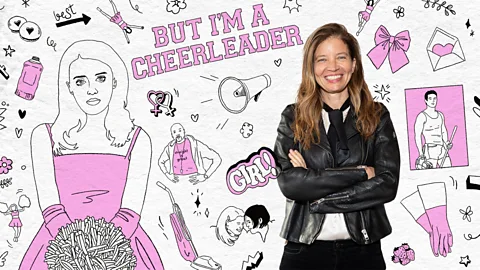
Emmanuel Lafont/.Getty Images Jamie Babbit with But I'm a Cheerleader art in the background (Credit: Emmanuel Lafont/ Getty Images)Emmanuel Lafont/.Getty Images
(Credit: Emmanuel Lafont/.Getty Images)

In 1999, this unlikely rom-com set at a conversion therapy camp and starring Natasha Lyonne was hated by critics. But it’s since been recognised as both groundbreaking and hilarious.

Jamie Babbit’s audacious feature debut But I’m A Cheerleader is a bona fide LGBTQ+ cult classic. The satirical romantic comedy premiered at the Toronto Film Festival 25 years ago, in September 1999, and though it was critically panned initially, it has since been deservedly recognised for its pioneering lesbian representation, among other things. Babbit’s film delivered a campy but heartfelt dismantling of gender stereotypes and the obscene practice of conversion therapy.

Indeed, with its wit, flair and refusal to bow to convention, it was a key film in Hollywood’s wider lesbian awakening during the 1990s, when more rounded and sympathetic lesbian characters were gradually beginning to emerge. Babbit says she came up with the concept of the film from a desire to fill a void. “I was a young femme lesbian in my twenties, and I didn’t see any movies about lesbians that felt like a movie for me,” she tells the BBC. “I wanted to tell a story of a femme lesbian who rescues a butch lesbian, using her femme powers of cheerleading to do that.”

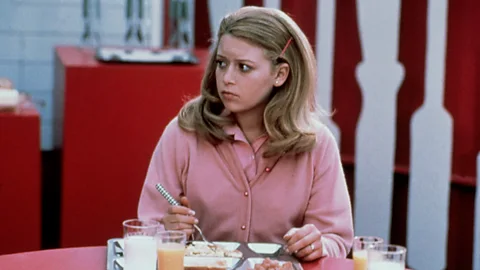
Alamy A 19-year-old Natasha Lyonne played the film's pom-pom shaking heroine in one of her first lead roles (Credit: Alamy)Alamy
A 19-year-old Natasha Lyonne played the film’s pom-pom shaking heroine in one of her first lead roles (Credit: Alamy)

But I’m a Cheerleader follows all-American teenage pom-pom shaker Megan Bloomfield, played by a then-19-year-old Natasha Lyonne, who is left bewildered when her conservative parents send her to a reparative conversion therapy camp called True Directions. She arrives, pom-poms still in hand, the joke being that she is the last to know that her vegetarianism and adoration of singer-songwriter Melissa Etheridge all point to her latent lesbianism.

In the nineties, a lot of gay friends of mine were dying of AIDS. Comedy was important because if you don’t laugh, you’re crying – Jamie Babbit

Subverting your typical coming-of-age tale, where teenage characters go on a voyage of emotional discovery, the film sees Megan and her fellow gay teens through an eyebrow-raising five-step programme to repress their feelings and “conquer” their “homosexual tendencies”. However, this is evidently all in vain, after Megan is partnered with rebellious lesbian Graham (Clea DuVall), a spunky young woman who sees right through the institution’s glossy, gleeful veneer.

Lesbian representation

At the time of But I’m a Cheerleader’s release, when the likes of Fight Club and The Matrix dominated the box office and gay marriage was not yet legal anywhere in the US, queer cinema was tentatively entering the mainstream. However, I’m A Cheerleader stood out from many LGBTQ+ films of the time in one key respect – it was unabashedly funny.

Culture Shifters

Culture Shifters is an interview series in which high-profile creatives reflect on a work of theirs which made a big impact on the world. Read more articles from the series.

“In the nineties, a lot of gay friends of mine were dying of AIDS,” Babbit explains, of her decision to make such a light film about serious subject matter. “Comedy was important because if you don’t laugh, you’re crying.” Emerging from the epidemic, iconic queer films of the time were often distinctly morbid – think of Peter Jackson’s 1994 Heavenly Creatures, about two teenage girls turned murderers, and Kimberly Peirce’s 1999 Boys Don’t Cry, about the brutal killing of trans man Brandon Teena. Then there was Lana and Lilly Wachowski’s 1997 thriller Bound, which depicted lesbians in an underground crime world and persistently under threat.

By contrast, Babbit wanted to create a story to uplift her community in the wake of such sorrow on and off screen. But I’m A Cheerleader’s light campiness has arguably led to a more playful and triumphant strain of queer cinema which includes such films as Angela Robinson’s 2004 parodic lesbian rom-com D.E.B.S, about the relationship of a spy in training and her nemesis, and more recently Emma Seligman’s 2023 Bottoms, which follows a sapphic high school fight club. The film’s conversion camp setting is ripe for traumatic ponderings, yet But I’m A Cheerleader is effervescently joyous. 

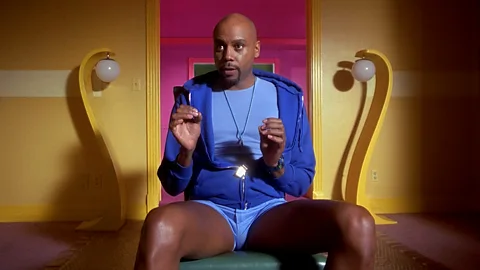
Alamy The film's supporting cast included an inspired out-of-drag RuPaul as a macho camp counsellor (Credit: Alamy)Alamy
The film’s supporting cast included an inspired out-of-drag RuPaul as a macho camp counsellor (Credit: Alamy)

Take the scene where the teens are tasked with identifying the “root” of their homosexuality: their self-diagnoses range from blaming the fact that they’ve attended an all-girls boarding school to their mother being married in trousers, each explanation more ridiculous than the last. The film gets yet more hilarious as camp counsellors Mary, played by Cathy Moriarty, and “formerly gay” Mike, played by RuPaul a decade before RuPaul’s Drag Race, lead baby-rearing lessons for the girls and wood-chopping for the boys respectively – both of which are inadvertently packed with sexual innuendo.

“I was always gravitating towards comedy, but not John Waters’ shock, gross-out. I wanted a sweet romance fairy tale that’s also biting,” Babbit says. But I’m A Cheerleader not only celebrates the comradeship between the teens as a group, the range of whom reflect the diverse shades of lesbianism, but also focuses in on the developing love story between Megan and Graham – one which plays out with awkwardness, but not, importantly, fear from either party. In the darkness, Babbit finds hope. She says she wanted to reflect the irony that conversion therapy camps “can be a conduit for gay people from small towns to meet each other and fall in love. I was trying to be optimistic about a deeply screwed-up situation.”

Conversion therapy 

It’s not only the prominent and warming lesbian representation that makes But I’m A Cheerleader a standout amongst nineties LGBTQ+ cinema, but the film’s trenchant takedown of conversion therapy, the practice of trying to change an individual’s sexual orientation or gender identity. A 2022 report from The Trevor Project estimated that 508,892 LGBTQ+ youths in the US were at risk of being subjected to conversion therapy in 2021. While such recent films as The Miseducation of Cameron Post and Boy Erased, both released in 2018, consider conversion therapy with sombre gravity and depict the violent results of such practices, decades earlier But I’m A Cheerleader broke boundaries by approaching the topic with satire.

It was stupid [and] offensive. I got my R rating but I see it now and it’s literally PG – Jamie Babbit

The film looks at how among other things, conversion therapy can be founded on reinforcing outdated gender stereotypes. At True Directions, “they tell you if you like pink and Barbie you’re ladylike, and if you do dishes, clean and cook, you’ll be straight,” Babbit explains. “I wanted to show how artificial that was.”

This artificiality is reflected in But I’m A Cheerleader’s whole aesthetic, with its high-camp costumes and production design. At True Directions, teens are dressed in polyester, gendered uniforms and the technicolour artifice stretches to the girls’ sleeping quarters where there are brightly kitsch, plastic pink sheets. As Babbit says, she wanted the camp to look like “a Barbie Dreamhouse because it’s so plastic, so fake and not organic”. 

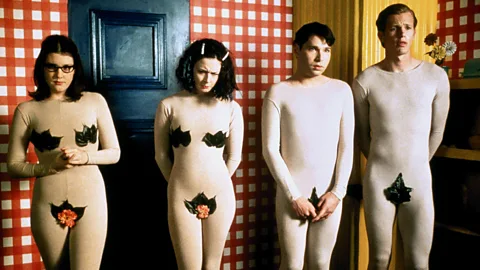
Alamy The film's surreal climax sees the campers required to simulate heterosexual sex in nude leotards (Credit: Alamy)Alamy
The film’s surreal climax sees the campers required to simulate heterosexual sex in nude leotards (Credit: Alamy)

The film reaches its apex with the teenagers’ final test before they graduate as “straight”: simulated heterosexual sex. Those who have got this far are dressed in full-body nude leotards with Adam and Eve-esque leaves and flowers over their genitals. Paired with a member of the opposite sex, they must lie together in a constructed reality of hetero sex and practise thrusting.

Cult status

Ultimately, Babbit says her main film-making ambition to make “a gay Clueless” proved harder than she first thought. “Agents and managers were telling [actors] to stay in the closet, so I had a hard time getting actors to be in the film,” Babbit reflects. “Clea Duvall was nervous and her manager was nervous. By the way, [lots of the cast and crew] are gay, her manager was gay.” Given this context, Babbit’s boldly-brush-stroked queer storytelling seems all the more valiant.

But I’m A Cheerleader wasn’t always a celebrated cult classic. Though it seems tame today, Babbit’s film was initially tagged with the highest NC-17 rating – considered commercial box-office poison – because of scenes implying lesbian oral sex and masturbation, and she had to cut these to get it down to an R. “It was stupid [and] offensive,” Babbit says of the requested editing changes. “I got my R rating, but I see it now and it’s literally PG.”

When the film premiered, Babbit then faced critical derision. “What shocked me was going to Sundance and getting mean reviews,” she remembers. “Variety gave it a terrible review and Entertainment Weekly gave it an F. I have yet to see [another] F rating in Entertainment Weekly and I’m 50 years old!” Furthermore, on a $1 million budget, the film barely made a box office dent, making just $60,000 on its opening weekend.

Jamie Babbit’s Five Culture-Shifters

Amy Heckerling – Clueless (1995). Amy brought nuance and emotion to deeply felt stories about the joys and terrors of being a teenager. Her unpretentious and hilarious work marked the teen film genre forever with a magic, very female touch.

Nicole Eisenman – Paintings (miscellaneous). Nicole broke out in the 1990s art world. Her figurative paintings of queer women and their overt comedy and sexuality brought a light to the queer new wave that was unapologetically gay, sexual and ready to finally burst out of the closet.

Bikini Kill – Rebel Girl (1993). Kathleen Hanna’s band rocked the punk scene out of its own misogyny. Their music is full of anthems of female stories celebrating friendship and empowerment like this one, and their lo-fi sound encouraged countless teen girls to pick up instruments and start playing their truths.

Adrienne Rich – Collected Poems (1950-2012). Soulful, textured poems of lesbian inner life. Both plain-spoken and emotionally layered. A wordsmith at the highest level.

Jane Campion – The Piano (1993). From her short film Peel to this triumph, every film Jane makes is funny and complicated and deeply original. She is a true master of the complicated dark and funny ways humans exist in the world. 

But while most films with this kind of initial reception then disappear forever into cinematic archives, But I’m A Cheerleader has garnered cult status and continues to top recommendation lists for LGBTQ+ cinema today.  “There were always young girls who came up to me, so I knew that it struck a chord with my people,” Babbit notes.

The film’s legacy continues across pop culture. Queer band MUNA’s 2022 Silk Chiffon music video pays homage to the film’s cheerleading visuals and The Miseducation of Cameron Post mirrored But I’m A Cheerleader’s concluding shot of teens bundling into the back of a truck, to be whisked away to a brighter future. “I’m always thrilled when I see that [But I’m A Cheerleader] has these echoes,” Babbit says. “It’s like reflections of reflections of each other’s art.”

Above and beyond these specific citations, But I’m A Cheerleader continues to resonate strongly with its self-reflexive comedy, camp aesthetic, and distinctly optimistic outlook. Bringing laughter to a bleak period of LGBTQ+ cinema, the film has now struck a chord with a whole new generation. As Babbit says: “I’m less shocked now that it still speaks to people because it spoke to me when I made it. I just knew there was nothing like it.”