Notice: Function _load_textdomain_just_in_time was called incorrectly. Translation loading for the td-cloud-library domain was triggered too early. This is usually an indicator for some code in the plugin or theme running too early. Translations should be loaded at the init action or later. Please see Debugging in WordPress for more information. (This message was added in version 6.7.0.) in /home/releande/public_html/wp-includes/functions.php on line 6170 News Magazine | Get The Most Freshy News Every Day | Page 49
Roomies… as the reality of this heartbreaking loss continues to sink in, Lil Jon has been finding ways to express his grief publicly, leaving fans emotional and shaken. With each post, memories of his son Nathan Smith are being shared in real time. And, supporters across social media are reacting with shock, prayers, and an overwhelming outpouring of love as they try to process the devastating news alongside the family.
RELATED: Prayers Up! Lil Jon Breaks Silence After Son Nathan Smith’s Body Found In Pond Following Missing Person’s Report
Lil Jon Continues To Mourn Son Through Emotional Tributes
Since the heartbreaking news of Nathan Smith’s passing, Lil Jon has spoken out numerous times through emotional tributes followed. Shortly after releasing a statement confirming the devastating news, the rapper shared a video capturing moments with Nathan from childhood through adulthood, offering a heartfelt glimpse into their bond. Alongside the clip, he wrote, “THIS HURTS SO BAD. & I LOVE YOU SON.” The post quickly drew an outpouring of love and condolences from supporters.
In a separate post, Lil Jon highlighted Nathan’s music on Spotify, reflecting on his son’s artistic journey and independence. He shared that Nathan released the project after graduating from college, writing, “SLADE RELEASED THIS WHEN HE GRADUATED FROM COLLEGE. HE WAS SO HAPPY TO EXPRESS HIS ART N DO IT HIMSELF. I WAS SO PROUD OF HIM FOR DOING IT ALL ON HIS OWN.”
Family Shares Heartfelt Messages For Nathan
Lil Jon’s apparent partner, Jamila Sozahdah, who shares a young daughter with the rapper, also paid tribute to Nathan, sharing a heartfelt video of sweet moments with him — including clips with his baby sister. In the caption, she wrote:
“Nate… you were so talented, so respectful, so kind, and so incredibly smart. You had a light about you that people felt instantly, and a heart that showed up quietly but powerfully. We were not ready to lose you. None of us were Your presence mattered, your life mattered, and your memory will always live on in our hearts. Nahara will miss her big brother. Rest in peace, sweet soul“
Here’s What We Know So Far
Milton Police confirmed Friday that a body recovered from a pond has been identified as Nathan Smith, the son of rapper and producer Lil Jon. Authorities shared that divers with the Cherokee County Fire Department located the body around 11:53 a.m. While official confirmation is still pending through the Fulton County Medical Examiner’s Office, investigators stated that foul play is not suspected at this time. Police also noted that the case remains open and active as they continue their investigation.
As previously reported, officers responded to the Baldwin Drive area on February 3 after receiving a report of a missing adult. Police said Nathan had reportedly left his residence under unusual circumstances, prompting an immediate and coordinated search involving multiple law enforcement and emergency agencies, along with support from the surrounding community.
Social Media Erupts Over Lil Jon’s Loss
Fans immediately flooded Lil Jon’s Instagram comment section, sending an overwhelming wave of love and support as the news spread. Many shared how deeply saddened they felt by the loss, while others echoed the sentiment that no parent should ever have to bury their child. The comments quickly filled with prayers, white dove emojis, and broken hearts, reflecting the collective grief and shock felt by followers.
The Instagram user @metroboomin shared, “Praying for you and your family this breaks my heart! 🙏🏾”
And, Instagram user @gabunion said, “Im so sorry. Sending so many prayers and all the light to you and your family. 🙏🏾🙏🏾🙏🏾”
Instagram user @cthagod wrote, “Sending you and your family healing energy King. 🙏🏾🖤✊🏾😢”
One Instagram user @prettychaoss__ commented, “This is so sad man 💔🙏🏾”
This Instagram user @papichulo_300 shared, “May God cover you in your time of need 🙏🏽❤️”
And, Instagram user @vvs.lakai said, “💔🥺 ugh i hope Lil John stays strong, praying for him and his family“
Meanwhile, Instagram user @mz.michelle_15 added, “💔💔💔😢😢😢🥺🥺🥺🥺🕊️🕊️🕊️🙏🙏”
While Instagram user @epik90s wrote, “May God bless Lil Jon and his Family..🙏🏾💔Pray that they find comfort during this time.🥹❤️”
Finally Instagram user @_daniboi said, “Parents should NEVER have to bury their children. I’ll die on that hill. May his son rest in peace ❤️”
Family Devastated Amid Pending Investigation
Lil Jon confirmed the heartbreaking loss in a statement shared alongside Nathan’s mother, Nicole Smith. The couple expressed that they are devastated and heartbroken, remembering Nathan as a kind, caring, and passionate young man who deeply loved his family and friends. While Lil Jon has addressed the loss publicly, Nicole Smith has not yet released a statement, and other family members have remained private as they grieve. The medical examiner’s office told 11Alive that they have not yet determined Nathan Smith’s cause or manner of death, do not suspect foul play, and will examine his body on Monday, Feb. 9.
RELATED: Prayers Up! Lil Jon’s 27-Year-Old Son Reported Missing In Georgia
We had 11 inches of snow on Saturday (4th biggest snow on record here!) and everything was shut down for a few days. When I went to the store today, most of the shelves were empty and I couldn’t buy most of the things on my list. I’m guessing nothing has been restocked since before the storm. It’s a truly minor inconvenience, and I’m so grateful to have a wide variety of food to eat in our house! But we’ll be relying heavily on things in our freezer and pantry this week.
Aldi
1 gallon Whole Milk – $2.96
1/2 gallon Oat Milk – $3.39
1/2 gallon Almond Milk – $2.29
3 dozen Eggs – $5.88
1 Cauliflower – $2.59
1 large tub Organic Spring Mix – $4.49
1 pkg Broccoli Crowns – $2.57
1 bag Green Grapes – $2.55
1 bag Red Cherries – $3.87
1 box Vitality Cereal – $2.59
1 box Crunchy Raisin Bran Granola – $2.69
2 pkgs Pepperoni – $5.98
1 large canister Oats – $3.29
Total: $45.14
Publix
2 boxes Jose Ole Taquitos – $7.59, used (2) $1/1 Jose Ole from the Green Flyer Publix Savings Booklet, plus received (2) $0.75/2 Jose Ole Ibotta Rebates – $4.09 for 2 after Coupons and Rebates
1 bag Finish Dishwasher Detergent Tabs – $2.99, used $2/1 Finish Publix Digital Coupon – $0.99 after Coupon (the last two items are in a separate budget category and I’m not including them in my grocery total for the week – I’m just showing them because they are a good deal that someone else might want to take advantage of).
These sizzling fajita vegetables will liven up your dinner table. The recipe features colorful bell peppers and red onion, seasoned and cooked to golden perfection. It was inspired by Tex-Mex fajitas and the veggies I always request on my Chipotle burrito bowls.
It took me quite a few tries to nail the texture that I had in mind—I wanted my peppers and onions caramelized on the edges, cooked until mostly tender, yet far from mushy. I finally figured it out, and I’m so glad to share this simple and foolproof method with you today.
Finished with a squeeze of lime juice, this vibrant side dish is ready in 20 minutes or less. You’ll find serving suggestions below to build your meal around it.
Fajita Vegetable Tips
You’ll find the full recipe below, but here’s why this recipe works so well.
Choose red, orange or yellow bell peppers. Sure, Chipotle often uses green peppers, but the other colors are sweeter and more flavorful.
Use a medium-sized skillet about 10 inches in diameter. Cast iron provides a traditional presentation for fajitas, but I can vouch that stainless steel also works well.
Keep a lid handy. The recipe uses minimal oil and simultaneously steams and sautées the veggies. This technique yields the perfect texture and ensures that your oil doesn’t burn, so these lightly charred peppers won’t set off your smoke alarm!
Don’t stir too often. Let the vegetables sizzle against the pan for a couple of minutes at a time before stirring. This allows the edges to caramelize.
Finish with a squeeze of lime juice and salt, to taste. The lime offers a welcome dash of acidity to cut through the sweetness, and another pinch of salt amplifies the rest.
Watch How to Make This Recipe
Serving Suggestions
Traditional Tex-Mex fajitas are served with thinly sliced, grilled skirt steak, but this fajita veggie recipe is such a versatile component! It’s a great, healthy side dish for your Mexican or Tex-Mex meals.
Serve fajita veggies as a component in tacos, burritos or burrito bowls by incorporating any of the following:
You could also make salad bowls with chopped romaine or your greens of choice, lightly warm fajita veggies, cilantro-lime dressing, cheese and crumbled tortilla chips.
Leftover veggies reheat well. I love them with scrambled or fried eggs in the morning, with some cheese, sour cream and crumbled tortilla chips on top.
More Tex-Mex and Mexican Favorites
Fresh Mexican recipes are always at the top of my list. Here are a few more recommendations:
Please let me know how your recipe turns out in the comments! I love hearing from you.
Print
Fajita Veggies
These bold fajita vegetables are tender, caramelized and delicious! This easy recipe tastes like Chipotle’s fajita veggies, but better. Recipe yields 4 servings.
Warm the olive oil in a 10-inch cast iron or stainless steel skillet over medium-low heat until shimmering. Add the peppers, onion, oregano, chili powder, cumin and salt, and toss to combine.
Add the water, then immediately cover and cook, stirring only every couple of minutes until softened to your liking and lightly charred along the edges, about 10 to 12 minutes.
Remove the skillet from the heat. Stir in the lime juice and season to taste with salt, if desired (I usually add another pinch of salt). Leftovers keep well in the refrigerator for up to 4 days; gently reheat them in the microwave before serving.
Nutrition
The information shown is an estimate provided by an online nutrition calculator. It should not be considered a substitute for a professional nutritionist’s advice. See our full nutrition disclosure here.
Notable for its moments of shocking violence and its avant-garde visual approach, Taxi Driver is brimming with memorable scenes beyond Bickle’s famous squaring off in the mirror. In particular, another shorter scene really stands as the film’s most important moment of visual idiosyncrasy; showcasing a distinctly European sensibility in what is ultimately a very American drama, as well as encapsulating the lonely melancholy that runs throughout.
A rejection with a difference
Coming a third of the way through the film, and closing its first act, it centres on a phone call Travis makes to Betsy after he’s upset her with his inappropriate date choice. He makes the call from a payphone in a grimy-looking corridor and pleads for a second chance – but, despite his attempt to make amends, she is unmoved.
The scene could have been shot in a typical, melodramatic way, with the camera staying on Travis as he finally realised that his chance with her was blown – and with that, his one sliver of hope to escape his alienated existence. Scorsese, however, eschews the obvious. Instead, cameraman Michael Chapman begins a slow track away from Travis, eventually resting on an empty corridor with an open doorway at its end, leading out onto the street. The corridor, which is the office entrance of the Ed Sullivan Theatre on Broadway, is run-down and hopeless, with a view onto the bustling darkness of the city at night.
The viewer hears Travis’s reaction to being awkwardly dumped off-camera (though not what Betsy says to him) before he hangs up and returns into shot, walking down the corridor with his back to the camera as he leaves the painful moment behind.
The shot is so contrary to the rules of classical Hollywood films where the drama, rather than the visual language of a scene, naturally took precedence – and it masterfully exemplifies both the film’s maverick creative ethos, as one of the seminal works of the 1970s “New Hollywood” revolution, and its protagonist’s isolation and melancholy. Travis never seems more vulnerable than in this moment, contrasting with his later bravado in the mirror scene. Here, the camera seems unable to bear witness to the character’s heartbreak, even if Travis is undoubtedly responsible for it. By moving off Travis, the shot almost allows him a brief retention of dignity, something that the urban society in which he lives rarely affords him.
Five bronze towers soar 400 feet above Saadiyat Island, the ever-expanding cultural district just off the coast of Abu Dhabi. The structures—which recall the wings of a falcon, a highly prized symbol in the United Arab Emirates—are the architectural signature of the Zayed National Museum, which opened in December. Two weeks before, another vastinstitution, the Natural History Museum, debuted. They will be followed later this year by the most ambitious of all—the late Frank Gehry’s Guggenheim Abu Dhabi.
The trio of buildings represents a major leap forward in the country’s $12 billion play to become a cultural capital to rival New York, Paris, and London. Spearheading the effort is Mohamed Khalifa Al Mubarak, the chairman of the Department of Culture and Tourism Abu Dhabi. He says the Guggenheim, which will be 12 times the size of its New York counterpart, is “going to be a lot more than a museum. It’s really a civic space that brings people together.”
From left: “Infinity Mirrored Room—Filled with the Brilliance of Life,” an installation by Yayoi Kusama at the Guggenheim Abu Dhabi; the interior of the Guggenheim.
In addition to a collection of contemporary art from the 1960s to today, there will be music and dance performances staged in the shade of the museum’s cone-shaped towers. The focus will be on artists from the Middle East, Asia, Africa, and Australia “who have not been given the light they deserve, whether it’s because of their geographical location or their gender,” Mubarak says. Works by these artists will be displayed alongside pieces by well-known Western names, such as Basquiat, Pollock, and Rothko. “That’s what’s going to make it distinctly different from anywhere else.”
There is plenty more to discover in Saadiyat, where the 295-room Jumeirah Saadiyat Island, which overlooks the Gulf, makes for a sumptuous home base. The Zayed—a sprawling, 900,000-square-foot space designed by British architecture firm Foster + Partners—dominates the skyline. Named for the U.A.E.’s founding father, Zayed ibn Sultan Al Nahyan, it tells the nation’s story from antiquity to today. Across six permanent galleries—which appear to float above the lobby in concrete spheres—are 1,500 artifacts spanning 300,000 years of human history. The first thing you’ll see is a reconstruction of a Bronze Age boat used by ancient traders; further inside is the 8,000-year-old Abu Dhabi Pearl.
Visitors at Abu Dhabi’s Natural History Museum.
Natural History Museum Abu Dhabi
Leading to and from the Zayed is the Al Masar Garden, planted with desert shrubs and the region’s iconic ghaf tree. Walk along it toward the Gulf and you’ll come to the 377,000-square-foot Natural History Museum, a cascade of geometric white blocks and lush greenery designed by Dutch architecture studio Mecanoo. In contrast to some of the city’s more formal institutions, it’s ideal for families. On display are extinct species like a four-tusked elephant, whose fossils were discovered nearby, and a 67 million-year-old skeleton of a Tyrannosaurus rex. There are also boulder-size chunks of moon rocks and meteorites that crash-landed on Earth that children can touch and smell.
A short stroll away is the Louvre Abu Dhabi, which kicked off the area’s development as a global arts center when it opened in 2017. Its collection encompasses global treasures, such as Iranian illustrated folios from the 16th century, Egyptian funerary statues, and works by modern European masters including Picasso and Renoir.
A Ming dynasty plate and a coin from 300–100 BC from the Zayed National Museum.
Zayed National Museum/ Department of Culture and Tourism, Abu Dhabi
Saadiyat’s art scene will reach new heights in November, when the London-based Frieze takes over the annual Abu Dhabi Art Fair, which will be rebranded as Frieze Abu Dhabi.
In addition to the long-awaited Guggenheim, Mubarak has also hinted that “another amazing asset will be announced soon.” Word in the souk is, it’s a concert hall.
A version of this story first appeared in the March 2026 issue of Travel + Leisure under the headline “Taking Flight.”
Visual rhythm has shaped Marleen Hulst’s creative life long before she identified herself as an artist. Growing up in the Netherlands, she developed an early sensitivity to repeated motifs, surface decoration, and the subtle order hidden in everyday objects. This sensitivity did not emerge through formal art training but through observation, collection, and curiosity. Patterned paper, packaging, and napkins became treasured items, saved and reused in scrapbooks where repetition and variation could be studied intuitively. These early habits reveal how deeply pattern recognition is embedded in her way of seeing the world. Even today, that instinctive attraction continues to guide her work, anchoring it in familiarity while allowing space for experimentation.
Several years later, this fascination found a new outlet through zentangle drawing. Filling sketchbooks with intricate repeated lines, Hulst explored how simple marks could grow into complex visual structures. Although these drawings were based on existing designs rather than original inventions, they offered her long stretches of focused making and visual satisfaction. Over time, however, repetition alone was no longer enough. She began to feel the need for a more personal visual language, one that reflected her own sense of restraint, balance, and calm. That internal shift marked an important turning point, moving her away from imitation and toward authorship.
Today, Hulst balances her creative practice with a part time role in finance administration, an experience that quietly informs her artistic approach. Structure, order, and consistency play a significant role in both worlds; yet her art offers a softer, more intuitive counterpoint. Pattern making becomes a space where control and spontaneity coexist, allowing her to step away from rigid systems while still honoring clarity and logic. This duality gives her work its quiet confidence, positioning her within contemporary pattern art as someone who values simplicity not as limitation, but as possibility.
Marleen Hulst: Discovering Freedom Through Stamp Carving
A defining moment in Hulst’s artistic development arrived in the summer of 2024 through an online video about carving stamps. The process immediately captured her attention, offering a tactile and accessible way to create patterns without unnecessary complexity. She began with basic geometric forms such as circles, squares, and rectangles, sometimes adding stripes or subtle variations in scale. These small stamps became her primary tools, proving that limited shapes could generate an endless range of visual outcomes. This discovery reinforced her belief that strong work does not require excess, but rather thoughtful repetition and balance.
Once she started printing, the process became almost irresistible. Armed with a modest sketchbook and a selection of ink pads, Hulst allowed intuition to guide her. Patterns emerged organically as she tested combinations, spacing, and color interactions. There was no pressure to plan or perfect each outcome. Instead, the act of printing itself became the focus, offering both calm and excitement. Through this hands-on approach, her visual identity became clearer. Clean compositions, rhythmic spacing, and a confident use of negative space now define her style.
Her exploration expanded further through handmade paper. After attending a paper making workshop, Hulst invested in her own mold and deckle, embracing the slow, physical nature of the process. Creating paper at home requires patience and attention, qualities that align naturally with her pattern work. Printing on sheets she produced herself added a deeper layer of meaning, merging material and image into a single expression. Alongside this, she began reusing brown shopping bags, appreciating their texture and occasional typography. These choices reflect a respect for materials and an interest in giving overlooked surfaces a renewed purpose.
Everyday Surfaces and Quiet Sources of Inspiration
Inspiration for Hulst’s work is grounded firmly in daily life. Rather than looking exclusively to galleries or formal art spaces, she notices patterns embedded in ordinary surroundings. Tea towels, shower curtains, cushions, clothing, and ceramic flower pots all offer visual prompts. These familiar objects demonstrate how pattern operates as both decoration and structure, shaping environments without demanding attention. By drawing from such sources, Hulst ensures her work remains approachable, rooted in shared visual experiences rather than distant concepts.
Museums also play a role, though often in subtle ways. A single piece glimpsed during a visit can spark an idea that lingers long after. Online platforms further expand her visual library. Browsing the internet and using Pinterest allows her to collect impressions rather than direct references. These images function as gentle triggers, encouraging new combinations and interpretations rather than imitation. The result is a practice that absorbs influence quietly, filtering it through personal intuition and restraint.
This approach supports her preference for working without rigid plans. When she sits down to create, usually once or twice a week, she allows the process to unfold naturally. Selecting one or two stamps and a color, she begins printing without overthinking. Patterns often seem to appear on their own, guided by subconscious decisions rather than deliberate strategy. This method preserves a sense of discovery and keeps the work from becoming mechanical. It also reinforces trust in her instincts, an essential element of her artistic confidence.
Marleen Hulst: Meaningful Milestones and Future Directions
Among the many patterns Hulst has created, one holds particular personal significance. Printed on handmade paper, the piece titled Summer Vibe occupies a place in her living room, framed and displayed on a table rather than hidden away. This work marked a major milestone when it was selected for a Billboard Showcase in central London in August 2025. Seeing her art presented beyond Instagram for the first time felt unreal, opening the door to further showcases and features. Despite these later opportunities, that initial experience remains especially meaningful, symbolizing a quiet breakthrough moment.
Naming her patterns is rare, which makes Summer Vibe stand out even more. The decision to title it reflects how deeply connected she feels to the piece and the moment it represents. It stands as proof that her understated practice can resonate far beyond its humble origins. Recognition did not alter her approach, but it did affirm the value of staying true to her instincts. The work continues to serve as a reminder that consistency and authenticity can gradually build visibility without compromising artistic integrity.
Looking ahead, Hulst is drawn to projects that extend her patterns into new forms. Greeting cards are a natural next step, especially given her personal connection to paper and card making. After her mother’s passing in 2025, she inherited a large collection of colored paper, cardstock, and envelopes. Her mother had always created cards by hand, and Hulst sees this project as a continuation of that tradition in her own visual language. Collage also attracts her interest, particularly the challenge of combining printed patterns with layered imagery. These future explorations reflect an artist who evolves gently, honoring memory, material, and the enduring appeal of simple forms.
Across multiple generations, the Celebrezze family built an enduring political dynasty that has wielded power and influence from Cleveland to Washington, D.C.
Since the 1920s, Celebrezze family members have occupied an extraordinary sweep of public offices, from Cleveland mayor and state attorney general to the state Supreme Court, appellate courts and county benches.
In 2009, Leslie Ann Celebrezze became the family’s first woman to run and the first to win an election when voters tapped her to replace her father as a Cuyahoga County Domestic Relations Court judge.
The family dynasty took another turn after she pleaded guilty on Wednesday to tampering with public records for creating a false court entry to steer work to Mark Dottore, a longtime family friend whom she’d repeatedly appointed to oversee lucrative divorce cases.
Celebrezze said little during the hearing and declined comment to reporters as she left the courtroom with her attorney.
Visiting Judge Mark Wiest from Wayne County did not immediately set a date for Celebrezze’s sentencing on the third-degree felony charge, which carries a potential prison sentence of up to three years.
Prosecutors said they will not request prison time, leaving that decision to Wiest.
The judge said a lesser jail sentence is a possibility and that he will rely on a pre-sentence investigation to help guide his decision.
“I’m not saying [a jail sentence] is going to happen, but I want that option,” Wiest told Celebrezze.
The conviction comes more than two years after The Marshall Project – Cleveland first detailed Celebrezze’s relationship with Dottore.
Coming to America
Rocco Cilibrizzi was a shepherd in Potenza, Italy, when he moved his family to Cleveland around 1912, joining the surge of immigrants who would make the city the nation’s fifth largest at that time. To fit in, the family surname was Americanized to Celebrezze.
Their political influence first took hold after brothers Anthony J. Celebrezze Sr. and Frank D. Celebrezze held prestigious posts in Cleveland and Cuyahoga County, and became power brokers inside the local Democratic Party.
Frank became an assistant county prosecutor in 1929 and later worked as Cleveland’s safety director, replacing the famed “Untouchable” Prohibition agent Eliot Ness in 1942. He later won a seat on the Cleveland Municipal Court.
Anthony was elected Cleveland mayor in 1953, serving until 1962, when he was picked by President John F. Kennedy to become a cabinet secretary of the Department of Health, Education and Welfare.
His name is emblazoned on the federal government’s skyscraper blocks from the courthouse where his great-niece, Leslie Ann Celebrezze, sat as a judge.
The family’s second generation expanded its influence further on the Ohio judiciary and state politics. At one point, two Celebrezze family members sat on the seven-member state Supreme Court.
Frank D. Celebrezze Jr. was a state Supreme Court justice from 1972 to 1986, serving as chief justice for eight of those years. He lost a 1986 election to keep his seat.
His brother, James, joined him on the bench in 1983, making them the state’s first siblings on the high court.
In 1991, James Celebrezze won a seat on the Cuyahoga County Domestic Relations Court. He retired in January 2009. His daughter, Leslie Ann Celebrezze, who had been a magistrate for the Cleveland Municipal Court, followed in his footsteps onto the court. Controversy over the family’s relationship with Dottore also followed.
Brent Larkin, who has written about Cleveland and Ohio politics since 1970, said the Celebrezze dynasty has had two branches, both enjoying success at the ballot box.
One was led by Anthony J. Celebrezze Sr. and his son. The other includes brothers James and Frank Celebrezze, who were both embroiled in controversies when they served on the Ohio Supreme Court.
The family also clashed in one election. In 1976, cousins Anthony Celebrezze Jr. and James Celebrezze faced each other in a crowded congressional primary, with both losing.
“There was no love lost among the two family factions,” Larkin said.
He said he does not believe that Leslie Ann Celebrezze’s conviction will hurt the family’s future in politics. The Western Reserve Historical Society lists her as one of seven notable Italian American Women in Northeast Ohio.
Become a Member
Join the community that keeps criminal justice on the front page.
“Historians won’t allow Leslie Celebrezze’s sleaze to tarnish the entire family’s legacy,” Larkin said.
Dottore and family ties
Dottore, a longtime friend of the Celebrezze family, also served as the campaign treasurer for Leslie Ann Celebrezze and for Nicholas Celebrezze, a judge on the Cuyahoga County Juvenile Court.
Just after Leslie Ann Celebrezze took her father’s judgeship in 2009, the Ohio Supreme Court removed her from a divorce case involving a wealthy real estate developer in which Dottore was already appointed as receiver.
Celebrezze’s father originally appointed Dottore to that case and 10 others during the last six months of 2008, netting Dottore $340,000 in fees.
Yet, “The judge gave no work to any other receivers during the same period, records show, despite an Ohio Supreme Court rule that such appointments be rotated equitably,” The Plain Dealer reported.
Then-Ohio Supreme Court Chief Justice Thomas Moyer wrote in his ruling that he also had concerns that Leslie Ann Celebrezze would “continue to engage in the questionable use of Dottore’s services initiated” by her father.
Celebrezze later removed herself from 88 cases that started with her father.
Old troubles resurface
In 2023, The Marshall Project – Cleveland first raised questions that Celebrezze, the administrative judge at the time, directed case assignments to herself. She stated in court entries that the cases had been randomly assigned to her.
In some complex divorce cases, judges appoint receivers to act as neutral parties to control a couple’s marital assets, including real estate, cash, equipment, deposit accounts and businesses. The receivers are paid by the divorcing couples.
Celebrezze approved nearly $500,000 in fees to be paid to a company, Dottore Cos. LLC, between January 2017 and June 2023, The Marshall Project – Cleveland reported. The judge appointed either Dottore or his daughter to be the receiver in six cases she handled during that time, according to Cuyahoga County court records.
In December 2025, a visiting judge ordered Dottore to repay nearly $1.3 million in unauthorized fees that Dottore paid to his own attorney to review his invoices in a divorce involving Strongsville businessman Jason Jardine. Dottore billed Jardine and his former wife Crystal for the legal fees. Dottore filed a notice to appeal the ruling.
Celebrezze and Dottore told The Marshall Project – Cleveland that they were only lifelong friends, even after a private investigator recorded videos of them kissing outside a steakhouse and Celebrezze visiting Dottore’s home and office numerous times. Both denied it was a romantic relationship.
However, Celebrezze conceded in court records in 2025 that she loved Dottore when she bypassed the court’s random assignment process to shift cases to her docket and subsequently appointed him as receiver.
Donald Trump‘s social media activity has always been headline-worthy, whether he retweets a controversial post or pens a lengthy Truth Social paragraph. But the 79-year-old’s since-deleted Truth Social video of former President Barack Obama and First Lady Michelle Obama sparked outrage, even from fellow Republicans, about its racist undertone. The video was shared to the Republican’s account on Thursday, February 5, before it was removed on Friday.
The clip focused on baseless election fraud claims about the 2020 presidential election, which former President Joe Biden won. At the end of the video, a segment of Barack, 64, and Michelle, 62, appeared as cartoon apes, and it was synced to the song “The Lion Sleeps Tonight.”
Any imagery comparing a Black person to an ape has been a long-standing racist trope. February is Black History Month, which recognizes the achievements, contributions and milestones by Black Americans. Barack, for his part, was the first Black president in American history.
Praying it was fake because it’s the most racist thing I’ve seen out of this White House. The President should remove it.
White House Press Secretary Karoline Leavitt defended the Truth Social video in a text, per PBS, as just an “internet meme” comparing Donald to the King of the Jungle from Disney’s 1994 movie The Lion King.
“This is from an internet meme video depicting President Trump as the King of the Jungle and Democrats as characters from The Lion King,” Leavitt, 28, said. “Please stop the fake outrage and report on something today that actually matters to the American public.”
Nevertheless, just before noon ET, the clip was taken down. An official told CNN in a statement that the video was an error by an unnamed staffer.
“A White House staffer erroneously made the post,” the statement read. “It has been taken down.”
The clip sparked widespread outrage across the nation. South Carolina junior Senator Tim Scott, who is the only Black Republican in the Senate, called the post the “most racist thing” he had seen from the White House.
“Praying it was fake because it’s the most racist thing I’ve seen out of this White House,” Scott, 60, tweeted, adding, “The President should remove it.”
Barack and Michelle have yet to publicly comment on the since-deleted video.
There’s an endless debate over whether real estate or stocks are the better asset class. Although I’m a fan of both, I just realized the feel-good wealth effect adds another feather to real estate’s cap.
In my post about avoiding the real estate frenzy zone if you want to get the best deal, I highlighted a home that sold 60% over asking, jumping from $2.5 million to $4.05 million. It was an astounding close that genuinely surprised me. I walk and drive by that house all the time and think nothing of it.
After checking in with my real estate agent for some color, she explained that early-year inventory is extremely tight, so demand is massively outstripping supply. The home was remodeled and well-located, so it deserved a strong outcome. Still, it’s not a house I ever imagined breaking the $3 million barrier this year, let alone crossing $4 million.
When I walked by the home again on my way back to the auto mechanic to pick up my car, something funny happened. I no longer felt bad about paying more to fix a coolant leak. I’d already spent about $1,000 replacing the water pump a couple of years ago. Normally, that would’ve irritated me.
After paying the auto mechanic $415 for the oil service and coolant leak fix (replaced a hose for $225), I treated myself to a $10 milkshake, something I never do when getting a burger. Objectively terrible for my weight-maintenance plan. Subjectively? I felt richer so I figured why not YOLO.
That massive house overbid created a real, immediate feel-good wealth effect. $10 for a milkshake after spending another $225 on my car suddenly felt like chump change.
Why the Wealth Effect From Real Estate Feels Stronger Than From Stocks
Since the beginning of 2023, we’ve had a phenomenal stock market run. The S&P 500 is up roughly 80% over the past three years, creating a meaningful positive wealth effect that has translated into higher consumption. I’ve even argued that housing affordability is better than it looks thanks to equity market gains.
Excess stock returns above historical norms have effectively bought us more time, our most valuable asset.
And yet, I’ve come to believe that the positive wealth effect from a huge real estate sale is stronger, deeper, and more durable than even a tremendous stock market rally.
Here are the reasons why.
1) Real Estate Gains Feel More Permanent Than Stock Market Gains
Real estate moves like an armored super-tanker. Even in rough waters, it doesn’t sink. It just keeps chugging along toward its destination. Stocks, by contrast, behave like jet skis: thrilling, fast, and exciting, but one unexpected swell can throw you off and let a great white shark take a bite.
Stocks have no intrinsic utility. They are “funny money.” A stock’s value can get cut in half overnight after a single earnings call. Or some random exogenous shock that causes demand to fall off a cliff could cause years of turmoil.
Real estate provides essential utility. We all need a place to live. In fact, when the world feels like it’s falling apart, housing demand can actually increase. In the extreme scenario of a zombie apocalypse, you’ll crave a defensible home base. Your stocks aren’t going to do jack shizzle to prevent you from getting bitten.
Rental income also doesn’t reduce the value of the underlying property. Dividends, on the other hand, are paid directly out of a company’s balance sheet. As a result, the value of the company actually goes down my the decline in cash paid out. Therefore, rental income is superior to dividend income.
The Buoyancy Of Real Estate
We’ve seen how fleeting stock gains can be. In 2021, easy money and massive stimulus sent equities to nosebleed levels. Meta went from about $270 to $376, then collapsed 73% to $99 in 2022, wiping out years of gains in a short period of time. Thankfully it came back.
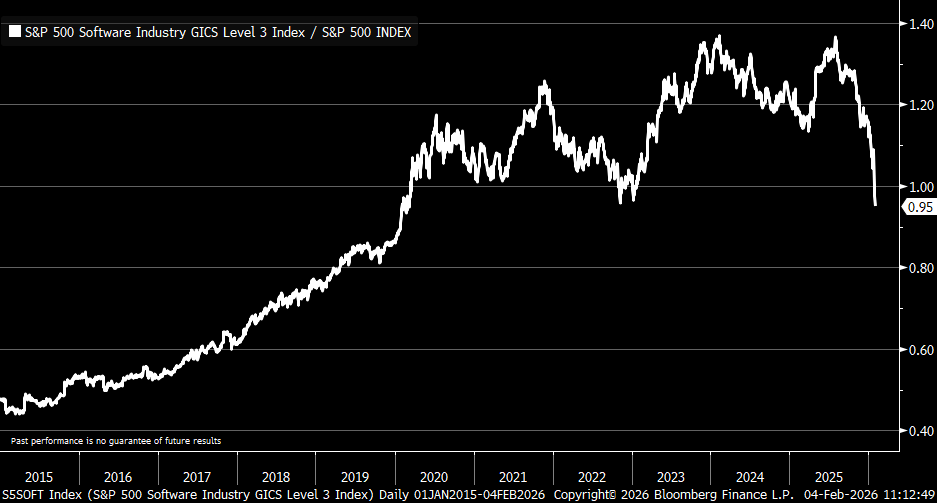
But now software companies in just six months have lost over 6 years of gains relative to the S&P 500, due to fears AI will make SAAS companies and the like obsolete.
Bellwether Microsoft, a company I own, has lost almost 20% of its value in just one month. Meanwhile, Amazon, another stock I own guided for $200 billion in CAPEX in 2026 due to extraordinary demand and the stock was down as much as 11% in after hours.
Housing also surged in 2020 and cooled in 2022 when rates spiked. But unlike the 20% S&P correction or the 25% – 70% drawdowns in tech stocks in 2022, national home prices largely stalled. Even in harder-hit regions like Texas and Florida, declines were around 15% after 50%+ gains. You rarely see housing corrections that erase years of appreciation so rapidly the way stocks sometimes do.
In economics, permanence matters. If a gain feels temporary, you save it. If it feels durable, you spend it.
A classic example is not spending more if you think there will be tax hikes after a year of tax cuts.
2) Real Estate Wealth Is More “Visible,” Which Makes It More Spendable
Stock gains live on a screen. They’re abstract numbers that flicker up and down every trading day. You know they can disappear just as quickly as they appeared, so you subconsciously treat them with caution.
Real estate wealth is physical and visible. You walk by it. You sleep in it. Disrespectful neighbors let their dog’s poop on its front lawn. Comparable sales confirm it. A $4.05 million closing across the street feels real in a way a brokerage balance never does.
This visibility makes the wealth easier to mentally access, even if you don’t plan to sell your own home. It creates confidence, and confidence leads to spending.
That’s why a neighbor’s record-breaking sale can make you feel richer. The comp just reset your internal reference point. You can’t help but compare your home to theirs and bump up your net worth in the process.
3) Real Estate Provides Stronger Social Proof And Validation
When a house sells at a new record high, it becomes a public event. Agents talk about it. Neighbors gossip about it. Appraisers recalibrate their assumptions. Lenders, insurers, and future buyers quietly update what they believe the neighborhood is worth. Price discovery happens in the open, reinforced by multiple independent third parties at once.
This kind of validation feels amazing. Real estate appreciation isn’t just reflected on a private statement; it’s embedded into comparable sales, listing prices, and neighborhood narratives. One sale can re-anchor an entire block’s perception of value. The gain feels real because it reshapes what others are willing to pay in the same physical space you occupy every day.
Stock gains, by contrast, are lonely and abstract. Nobody throws a block party because the S&P 500 hits a new high. There’s no shared acknowledgment, no communal recalibration of worth. If you mention a big equity win, people tend to assume you either got lucky or took reckless risk. And since nobody likes a braggart, most stock gains stay quietly hidden behind a login screen.
With real estate, your wealth becomes socially validated without self-promotion. After all, the point of investing in stocks is ultimately to turn paper gains into something tangible and meaningful. For most people, that means buying a home, aside from funding retirement. In a world where most financial wins are invisible, this quiet recognition dramatically amplifies the feel-good wealth effect.
Huge feel-good real estate wealth effect for neighbors of this house selling for $1.555 million over asking
4) Real Estate Gains Take More Effort, Stock Gains Far Less So
Because real estate isn’t a 100% passive investment – normally a negative variable in my passive income rankings – its gains ironically feel more earned. If a remodel was involved, even more so given its one of the most painful processes a person can go through. Real estate rewards patience, discipline, ongoing maintenance, and long holding periods. There’s real work behind the outcome, both physical and psychological.
Climbing the property ladder takes decades. Along the way, you usually save aggressively for a large down payment, then summon the courage to take on a massive amount of debt to buy an extremely expensive, illiquid asset. Portions of your house will break and need to be fixed. That’s commitment, plain and simple.
Stock investing, by comparison, is intentionally frictionless. You click, allocate, rebalance, and wait. That efficiency is financially optimal, but psychologically it dulls the payoff. Returns feel closer to luck or market tides than personal sacrifice, resulting in a thinner, less durable feel-good effect, even when the numbers look great on paper.
Get Neutral Real Estate As Early As You Reasonably Can
If the feel-good wealth effect from real estate is stronger than stock market gains, the logical takeaway isn’t to speculate harder. It’s to get neutral real estate as early as possible.
Getting neutral means owning your primary residence so housing inflation no longer works against you. Instead of rising prices making life more stressful, they begin working quietly in your favor through:
Inflation protection on your largest recurring expense
Forced savings through principal paydown
Long-term appreciation supported by rising replacement costs
You don’t need a portfolio of rental properties to benefit. Owning just one home already changes the equation. By locking in your housing costs, you hedge the single largest expense in your budget. For many households, that alone justifies ownership—even before appreciation or rental income enter the picture.
The psychological payoff is immediate, especially as a parent. When shelter is secured, everything else feels more manageable.
Stocks are essential for liquidity and long-term growth. But relying solely on stocks while remaining fully exposed to housing inflation as a renter is an underappreciated risk.
Real Estate Quietly Wins
The biggest misconception is that stocks alone deliver financial security. They don’t, at least not to the degree people expect. Stocks can grow your net worth on paper, but their volatility makes that wealth feel fragile and reversible.
Real estate works differently. Owning your home converts your largest recurring expense into an asset and turns housing inflation from a threat into a tailwind. Over time, it replaces financial anxiety with a sense of control that portfolios alone struggle to provide.
With real estate, it’s not just about returns, it’s about permanence. No matter what the market does tomorrow, your family still has a roof over its head. That stability creates a confidence that quarterly statements rarely match.
Both stocks and real estate generate wealth effects. But real estate wealth feels more durable, more visible, and more real. As a result, people are far more willing to loosen the purse strings when their housing situation feels secure.
That’s how a record-breaking home sale down the block suddenly makes a pricey car repair feel acceptable, an indulgent lunch feel earned, or even a completely unnecessary $10 milkshake seem like a reasonable life choice – perhaps followed by a $250-a-month gym membership to burn it off.
Readers, which creates a stronger feel-good wealth effect: a big real estate sale or stock market gains?If you disagree with my thesis, I’d love to know why.
Participate In The Feel-Good Wealth Effect Of Real Estate
Rising real estate prices don’t just make people richer on paper. They make people feel more confident, more secure, and more willing to spend.
If you want exposure to that positive wealth effect without buying another property, one option is Fundrise. Fundrise lets you invest passively in diversified residential and industrial real estate across the country, so you can participate in real estate’s long-term, confidence-building upside without the hassles of direct ownership.
I’ve invested over $500,000 with Fundrise, and they’re a long-time sponsor and trusted partner of Financial Samurai. With a $10 minimum investment, it’s a simple way to tap into real estate’s feel-good wealth effect and balance stability with growth.
In addition, pick up a copy of Millionaire Milestones, my instant USA Today bestseller. The book helps you build more wealth so you can break free sooner.
For more nuanced personal finance content, join 60,000+ others and sign up for the free Financial Samurai newsletter. This way, you never miss a thing.
This website may contain affiliate links and advertising so that we can provide recipes to you. Read my disclosure policy.
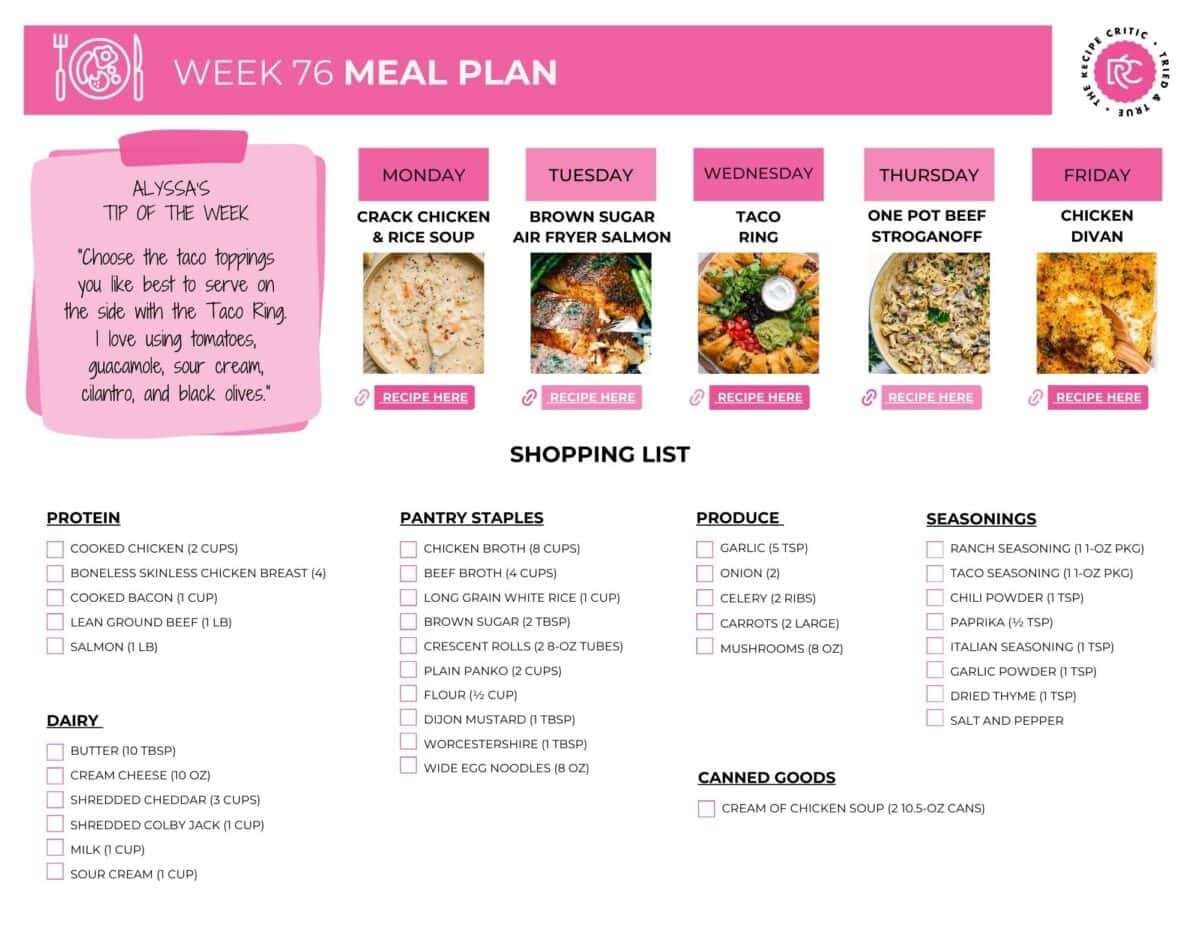
If planning dinner feels overwhelming, this free weekly meal plan can help. It includes 5 simple meals that serve 4–6 and a shopping list so you can spend less time planning and more time enjoying the week.
Don’t like something on the menu? Don’t worry! I have a new weekly meal plan each week, and you can switch out any meals you want! If you want to receive all of the meal plans, sign up for my newsletter here!
Crack Chicken and Rice Soup
A cozy, one-pot soup with tender chicken, hearty rice, creamy cheese, and ranch seasoning in every bite.
View Recipe
Air Fryer Salmon
Melt-in-your-mouth brown sugar garlic air fryer salmon is juicy, tender and full of flavor. Salmon is so good, especially when it’s cooked right, and the air fryer makes it perfect every time! It’s an easy, hands-off way to make a scrumptious meal.
View Recipe
Taco Ring
This taco ring is the easiest, cheesiest dinner. I know your family will love it as much as mine does! All you need is a can of crescent rolls, shredded Colby Jack cheese, some taco seasoning, and your favorite fixings to bring it to life!
View Recipe
One Pot Ground Beef Stroganoff
One Pot Ground Beef Stroganoff is creamy, hearty, easy and a savory perfection meal. It is going to be dinner winner! Tender mushrooms, tasty ground beef and luscious served with noodles for a beautiful dish your whole family will love.
View Recipe
Chicken Divan
Chicken divan is a creamy chicken casserole recipe topped with crispy buttered bread crumbs. It’s easy to make, can be prepped ahead of time, and is a classic family favorite.
View Recipe
Why Should I Meal Plan?
If you haven’t tried planning your meals ahead of time, this is going to be a game-changer for you! Here’s why I swear by weekly meal planning:
Time Saver: Dinner feels easier when there’s a plan. You already know what’s for dinner and how long it takes, so evenings run a little smoother.
Money Saver: Meal planning helps you shop with intention. You buy what you need, use what you have, and then you avoid those extra grocery trips that add up fast.
Bye-Bye Takeout: When meals are planned and groceries are stocked, you’re less likely to hit the drive-thru. That means more savings and healthier eating. Win-win!
Each weekly meal plan has a free grocery list that is easy to print and convenient for taking with while grocery shopping. Simply cross off or check mark each grocery item as you go!
What to Make With Dinner
If you want to add some sides to your dinner, here are a few that go great with this weeks meals!
Meal Planning with Leftovers
I only meal plan Monday-Friday. We sometimes have plans over the weekend, or I have leftovers that we can finish off the week! If you have leftovers, store them in an airtight container in your fridge.




:max_bytes(150000):strip_icc():format(jpeg)/TAL-art-museum-evening-fountain-ABUDHABIART0326-d82b85d403f44135a4732ea521dbbe99.jpg)