
How Black Language Built America While America Tried to Bury It
Let me take you somewhere real quick.
Picture a classroom. Third grade. Maybe fourth. Somewhere in the Bronx, or Mount Vernon, or the South Side, or Compton — doesn’t matter, the address changes but the scene stays the same. A little Black child raises their hand and gives an answer in the voice they woke up with. The voice their grandmother used. The voice that got loud at cookouts, that got quiet in church right before the spirit hit, that carried whole novels’ worth of meaning in a single drawn-out *”mannnn.”*
And the teacher — maybe well-meaning, maybe not, maybe just doing what she was trained to do — corrects them. Not the content. The container. Not what was said. How it was said.
That child goes home a little quieter than they left.
Multiply that moment by twelve years of school. By every job interview where someone coached you to “sound more professional.” By every time the way you talked got read as a signal — of your education, your class, your intelligence, your worth. Multiply it by millions of people, across generations, across a country that built entire institutions around the idea that some voices belong in the center and some need to be corrected at the door.
What you get isn’t just a language gap.
What you get is a wound.
—
I’ve been a writer my whole adult life. With now more than two hundred books. Over two thousand songs. Street narratives, love stories, crime fiction, music that came straight from the gut and hit people exactly where they were living. And I will tell you something that took me longer than it should have to say out loud:
The voice I wrote in was never the problem.
The room was just too small.

What the Research Actually Says
There’s a whole body of scholarly work — serious, peer-reviewed, institution-backed research — that has been making this case for sixty years. It just doesn’t make it into the places most people look.
William Labov went into Harlem in the 1960s, walked the blocks, sat with the people, listened the way nobody official had bothered to listen before. What he found wasn’t what the educational establishment wanted to hear. The children being labeled as linguistically deficient were operating inside a fully systematic, rule-governed language. Complex. Expressive. More capable of certain kinds of precision than Standard American English in specific registers. They weren’t failing because of language. They were navigating a system designed to read their fluency as failure.
Geneva Smitherman took that and made it sing. Her 1977 book documented Black American English as the language of an entire people — tracing it back through the African diaspora, through the slave trade, through the Great Migration, through jazz and gospel and the dozens and the barbershop and the pulpit. She gave it a name — AAVE, African American Vernacular English — and she gave it something the establishment had long withheld: dignity.
More recently, April Baker-Bell has been naming exactly what that constant correction does to a person over time. She calls it linguistic violence. Not metaphorically. She means that the persistent demand that Black students abandon their home language in order to be seen as intelligent is an act of harm. It fractures identity. It teaches children to surveil their own mouths.
And Jonathan Rosa extended the whole conversation outward — showing how what Black communities experience with language is part of a broader pattern. That society has developed a way of hearing people’s voices and immediately filing them by race, by status, by whether they deserve to be believed. He calls it raciolinguistic ideology. The idea that you don’t just speak — you sound like what you are. And what you are gets decided before you open your mouth.
John Russell Rickford tied it all together personally — as a scholar who grew up inside this language, who defended it inside institutions that wanted him to keep it outside the door. His argument is simple and devastating: Black language doesn’t just have rules. It has soul. It carries the weight of how millions of people have loved each other, buried each other, raised children, prayed, grieved, celebrated, and survived.
All five of these scholars — working across decades, from different angles — arrived at the same conclusion.
Your grammar was never wrong. The standard was always political.

What “Standard” Actually Means
Here’s something worth sitting with.
Standard American English — the version you were graded on, the one that gets you the job, the one the news anchor uses, the one teachers spent twelve years trying to install in you — is not neutral. It is not the logical endpoint of language evolution. It is not more precise or more beautiful or more capable of expressing the full range of human experience.
It is the dialect of people who had power when the rules got written down.
That’s it. That’s the whole secret.
Every language has dialects. Every dialect is rule-governed. The difference between a dialect that gets called “standard” and one that gets called “broken” is not linguistic. It is political. It is about who was sitting at the table when the textbooks were printed, whose way of speaking got normalized into the curriculum, whose kids got rewarded for sounding like themselves.
Black people in America built a language out of the wreckage of everything that was taken. They came from hundreds of different African linguistic traditions — Wolof, Yoruba, Akan, Igbo, and more — were stripped of the ability to communicate openly with each other, forced to acquire English under conditions of violence and surveillance, and still produced something that scholars now spend careers trying to fully document. The call-and-response. The tonal semantics. The signifying. The way a single word can carry irony, affection, warning, and praise simultaneously depending on nothing more than how long you hold it.
That’s not broken English.
That’s engineering under impossible conditions.
—
What This Means for Your Story
I’m not writing this as an academic. I never claimed to be one. I’m writing this as someone who grew up in the Bronx, who spent years in spaces that society had labeled as outside, who put pen to paper and told stories that the literary establishment largely ignored — not because the stories lacked power but because the power showed up in a voice they weren’t prepared to receive.
And what I’ve come to understand, having spent time with these books, is that my whole catalog has been part of something larger than I named it.
Every street narrative I wrote in the vernacular was, whether I called it that or not, a document. Evidence that this language could carry tragedy and humor and moral complexity and desire and grief all at once. Every character I gave a fully realized interior life — in their own voice, not translated into something more “acceptable” — was a small act of refusal.
Refusal to split.
Because that’s what the system asks you to do. Split yourself. Bring your acceptable self to the institution and leave your real self at the door. Code-switch so efficiently that nobody can tell you ever had another language. Make yourself legible to the standard and invisible to your own people simultaneously.
I watched people do that my whole life. And I watched what it cost them.
The ones who split clean — who mastered the standard, who got the degrees and the titles and the corner offices — sometimes made it back to themselves, and sometimes didn’t. The language you perform long enough starts performing you. And one day you realize you’ve spent so many years sounding like someone else that you’ve forgotten what your own voice felt like when it wasn’t trying.

The Ones Who Never Split
Here’s who I want to talk about for a minute.
The ones who never split.
Not because they couldn’t. Because they chose not to.
Think about what it takes to build an art form — hip-hop — inside the most surveilled, policed, and dismissed communities in America, and have that art form eventually become the dominant global music culture. Think about the linguistic architecture in a single Nas verse. The way it moves between street reportage and philosophical reflection without announcing the transition. The density of information per line. The way meaning doubles and triples depending on what you know coming in.
That’s not accidental. That’s craft operating at the highest level — inside a language that was being called broken in classrooms at the exact same time it was being called genius on record labels.
KRS-One built an entire pedagogical theory inside rap music. He wasn’t just rhyming. He was teaching. Every performance was a lecture, a ritual, a demonstration of what this language could do when you took it seriously as a vehicle for transmitting knowledge.
Black Thought has been holding down one of the most technically precise lyrical traditions in the music for thirty-plus years — in the vernacular, with the full range of cultural reference, without apology, without translation.
These weren’t people who succeeded despite their language. They succeeded because of it. Because they understood, even if they didn’t always articulate it in academic terms, that the language itself was the argument.
—
What the School Never Taught You
Here’s the thing that should make you angry — and then should make you strategic.
There is a direct line from the Harlem Renaissance to AAVE scholarship to hip-hop to contemporary Black literature to your life. A straight line. A tradition. And most of us were never taught it existed.
We were taught to see Black cultural production as a series of isolated incidents — this musician, that writer, this movement, that moment. Never as a continuous tradition with its own internal logic, its own standards of excellence, its own way of measuring what counts as mastery.
But the tradition exists. It has always existed. And the people who’ve spent their careers documenting Black language have been, in their own way, doing the same thing that your favorite rapper does when they drop a verse full of historical reference — they’re insisting that this is real, this matters, this deserves to be taken seriously on its own terms.
What that means for you — right now, wherever you’re sitting as you read this — is that you are not starting from scratch.
You are not an anomaly. You are not an exception. You are not a person who somehow produced meaningful work despite your background, your community, your language.
You are the continuation of something.
The question is whether you know it.
—
The Violence Was Always Linguistic First
I want to go somewhere a little darker for a moment, because this conversation doesn’t get complete without it.
Baker-Bell’s framework — linguistic violence — is not hyperbole. The assault on Black language has been, since before this country was a country, one of the primary mechanisms of control. You cannot enslave people who can communicate freely with each other. You cannot maintain a caste system if the people at the bottom are allowed to develop and transmit their own knowledge in their own terms. The suppression of language was never incidental to oppression. It was central to it.
And what makes it so effective — what makes it persist long after the formal legal structures of slavery and segregation — is that it gets internalized. You don’t need someone standing over you with a correction anymore. You learn to correct yourself. You learn to hear your grandmother’s voice and wince. You learn to translate your own thoughts before they leave your mouth. You learn to pre-edit your realness.
That internalization is the goal. That’s the mechanism that keeps the system running without obvious enforcement.
And the antidote — the thing that actually works — is not learning to perform the standard more fluently.
The antidote is understanding what your voice actually is.
Not as a consolation prize. Not as a cultural artifact to be preserved behind glass. But as a living, generative, world-making instrument that has always been capable of more than the standard ever gave it credit for.
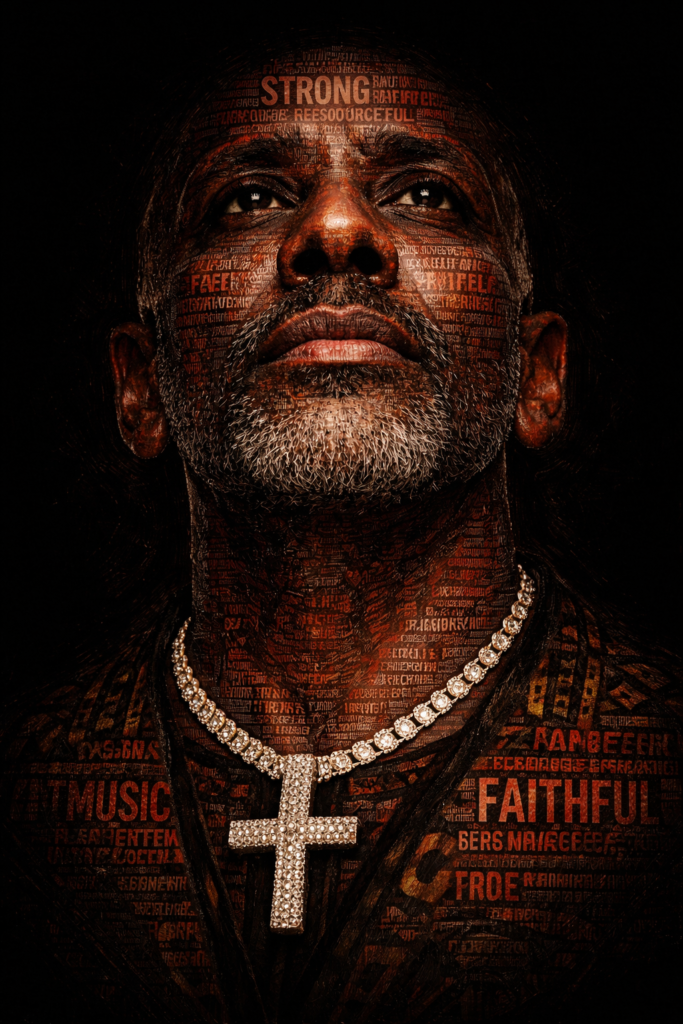
What I’m Building With This Knowledge
I’m not sharing this just to make a historical argument.
I’m sharing it because it changes how you build.
When you understand that your voice — your actual voice, the one you woke up with, the one your people passed down to you — is not a liability but an asset carrying hundreds of years of accumulated expressive intelligence, you stop asking permission to use it.
You stop code-switching in your art.
You stop writing the Black characters in your stories as translations of themselves.
You stop producing content that gestures at your culture from the outside, that flattens the language into something more universally “accessible,” that trades the full weight of a moment for the comfort of an audience that didn’t earn it.
You write from the inside.
And what comes out when you write from the inside — when you trust the language, trust the tradition, trust the people who built it — is the only thing that lasts. It’s the thing that makes someone set your book down at 2am because they need a minute. It’s the thing that makes a song feel like somebody reached into your chest and named something you didn’t have words for. It’s the thing that makes a story feel less like entertainment and more like testimony.
Testimony. You recognize that word.
Smitherman called it testifyin’. The rhetorical act that is simultaneously personal witness, cultural transmission, and spiritual declaration.
That’s what the best Black art has always been.
That’s what I’ve been doing for two hundred books, whether I named it or not.
And that’s what you can do too — once you stop apologizing for the voice you showed up with.
—
Where This Leaves Us
The scholars I’ve referenced spent careers inside institutions fighting for the right to say what Black folks have always known at the kitchen table: this language is real, it is complete, it is beautiful, and it belongs.
The artists — the rappers, the novelists, the preachers, the poets — said the same thing with their lives, with their work, with every choice to stay in the voice instead of stepping out of it.
And the people who lived inside this language — your grandparents, your neighbors, the corner, the church, the cookout — they never needed a degree to know their words carried weight.
The research just finally caught up to what they already understood.
So here’s where I land.
Your grammar was never wrong.
Your cadence was never broken.
Your stories — the ones that came out with the music of your actual life in them — were never too much or too little for the page.
The standard was always political.
Which means the decision to ignore it is always personal.
And the most powerful thing you can do — for yourself, for your people, for the tradition that made you — is write like you mean it.
In the voice you were born into.
Without apology.
Without translation.
The whole way through.
—
*Relentless Aaron is an author, music producer, publisher, and multimedia entrepreneur based in Atlanta, Georgia. His catalog spans 200+ books, 2,000+ music compositions, and an expanding AI-driven content universe. He writes, builds, and moves — always in his own voice.